Making your own rose water toner costs less than five dollars and takes about 20 minutes from start to finish. You’ll know exactly what’s touching your face, and your skin will thank you for skipping the preservatives and synthetic fragrances found in most store-bought versions.
Rose water toner requires only fresh rose petals and distilled water. The distillation method takes 20 minutes and produces a gentle, hydrating toner that balances pH, reduces redness, and adds moisture without harsh chemicals. Store it in a glass bottle in the refrigerator for up to two weeks. This natural alternative costs a fraction of commercial toners while delivering the same skin-soothing benefits.
What You Need to Get Started
The ingredient list is refreshingly short.
You need fresh rose petals and distilled water. That’s it.
For the petals, choose organic roses that haven’t been sprayed with pesticides. Your garden roses work perfectly if you know they’re chemical-free. Otherwise, grab organic roses from a farmer’s market or specialty grocery store.
Avoid florist roses. They’re typically treated with preservatives and chemicals that shouldn’t go near your skin.
For equipment, gather these items:
- A medium-sized pot with a lid
- A heat-safe bowl that fits inside the pot
- Ice cubes
- A clean glass bottle or jar with a tight lid
- A fine-mesh strainer or cheesecloth
The glass bottle matters more than you might think. Plastic can leach chemicals into your toner, defeating the whole purpose of making it yourself.
The Distillation Method Step by Step
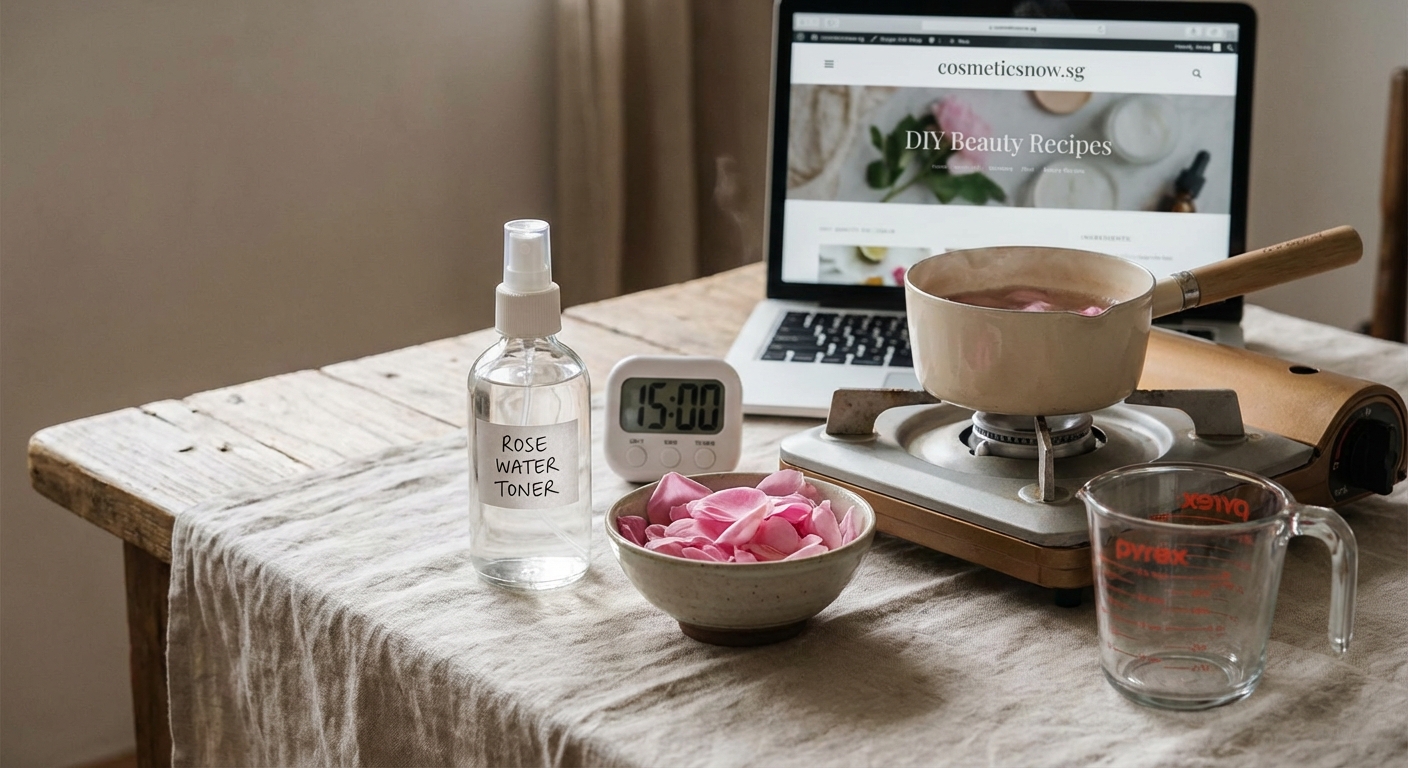
This technique captures the essence of roses through steam.
-
Remove the petals from three to four large roses. Rinse them gently under cool water to remove any dirt or insects.
-
Place the petals in the bottom of your pot. Add just enough distilled water to barely cover them, usually about one to two cups.
-
Set your heat-safe bowl upside down in the center of the pot, right on top of the petals. The bowl should sit higher than the water level.
-
Turn the pot lid upside down and place it on the pot. The handle should point downward into the bowl.
-
Bring the water to a gentle simmer over medium heat. Once it’s simmering, pile ice cubes on top of the inverted lid.
-
Let it simmer for 20 minutes. The steam will rise, hit the cold lid, condense, and drip down the handle into your bowl. That’s your rose water collecting drop by drop.
-
Turn off the heat and let everything cool for 10 minutes before carefully removing the bowl.
The liquid in the bowl is pure rose water toner. The petals in the pot can go straight into your compost.
“Homemade rose water contains the same beneficial compounds as commercial versions, including flavonoids and phenolic acids that calm inflammation. The difference is freshness and the absence of stabilizers that can irritate sensitive skin.” – Dr. Sarah Chen, Dermatologist
The Simple Steeping Method for Beginners
If distillation sounds intimidating, try steeping instead.
This method won’t capture quite as much of the rose essence, but it still produces an effective toner.
Place your clean rose petals in a heat-safe glass jar. Pour boiling distilled water over them until they’re completely submerged. Cover the jar and let it steep for 30 to 45 minutes as it cools to room temperature.
Strain out the petals through cheesecloth or a fine-mesh strainer. Squeeze gently to extract every drop.
The resulting toner will be lighter in color and scent than the distilled version, but it works beautifully for daily use.
I keep both methods in rotation. The distilled version for special occasions or when my skin needs extra care, and the steeped version for everyday maintenance.
How to Use Your Rose Water Toner
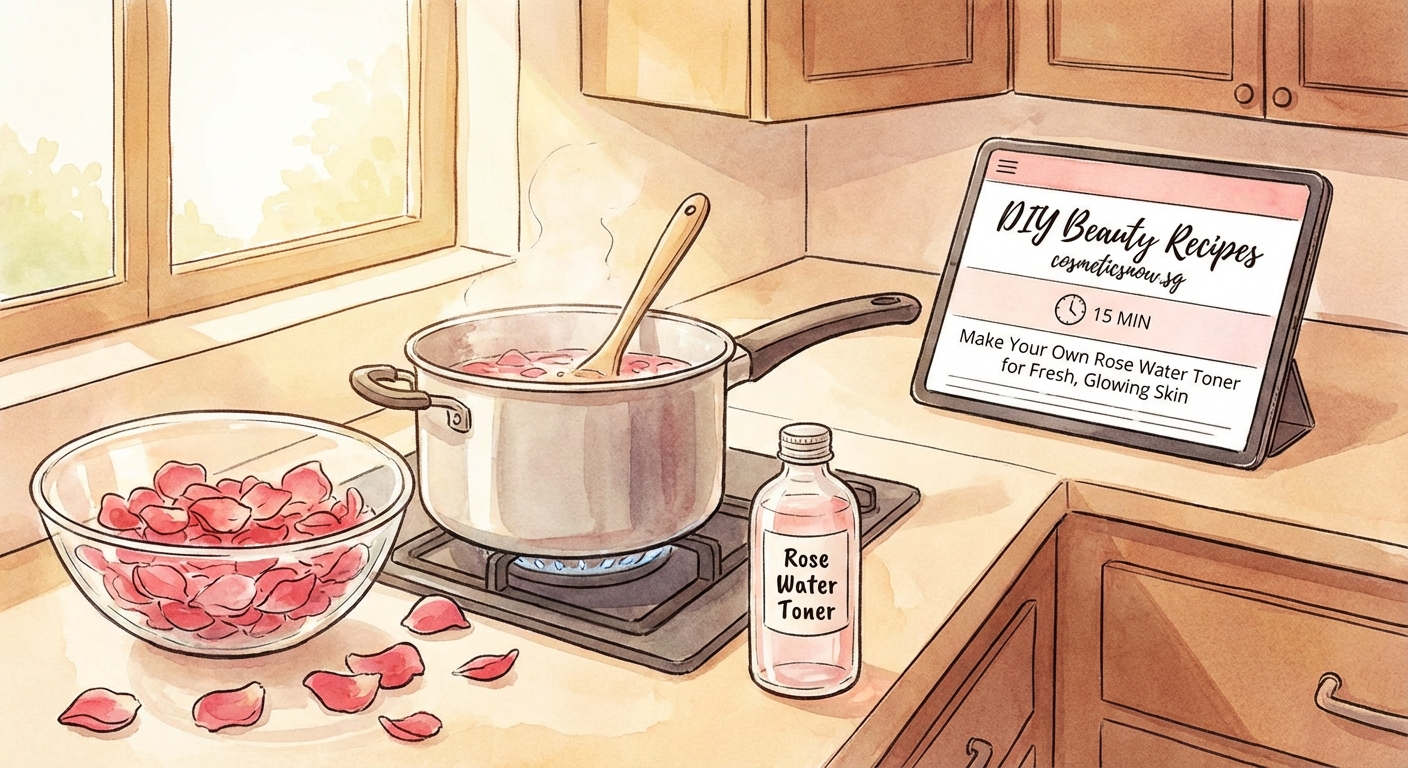
Application timing matters as much as the toner itself.
Apply it right after cleansing, while your skin is still slightly damp. This helps lock in moisture and prepares your skin for the products that follow.
Pour a small amount onto a cotton pad or directly into your palms. Pat it gently across your face, neck, and décolletage. Don’t rub or drag the cotton pad, just press and sweep.
Let it air dry for 30 seconds before applying your serum or moisturizer.
You can also use it throughout the day as a refreshing mist. Transfer some into a small spray bottle and keep it in your bag. It’s perfect for midday skin pick-me-ups or setting makeup.
For irritated or sunburned skin, soak a soft cloth in cold rose water and use it as a compress for 10 minutes.
Storage and Shelf Life
Proper storage extends the life of your toner significantly.
Always use a glass container. Dark amber or cobalt blue glass works best because it blocks light that can degrade the rose compounds.
Keep it in the refrigerator. The cool temperature preserves freshness and feels amazing on your skin.
Homemade rose water lasts about two weeks when refrigerated. You’ll know it’s gone bad if it develops an off smell or changes color.
Make small batches rather than trying to stockpile. Fresh is always better, and the process is simple enough to repeat every couple of weeks.
Label your bottle with the date you made it. This prevents the common mistake of using toner that’s past its prime.
Common Mistakes and How to Avoid Them
Even simple recipes have pitfalls.
| Mistake | Why It Happens | The Fix |
|---|---|---|
| Weak, barely scented toner | Not enough petals or too much water | Use more petals or less water. The petals should be crowded in the pot. |
| Toner spoils within days | Contamination during bottling | Sterilize your storage bottle with boiling water first. Let it dry completely before filling. |
| Brown or murky appearance | Petals left in too long or burned | Keep heat at a gentle simmer, never a rolling boil. Remove petals promptly after steeping. |
| Skin irritation after use | Pesticide residue on petals | Only use organic, unsprayed roses. When in doubt, test on your inner wrist first. |
| No condensation during distillation | Not enough ice or heat too low | Refresh ice cubes every 10 minutes. Maintain a steady simmer. |
The most frequent mistake I see is people using tap water instead of distilled. Tap water contains minerals and chlorine that can irritate skin and reduce shelf life.
Customizing Your Toner for Different Skin Needs
Rose water works for every skin type, but you can enhance it.
For oily or acne-prone skin, add two drops of tea tree oil per cup of rose water. Shake well before each use.
For dry skin, mix in a teaspoon of vegetable glycerin. This adds extra hydration without feeling heavy.
For mature skin concerned with firmness, add a vitamin E capsule (pierce it and squeeze out the oil) to your bottle of rose water.
For sensitive or reactive skin, use the basic recipe without additions. Pure rose water is naturally anti-inflammatory.
These additions slightly reduce shelf life, so make smaller batches when customizing.
The Science Behind Why It Works
Rose water isn’t just pleasant-smelling water.
The petals contain compounds that actively benefit your skin. Phenolic acids act as antioxidants, protecting against environmental damage. Flavonoids reduce inflammation and redness.
The pH of rose water sits around 5.5, which matches your skin’s natural pH. This helps maintain your skin barrier function, unlike many commercial toners that are too alkaline.
Rose water also has mild astringent properties from the tannins in the petals. This helps tighten pores temporarily without the harsh drying effect of alcohol-based toners.
The hydration comes from the water itself, but the rose compounds help your skin hold onto that moisture longer.
Integrating Rose Water Into Your Full Routine
Toner is just one step in effective skincare.
After cleansing and before moisturizing is the classic placement. But rose water is versatile enough to use in multiple ways throughout your complete skincare routine.
Mix a few drops into your foundation for a dewy finish. This trick also helps foundation apply more smoothly and last longer.
Use it to dampen your beauty sponge before blending makeup. The rose water prevents the sponge from absorbing too much product.
Spray it on your face after applying powder to eliminate any cakey appearance.
Add it to clay face masks to adjust consistency. This keeps masks from over-drying your skin.
Cost Comparison With Store-Bought Options
The economics make a compelling case.
A small bottle of commercial rose water toner costs between $15 and $30. Premium brands charge even more.
Making your own costs about $3 to $5 per batch, depending on where you source your roses. That same $3 makes enough toner to last two weeks with twice-daily use.
Over a year, you’ll spend roughly $75 to $130 on homemade rose water versus $360 to $720 on store-bought versions.
The savings multiply if you grow your own roses. One established rose bush produces enough petals for a year’s worth of toner.
Beyond money, you’re also saving the packaging waste from dozens of plastic bottles.
Troubleshooting Specific Issues
Sometimes things don’t go as planned.
If your rose water has no scent, your roses might have been too old or lacking in natural oils. Try using roses that were cut the same day, preferably in the morning when their oils are most concentrated.
If you see floating particles, strain it again through a coffee filter. This catches the finest sediment.
If your skin feels sticky after application, you’re using too much. A light misting or a cotton pad dampened with toner is plenty.
If you notice redness or itching, stop using it immediately. You might be allergic to roses or the specific variety you chose. Test different rose varieties on a small patch of skin before making a full batch.
If your toner develops a fermented smell before two weeks, contamination got in. Start fresh with sterilized equipment and bottles.
Why Fresh Beats Preserved Every Time
Commercial toners need preservatives to sit on shelves for months or years.
These preservatives, parabens, phenoxyethanol, and others, keep products stable but can disrupt your skin’s microbiome. Your skin hosts beneficial bacteria that help maintain its barrier function. Harsh preservatives don’t discriminate between good and bad bacteria.
Fresh rose water contains living compounds that degrade over time. This is actually a good thing. It means the beneficial properties are active and potent when you use them.
The two-week shelf life isn’t a limitation. It’s a feature that ensures you’re always using the most effective version of your toner.
Making small batches every couple of weeks becomes a pleasant ritual rather than a chore. You’ll start to notice which roses from which seasons produce the best results.
Your Skin Deserves This Simple Luxury
Rose water toner represents everything good about DIY skincare.
It’s simple enough for complete beginners but effective enough that experienced natural beauty enthusiasts keep it in their routines for years. The cost savings are substantial, the ingredient list is transparent, and the results speak for themselves.
Your bathroom counter doesn’t need to be crowded with products you can’t pronounce. Sometimes the best skincare comes from a pot on your stove and roses from your garden. Give your skin two weeks with homemade rose water toner. The difference in how it looks and feels might surprise you enough to never go back to store-bought versions.