Finding foundation that disappears into your skin feels impossible when you’re staring at fifty different bottles under fluorescent store lighting. You swatch three shades on your hand, they all look identical, and you end up guessing. Two days later, you catch your reflection in natural daylight and realize your face is three shades darker than your neck.
This happens to almost everyone because most of us test foundation in the wrong place, under the wrong lighting, and without understanding our undertones.
Choosing the right foundation shade requires testing on your jawline in natural light, identifying your undertone (warm, cool, or neutral), and checking how the formula oxidizes after 30 minutes. Never match foundation to your hand or inner wrist, as these areas differ significantly from your facial skin tone. The perfect match should disappear completely along your jawline without blending.
Understanding your skin undertone comes first
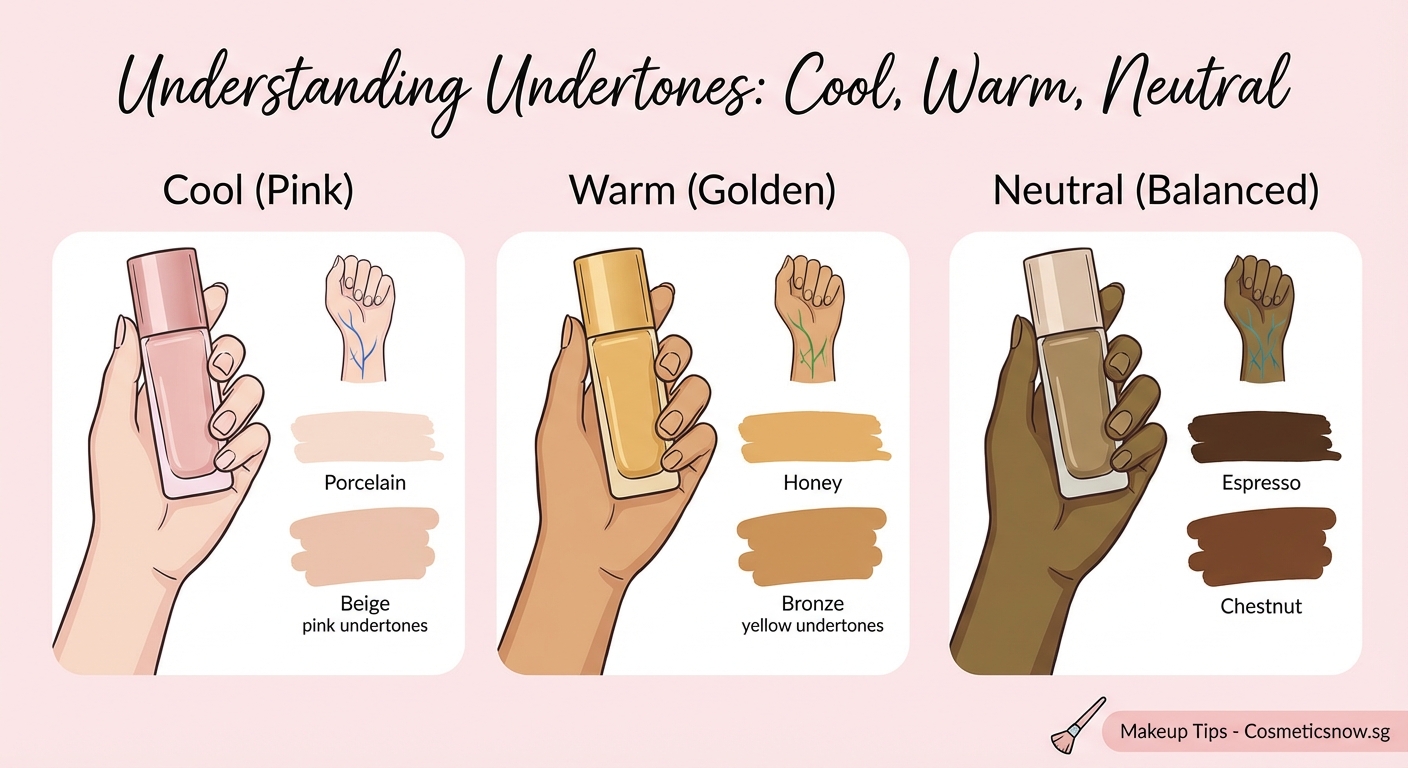
Your skin tone is what you see on the surface. Your undertone is the subtle hue underneath that never changes, even when you tan or get paler in winter.
There are three main undertones.
Warm undertones have golden, peachy, or yellow hues. Your veins look greenish through your skin. Gold jewelry tends to look better on you than silver. You tan easily and rarely burn.
Cool undertones have pink, red, or blue hues. Your veins appear blue or purple. Silver jewelry flatters your complexion more than gold. You burn easily in the sun.
Neutral undertones are a balanced mix of warm and cool. Your veins might look blue-green. Both gold and silver jewelry look equally good. You tan moderately.
Most foundation bottles will indicate whether they suit warm, cool, or neutral undertones. Some brands use letters like W, C, or N. Others use descriptors like “golden,” “rosy,” or “beige.”
Test foundation on your jawline, not your hand
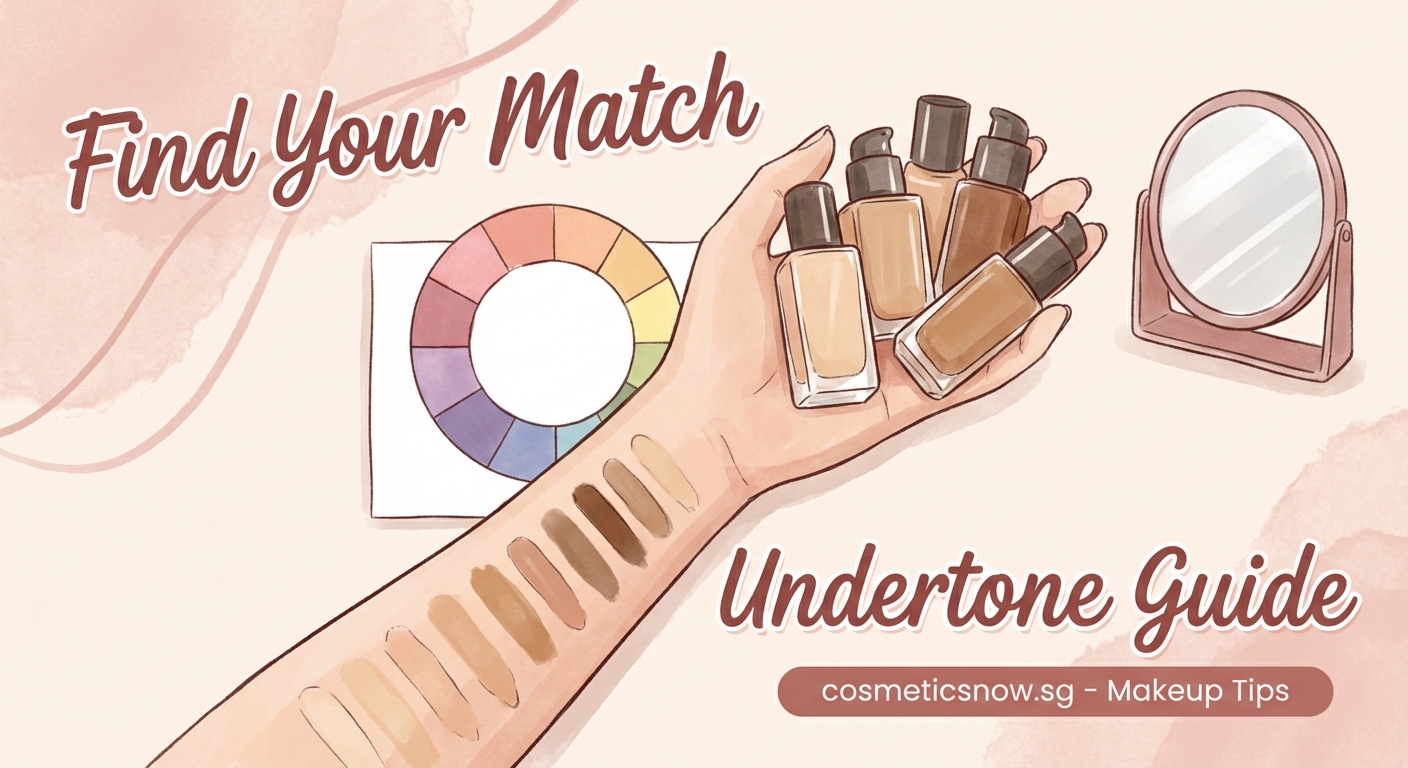
Your hand is exposed to sun, washing, and environmental damage differently than your face. The skin tone rarely matches.
Your inner wrist is even worse. It’s one of the palest parts of your body and will lead you to buy foundation that’s too light.
The correct testing spot is your jawline, right where your face meets your neck. This area shows your true face color and helps you avoid the dreaded mask effect where your face looks painted on.
Here’s how to test properly:
- Apply three shades you think might work in stripes along your jawline.
- Blend each stripe slightly but leave enough to see the color.
- Walk outside or stand by a window with natural light.
- The shade that disappears completely is your match.
If you’re between two shades, buy both. Mix them for a perfect custom match, or use the lighter one in winter and the darker one in summer.
Natural lighting reveals the truth about color
Store lighting lies. Fluorescent bulbs cast a cool, bluish tone that makes warm foundations look neutral and cool foundations look pink.
Yellow-toned lighting in some stores does the opposite, making everything look warmer than it actually is.
Natural daylight is the only honest light source. It shows exactly how your foundation will look when you’re outside, in your car, or sitting by a window at work.
If you absolutely must buy foundation without natural light testing, take photos with your phone’s flash on. The flash mimics daylight better than ambient store lighting. Check the photos before you buy.
Foundation oxidizes after you apply it
Oxidation happens when foundation reacts with your skin’s natural oils and air exposure. The color can shift up to two shades darker within 30 minutes.
This is why you need to wait before deciding if a shade works.
Test your chosen shade and then walk around the store for at least 20 minutes. Check it again in natural light. If it still matches your neck, you’ve found your color.
Some formulas oxidize more than others. Oil-free and silicone-based foundations tend to stay truer to their bottle color. Foundations with higher oil content oxidize more noticeably.
Different formulas require different shade selections
Liquid foundation typically offers the most shade range and the truest color match. It blends easily and shows its real color within minutes.
Powder foundation often looks lighter in the compact than it does on your skin. You might need to go one shade lighter than your liquid foundation match.
Stick foundation is highly pigmented. A little goes a long way, and the color can appear more intense than liquid formulas in the same shade.
Tinted moisturizer and BB cream usually come in limited shades because they’re sheer. They adapt to your skin tone better than full-coverage formulas, so you have more flexibility.
Cushion foundation can oxidize significantly because of the applicator puff. Always test it and wait 30 minutes.
Seasonal changes mean you might need two shades
Your skin tone shifts throughout the year. You’re paler in winter and darker in summer, even if you’re not actively tanning.
Having two foundation shades lets you adjust. Mix them as your color transitions, or use the lighter shade on your entire face and the darker one for contouring based on your face shape.
Some people keep three shades: winter, summer, and a mixing shade for spring and fall.
This sounds excessive until you realize that wearing the wrong shade makes everything else in your makeup routine look off. Your blush looks patchy, your highlighter looks chalky, and your whole face lacks dimension.
Common testing mistakes that lead to bad matches
| Mistake | Why It Fails | Better Approach |
|---|---|---|
| Testing on your hand | Hand skin differs from facial skin in tone and texture | Always test on jawline |
| Buying without waiting | Foundation oxidizes and changes color | Wait 30 minutes before purchasing |
| Testing in store lighting only | Artificial light distorts true color | Check in natural daylight |
| Matching to your forehead | Forehead can be darker from sun exposure | Match to jaw and neck area |
| Ignoring undertone | Wrong undertone looks gray or orange | Identify your undertone first |
| Trusting online swatches | Screen colors vary wildly | Order samples when buying online |
Online shopping requires a different strategy
Buying foundation online is risky, but sometimes it’s your only option.
Start by finding your exact shade match in any brand at a physical store. Write down the shade name and the undertone description. Most brands will say something like “light with neutral undertone” or “medium with warm golden undertone.”
Use shade-matching tools on brand websites. Many let you input a shade you already own, and they’ll recommend their equivalent.
Read reviews from people with similar skin tones. Look for photos in natural lighting. If someone says a shade runs pink and you have warm undertones, skip it.
Order samples or travel sizes when possible. Many brands offer discovery sets with multiple shades.
“The biggest mistake I see is people choosing foundation based on what looks good in the bottle. The bottle color means nothing. What matters is how it looks on your skin after 30 minutes in natural light.” – Professional makeup artist with 15 years of experience
Your skin type affects how foundation looks
Oily skin can make foundation look darker as oils mix with the formula throughout the day. You might need a shade slightly lighter than your perfect match to compensate.
Dry skin can make foundation look patchy or ashy. Make sure your skin is well-moisturized before testing. A proper morning skincare routine helps foundation sit better and show its true color.
Combination skin might have different tones in different areas. Match to your overall face tone, not to your T-zone, which can be redder.
Mature skin often has redness or discoloration. Don’t try to match foundation to red areas. Match to your neck and use color corrector for redness.
Texture and coverage change how color appears
Sheer coverage foundation looks more like your natural skin. You have more wiggle room with shade matching because your skin tone shows through.
Medium coverage needs a closer match. Your natural tone is partially visible, so the wrong shade will look off but not catastrophic.
Full coverage must match perfectly. There’s no natural skin showing through to blend the color. Even a half-shade off looks like a mask.
Matte foundation can make colors look slightly deeper and more intense. Dewy foundation reflects light and can make the same shade look a bit lighter and brighter.
When to adjust your foundation shade
Your foundation should match your face and neck exactly. If there’s a visible line where your face ends and your neck begins, the shade is wrong.
If your foundation looks grayish, it’s the wrong undertone. Cool foundation on warm skin looks gray. Warm foundation on cool skin looks orange or yellow.
If your foundation looks too pink, you need a more neutral or warm shade. If it looks too yellow, you need a cooler or more neutral shade.
If your foundation disappears completely but your face looks darker than your chest, you might be matching to sun damage on your face. Consider matching to your neck instead.
Professional color matching services help but aren’t perfect
Many beauty stores offer color-matching devices that scan your skin and recommend shades. These tools are helpful starting points but not foolproof.
The device might scan an area with redness or sun damage and recommend a shade that doesn’t match your overall tone. It might not account for oxidation.
Use professional matching as a starting point. Test the recommended shade on your jawline in natural light. Trust your eyes more than the machine.
Some stores let you take samples home. This is the best option because you can test the foundation in your own bathroom with your regular lighting and see how it wears throughout the day.
Building a foundation wardrobe makes sense
Professional makeup artists rarely use one foundation shade straight from the bottle. They mix shades to create custom matches for different areas of the face or different times of year.
You don’t need ten bottles, but having two or three gives you flexibility. Your perfect summer shade mixed with your winter shade gets you through spring and fall. A slightly lighter shade works for highlighting. A slightly darker shade works for subtle contouring.
Foundation lasts 12 to 18 months after opening, so buying multiple shades won’t lead to waste if you use them strategically. Once you know how to apply foundation properly, mixing shades becomes second nature.
Shade names mean nothing across brands
A “medium beige” in one brand might be completely different from “medium beige” in another brand. Shade numbers don’t translate either.
Some brands number from light to dark. Others use letters, words, or seemingly random codes. There’s no industry standard.
This is why you must test every new brand, even if you know your shade in your current foundation. You can’t assume anything based on names or numbers.
Keep a note in your phone with your exact shade matches in different brands. When you find a perfect match, write it down immediately. You’ll forget otherwise.
Your perfect shade is out there
Foundation matching isn’t mysterious once you understand the rules. Test on your jawline, check in natural light, wait for oxidation, and know your undertone.
The right shade makes everything else in your routine work better. Your concealer blends seamlessly. Your blush looks natural. Your whole face has dimension instead of looking flat or mask-like.
Stop guessing under store lights. Take the extra five minutes to walk outside. Your face will thank you every single day when your foundation actually matches your skin.