Your bathroom mirror reflects more than just your face. It shows you how well your skin is handling everything you throw at it: late nights, stress, weather changes, and yes, even that extra glass of wine from last night.
A solid morning skincare routine doesn’t need to be complicated or time-consuming. Five strategic steps can transform your complexion and set you up for a confident day ahead.
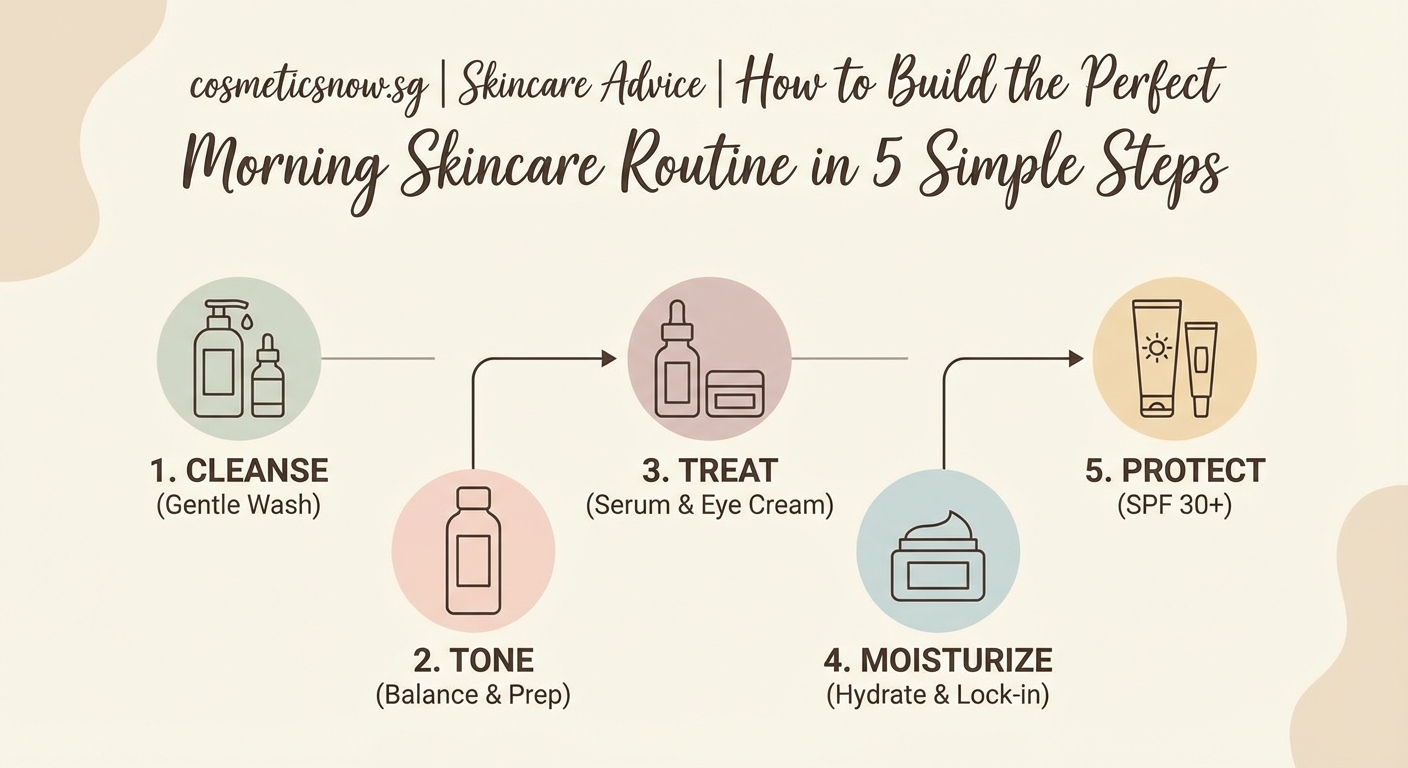
A perfect morning skincare routine follows five essential steps: cleanse, tone, treat with serums, moisturize, and protect with SPF. This sequence maximizes product absorption and shields your skin from daily environmental damage. The entire process takes under 10 minutes but delivers lasting results when done consistently with products suited to your specific skin type.
Why Your Morning Routine Differs From Your Nighttime Regimen
Morning skin has different needs than evening skin.
While you sleep, your skin goes into repair mode. It produces oils, sheds dead cells, and works through its natural renewal cycle. When you wake up, your face needs a fresh start, not a deep treatment session.
Your morning skincare routine prepares and protects. Your nighttime routine repairs and renews. The products you choose should reflect these different goals.
Think of morning skincare as armor. You’re building layers of protection before facing UV rays, pollution, air conditioning, and whatever else the day brings. If you’re new to structured skincare, our complete step-by-step guide to building your first skincare routine covers the fundamentals in detail.
Step 1: Cleanse Away Overnight Build-Up
Your first instinct might be to skip this step. After all, you washed your face before bed, right?
But overnight, your skin produces sebum. Pillowcases transfer bacteria. Dead skin cells accumulate. A morning cleanse removes all of this without stripping your skin’s protective barrier.
Choose your cleanser based on your skin type:
- Oily skin: Gel or foaming cleansers with salicylic acid
- Dry skin: Cream or milk cleansers with hydrating ingredients
- Combination skin: Gentle gel cleansers that balance without over-drying
- Sensitive skin: Fragrance-free, non-foaming formulas with minimal ingredients
Use lukewarm water, not hot. Hot water strips natural oils and can cause redness. Massage the cleanser in circular motions for 30 to 60 seconds, then rinse thoroughly.
Pat your face dry with a clean towel. Never rub. Rubbing creates friction that can damage your skin’s surface and accelerate aging.
Step 2: Balance and Prep With Toner
Toners used to be harsh, alcohol-heavy liquids that left skin tight and uncomfortable. Modern toners are completely different animals.
Today’s toners balance your skin’s pH after cleansing and prepare it to absorb the products that follow. They also add a first layer of hydration and can target specific concerns.
| Skin Concern | Toner Type | Key Ingredients to Look For |
|---|---|---|
| Dullness | Brightening | Vitamin C, niacinamide, licorice root |
| Dryness | Hydrating | Hyaluronic acid, glycerin, rose water |
| Acne | Clarifying | Salicylic acid, tea tree oil, witch hazel |
| Aging | Anti-aging | Peptides, antioxidants, green tea |
| Sensitivity | Soothing | Centella asiatica, chamomile, aloe vera |
Apply toner with clean hands or a reusable cotton pad. Press it gently into your skin rather than wiping. This pressing motion helps with absorption and feels more luxurious than swiping.
Wait 30 seconds before moving to the next step. This brief pause lets the toner fully absorb.
Step 3: Target Specific Concerns With Serums
Serums are where the real magic happens in your morning skincare routine.
These concentrated formulas penetrate deeper than moisturizers because they have smaller molecular structures. They deliver active ingredients directly where your skin needs them most.
You can layer multiple serums, but three is usually the maximum before you hit diminishing returns. Apply them from thinnest to thickest consistency.
Common Morning Serums and Their Benefits
Vitamin C serum tops the list for morning use. It brightens skin, fades dark spots, and provides antioxidant protection against free radical damage from sun exposure and pollution.
Hyaluronic acid draws moisture into your skin like a sponge. One molecule can hold up to 1,000 times its weight in water. This makes it perfect for plumping fine lines and creating a dewy base for makeup.
Niacinamide (vitamin B3) reduces pore appearance, regulates oil production, and strengthens your skin barrier. It plays well with almost every other ingredient, making it an easy addition to any routine.
For more detailed guidance on combining these powerhouses, check out how to properly layer your serums for maximum skin benefits.
Apply 2 to 3 drops of each serum to your fingertips. Warm it slightly between your hands, then press it into your skin using upward motions. Don’t forget your neck. That skin ages too.
“The biggest mistake I see is people applying too much serum at once. A little goes a long way. If you’re using more than 3 to 4 drops, you’re wasting product and money.” – Dr. Sarah Chen, Board-Certified Dermatologist
Step 4: Lock Everything In With Moisturizer
Moisturizer creates a seal over all the beneficial ingredients you’ve just applied. It prevents water loss and keeps your skin hydrated throughout the day.
Even oily skin needs moisturizer. When you skip this step, your skin often overcompensates by producing more oil. The key is finding the right texture for your skin type.
Gel moisturizers work best for oily and combination skin. They’re lightweight, absorb fast, and won’t clog pores or create shine.
Lotion moisturizers suit normal to slightly dry skin. They provide balanced hydration without feeling heavy.
Cream moisturizers deliver intense moisture for dry and mature skin. They create a protective barrier that lasts all day.
Apply moisturizer to damp skin for better absorption. Use gentle upward strokes, working from the center of your face outward. This technique supports your skin’s natural structure and feels more intentional than random rubbing.
Your eye area needs special attention. The skin there is thinner and more delicate. Use a dedicated eye cream or a small amount of your face moisturizer applied with your ring finger (it applies the least pressure).
Step 5: Protect With Broad-Spectrum SPF
This step is non-negotiable.
Sunscreen is the single most effective anti-aging product you can use. It prevents wrinkles, dark spots, texture changes, and skin cancer. Every dermatologist will tell you the same thing.
You need SPF every single day, regardless of weather or season. UVA rays penetrate clouds and windows. They cause aging even when you’re indoors or driving.
Choose a broad-spectrum sunscreen with at least SPF 30. Broad-spectrum means it protects against both UVA (aging) and UVB (burning) rays.
Sunscreen Formulas That Actually Work for Daily Use
Chemical sunscreens absorb UV rays and convert them to heat. They’re lightweight and invisible on all skin tones. Look for avobenzone, octinoxate, or oxybenzone.
Physical (mineral) sunscreens sit on top of your skin and reflect UV rays. They contain zinc oxide or titanium dioxide. Modern formulas no longer leave a white cast if you choose carefully.
Tinted sunscreens provide light coverage while protecting. They’re perfect for days when you want to skip foundation but still look polished.
Apply a nickel-sized amount to your face and neck. Most people use way too little sunscreen to get the protection listed on the bottle.
Wait 15 minutes before sun exposure or applying makeup. This gives the sunscreen time to bind to your skin properly.
Reapply every two hours if you’re outside. If you’re indoors all day, one morning application is usually sufficient.
Common Morning Skincare Mistakes That Sabotage Your Results
Knowing what to do is only half the battle. Avoiding these common errors will dramatically improve your results.
Using too many products at once. More is not better. Your skin can only absorb so much. Start with the basics and add one new product at a time, waiting two weeks between additions.
Applying products in the wrong order. Thin to thick is the golden rule. If you put moisturizer on before serum, the serum can’t penetrate.
Skipping SPF on cloudy days. Up to 80% of UV rays penetrate clouds. Your skin doesn’t know the difference between sunny and overcast.
Rubbing products into your skin aggressively. Gentle pressing and patting works better than harsh rubbing. Your skin is not a stain you’re trying to remove.
Not waiting between steps. Give each product 30 to 60 seconds to absorb before layering the next one. Patience pays off.
Using products that don’t match your skin type. Heavy creams on oily skin cause breakouts. Light gels on dry skin leave you tight and flaky. Match products to your needs, not trends.
How to Adjust Your Routine for Different Skin Types
Your skin type determines which specific products you choose within each step.
Oily Skin Morning Routine Adjustments
Use a foaming cleanser to control excess sebum. Choose gel-based or water-based products throughout your routine. Look for “non-comedogenic” labels to avoid clogged pores.
Your serums should focus on oil control and pore refinement. Niacinamide and salicylic acid work particularly well.
Finish with a lightweight gel moisturizer and a mattifying sunscreen. Powder sunscreens are great for midday touch-ups without adding shine.
Dry Skin Morning Routine Adjustments
Start with a creamy, hydrating cleanser. Layer multiple hydrating serums, focusing on hyaluronic acid and ceramides.
Use a rich cream moisturizer and look for sunscreens with added moisturizing ingredients like glycerin or squalane.
Consider adding a facial oil before your moisturizer on particularly dry days. Oils create an extra barrier against moisture loss.
Combination Skin Morning Routine Adjustments
You need balance. Use gentle gel cleansers that don’t strip or over-moisturize.
Apply different products to different zones if needed. Use lighter products on your T-zone (forehead, nose, chin) and richer ones on your cheeks.
Blotting papers throughout the day help control shine without disrupting your skincare.
Sensitive Skin Morning Routine Adjustments
Simplicity is your friend. Stick to fragrance-free, hypoallergenic products with minimal ingredient lists.
Avoid active ingredients like retinol, strong acids, and high-concentration vitamin C in the morning. These can cause irritation when exposed to sun.
Patch test new products on your inner arm for 24 hours before using them on your face. Your skin will thank you for this extra caution.
Building Your Routine Without Breaking the Bank
A perfect morning skincare routine doesn’t require luxury prices.
Many drugstore brands offer excellent formulations at a fraction of designer costs. The key is understanding ingredients, not being swayed by packaging or marketing.
Start with these budget-friendly essentials:
- CeraVe Hydrating Facial Cleanser – gentle, effective, recommended by dermatologists
- The Ordinary Niacinamide 10% + Zinc 1% – targets multiple concerns for under $10
- Neutrogena Hydro Boost Water Gel – lightweight hydration that works for most skin types
- La Roche-Posay Anthelios Melt-in Milk Sunscreen – elegant texture, reliable protection
You can build an entire effective routine for under $60. As you identify specific concerns, you can add targeted treatments.
Invest in the products that stay on your skin longest. Your serum and sunscreen deserve a bigger budget than your cleanser, which you rinse off after 60 seconds.
When You’ll Start Seeing Real Results
Skincare requires patience and consistency.
Your skin cell turnover cycle takes approximately 28 days. This means you need at least a month of consistent use before judging whether products work for you.
Here’s a realistic timeline:
- Week 1: Your skin adjusts to the new routine. You might experience minor purging as products bring underlying congestion to the surface.
- Week 2-3: Hydration improves. Your skin feels more comfortable and looks more even.
- Week 4-6: Texture smooths out. Fine lines appear less prominent. Dark spots begin to fade.
- Week 8-12: Major improvements in overall skin quality, tone, and resilience become obvious.
Take photos every two weeks in the same lighting. Progress happens gradually, and you see your face every day. Photos help you notice changes you might otherwise miss.
If you experience persistent irritation, burning, or worsening skin after two weeks, stop using the products. Skincare should improve your skin, not damage it.
Adapting Your Morning Routine Through the Seasons
Your skin’s needs shift with the weather.
Summer demands lighter products and more frequent sunscreen application. Winter requires richer moisturizers and extra hydration layers.
During humid months, you might skip your morning moisturizer and rely on serum plus sunscreen. In dry winter air, you might add a facial oil or switch to a heavier cream.
Pay attention to how your skin feels. Tightness means you need more moisture. Excessive shine means you need lighter products or oil-control ingredients.
Your morning skincare routine should feel like a ritual you look forward to, not a chore you rush through. When you find products that work, your skin responds with clarity, smoothness, and that natural glow everyone wants.
For those mornings when you’re truly pressed for time, the 5-minute morning beauty routine that actually works offers streamlined alternatives without sacrificing results.
Making Your Morning Skincare Routine Actually Stick
Knowledge means nothing without implementation.
The perfect morning skincare routine is the one you’ll actually do every single day. Consistency beats perfection every time.
Set up your bathroom for success. Keep products visible on your counter, not hidden in drawers. The easier they are to see and reach, the more likely you’ll use them.
Attach your routine to an existing habit. Do your skincare right after brushing your teeth. Your brain already has that morning sequence established, so piggybacking works better than creating an entirely new habit from scratch.
Start simple if you’re feeling overwhelmed. Begin with just cleanser and sunscreen for two weeks. Add one product at a time as the routine becomes automatic.
Your skin is the largest organ of your body and the only one everyone can see. Those five steps each morning are an investment in how you’ll look and feel not just today, but years from now. The face you have at 40, 50, and beyond is being shaped by the choices you make right now.
Your morning skincare routine is ready. Your products are lined up. Your skin is waiting for the transformation that comes from showing up for yourself every single day.