You’ve seen the labels. Biodegradable. Eco-friendly. Compostable. They’re plastered across makeup wipe packages, promising guilt-free cleansing. But standing in the beauty aisle, you might wonder if these claims hold up or if you’re just paying extra for clever marketing.
The truth is more complicated than a simple yes or no.
Biodegradable makeup wipes can be better for the environment than traditional ones, but only under specific conditions. Most require industrial composting facilities to break down properly and won’t decompose in landfills or home compost bins. The real environmental winner is switching to reusable cloths or the right way to remove makeup with washable alternatives, but if you must use disposables, certified biodegradable options cause less harm than conventional polyester wipes.
What actually makes a makeup wipe biodegradable
The term “biodegradable” gets thrown around loosely in beauty marketing. Technically, it means materials can be broken down by microorganisms into natural elements like water, carbon dioxide, and biomass.
Standard makeup wipes contain polyester or polypropylene. These synthetic fibers are essentially plastic. They can take hundreds of years to break down, if they ever truly do.
Biodegradable wipes use materials like bamboo, cotton, wood pulp, or plant-based cellulose fibers. These materials can decompose much faster under the right conditions.
But here’s where it gets tricky.
The fine print nobody reads
Most biodegradable wipes need industrial composting facilities to break down properly. These facilities maintain specific temperature, moisture, and oxygen levels that encourage decomposition.
Your bathroom trash can doesn’t provide these conditions. Neither does your backyard compost bin in most cases.
When biodegradable wipes end up in landfills (where most trash goes), they’re buried under layers of other waste. Without oxygen, even natural materials struggle to decompose. They might sit there for years, releasing methane as they slowly break down anaerobically.
Some brands claim their wipes are “flushable” and biodegradable. Don’t believe it. Water treatment facilities report massive problems with wipes clogging pipes and machinery. Even wipes labeled flushable don’t break down fast enough in water systems.
How biodegradable wipes compare to regular ones
Let’s break down the actual environmental impact across different categories.
| Factor | Regular Wipes | Biodegradable Wipes | Reusable Cloths |
|---|---|---|---|
| Material source | Petroleum-based plastics | Plant fibers (renewable) | Cotton or microfiber (one-time purchase) |
| Decomposition time | 100+ years | 3-6 months (industrial composting) or 1-5 years (landfill) | N/A (wash and reuse) |
| Water pollution | High (microplastics) | Low to moderate | Minimal (detergent only) |
| Manufacturing impact | High energy, fossil fuels | Moderate (agriculture, processing) | One-time manufacturing impact |
| Cost per year | $60-120 | $80-150 | $15-30 |
| Convenience | Highest | High | Moderate (requires washing) |
The numbers tell an interesting story. Biodegradable wipes perform better than regular ones, but they’re still single-use products with ongoing environmental costs.
The greenwashing problem you need to watch for
Beauty brands know you care about sustainability. Some exploit that concern with misleading labels.
Learning how to decode greenwashing in beauty product marketing helps you spot the red flags.
Here’s what to watch for:
- Vague claims: “Eco-friendly” or “natural” without certification or specifics
- Partial truth: “Made with biodegradable materials” when only 10% of the wipe is actually biodegradable
- Misleading imagery: Green leaves and earth tones suggesting environmental benefits that don’t exist
- No certification: Legitimate biodegradable products carry certifications like ASTM D6400, EN 13432, or OK Compost
A wipe might contain some plant fibers but still be held together with plastic binding agents. The packaging might be biodegradable while the actual wipe isn’t.
Read ingredient lists. Look for certifications. Research brands that make specific, verifiable claims about their products.
What happens to your wipes after you toss them
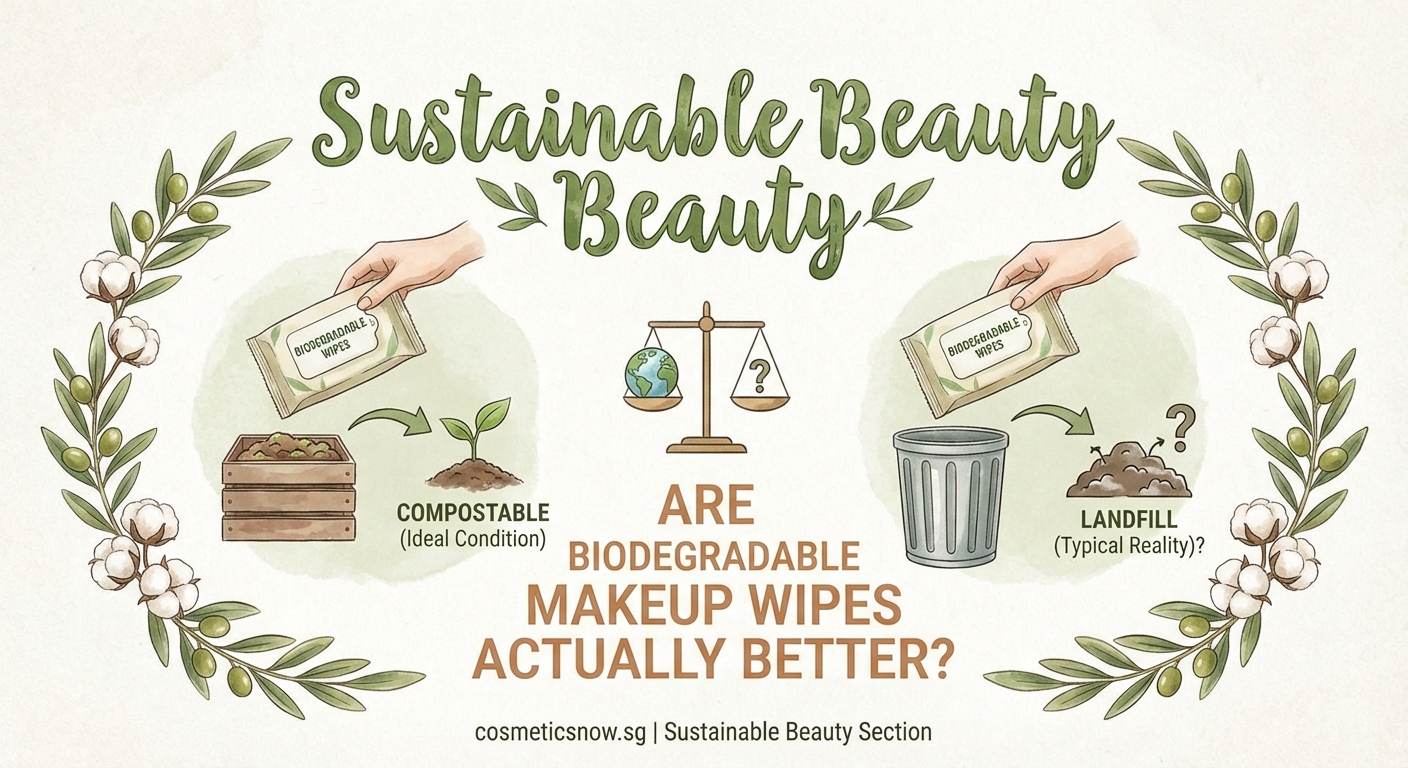
Let’s follow a makeup wipe through its post-use journey.
Regular polyester wipes
- You throw it in the bathroom trash
- It goes to a landfill where it sits, essentially mummified, for decades
- Tiny plastic fibers eventually break off, creating microplastics
- These microplastics can leach into groundwater or blow into surrounding areas
- The wipe never truly disappears, just becomes smaller plastic particles
Certified biodegradable wipes in ideal conditions
- You dispose of it in a commercial composting bin (rare)
- It reaches an industrial composting facility
- Under controlled heat and moisture, microorganisms break down the fibers
- Within 3-6 months, it becomes compost material
- The compost enriches soil with no toxic residue
Biodegradable wipes in typical conditions (landfill)
- You throw it in regular trash
- It goes to a landfill, buried under other waste
- Without oxygen, decomposition slows dramatically
- It breaks down over 1-5 years, releasing methane (a greenhouse gas)
- Some material remains, though it degrades faster than plastic
The gap between marketing promises and reality is significant.
Better alternatives that actually work
If you’re serious about reducing environmental impact, consider these options ranked from most to least sustainable.
Reusable makeup removal cloths top the list. Microfiber cloths remove makeup with just water. Cotton rounds can be washed and reused hundreds of times. You’ll need to wash them, which uses water and energy, but the overall impact is far lower than disposables.
Oil cleansing followed by a regular washcloth works beautifully. Many people find this method more effective than wipes anyway. Your skin often looks better too.
Micellar water with reusable cotton pads combines convenience with sustainability. You get the satisfying wipe-away experience without the waste.
If you absolutely need disposable wipes for travel or convenience, choose certified biodegradable options from transparent brands. Use them sparingly. One wipe per day instead of three makes a difference.
“The most sustainable beauty product is the one you don’t throw away. Reusable alternatives might require a small shift in routine, but they deliver better results for your skin and dramatically reduce waste. I’ve seen clients cut their bathroom trash by 60% just by switching from disposable wipes to washable cloths.” – Sarah Chen, Licensed Esthetician
Making the switch without the hassle
Changing habits takes planning. Here’s how to transition smoothly.
Start with a hybrid approach. Keep biodegradable wipes for travel and late nights when you can barely keep your eyes open. Use reusable options at home when you have more time and energy.
Set up a simple system. Keep a small basket in your bathroom for used makeup cloths. Toss them in with your regular laundry. It takes no extra effort once the habit forms.
Try different reusable options until you find what works. Some people love bamboo cloths. Others prefer microfiber. Some want the ritual of applying cleansing products properly layered before wiping.
Calculate your savings. Most people use 2-3 wipes daily. That’s 730-1,095 wipes per year. At roughly 10-15 cents per wipe, you’re spending $73-164 annually. A set of reusable cloths costs $15-30 and lasts years.
The money saved can fund better skincare products or makeup you’ve been eyeing.
When biodegradable wipes make sense
Despite everything, there are situations where biodegradable disposable wipes serve a purpose.
- Camping and outdoor activities where washing isn’t practical
- Hospital stays or medical situations requiring disposable hygiene products
- Travel to places with limited water access
- Gym bags for post-workout cleansing when showers aren’t available
- Backup option for exhausted evenings when your nighttime skincare routine feels overwhelming
For these specific uses, certified biodegradable wipes are genuinely better than regular ones. Just don’t fool yourself into thinking they’re as good as reusable options.
The certifications worth trusting
Not all “biodegradable” labels mean the same thing. These certifications indicate legitimate testing and standards.
ASTM D6400 certifies products will compost in industrial facilities within a specific timeframe. This American standard is rigorous and meaningful.
EN 13432 is the European equivalent, testing biodegradability, disintegration, and ecotoxicity. Products meeting this standard won’t leave harmful residues.
OK Compost certification from TÜV Austria verifies both industrial and home compostability, depending on the specific certification level.
USDA Certified Biobased Product label indicates the percentage of renewable biological ingredients. Higher percentages mean less petroleum-based content.
Brands using these certifications typically display them prominently. If you can’t find certification information on the package or website, that’s a warning sign.
Building a truly sustainable beauty routine
Makeup wipes represent just one piece of your environmental footprint. Transitioning to a sustainable beauty routine means looking at the bigger picture.
Consider these additional swaps:
- Refillable containers instead of single-use packaging
- Concentrated products that use less water and packaging
- Multi-use products like tinted moisturizers that replace separate items
- Bar cleansers that eliminate plastic bottles entirely
- Zero-waste makeup routines that prioritize reusable and recyclable options
Each swap compounds over time. Small changes create significant impact when maintained consistently.
The honest answer about environmental impact
Are biodegradable makeup wipes better for the environment than regular ones? Yes, marginally, if they’re genuinely certified and disposed of properly.
Are they as good as reusable alternatives? No, not even close.
The environmental hierarchy looks like this:
- Reusable cloths and washable options (best)
- Certified biodegradable wipes used sparingly and composted properly (better)
- Certified biodegradable wipes in regular trash (okay)
- Regular synthetic wipes (worst)
Your choice depends on your priorities, lifestyle, and willingness to adjust habits. Someone traveling constantly faces different constraints than someone with an established home routine.
The key is making informed decisions rather than falling for marketing that makes you feel good without delivering real benefits.
Your makeup removal routine deserves better
You care enough to research whether biodegradable wipes actually help. That awareness already puts you ahead of most consumers who grab whatever’s convenient.
Now you know the truth. Biodegradable wipes offer modest improvements over conventional ones, but they’re not the environmental solution brands want you to believe they are. The real answer involves rethinking disposable products altogether.
Start small. Try one reusable cloth alongside your current wipes. See how it feels. Notice whether your skin responds better to gentler cleansing methods. Track how much money you save over a month.
You might find that the sustainable choice also happens to be the better choice for your skin, your wallet, and your nightly routine. Sometimes the greenest option is also the one that works best all around.