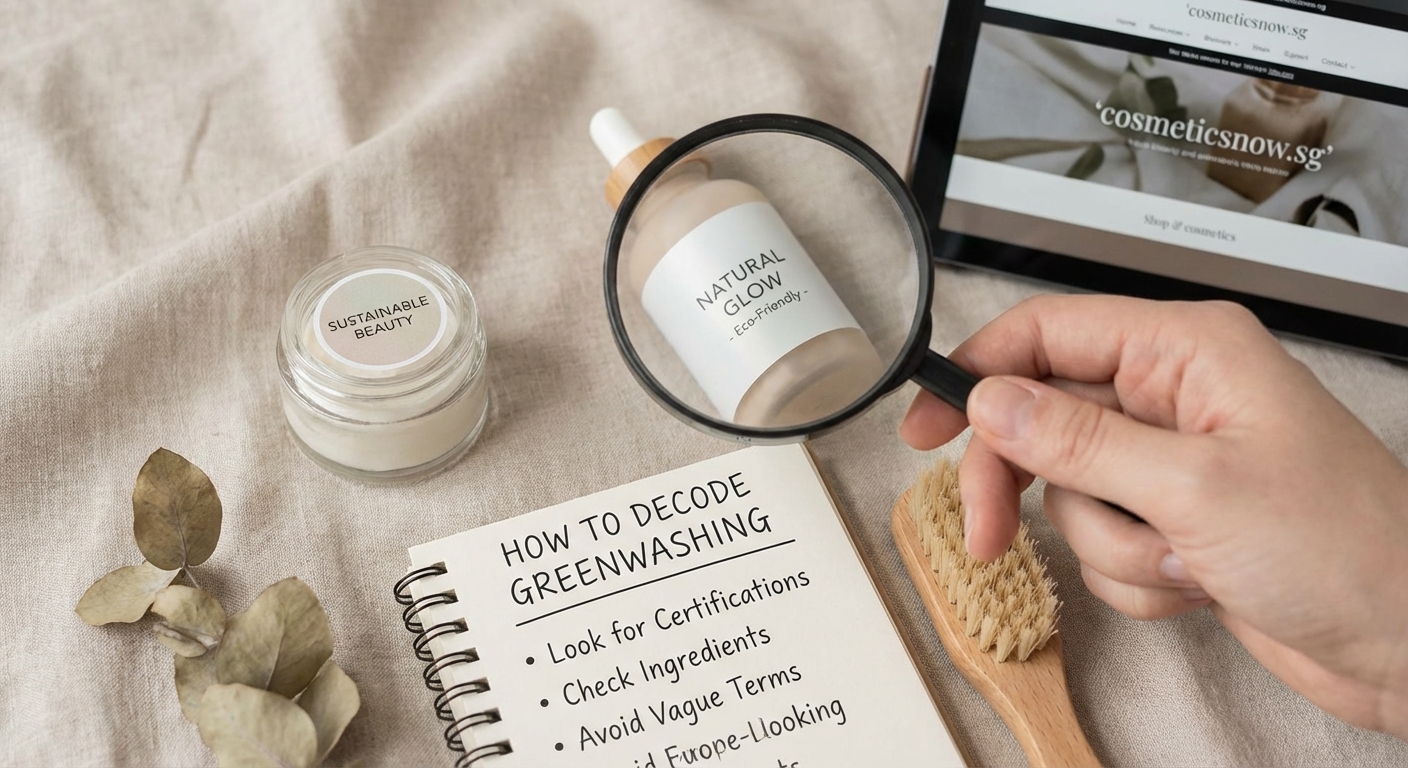
You’re standing in the beauty aisle, comparing two moisturizers. One has leaves all over the packaging. The other says “natural” in forest green letters. Both claim to save the planet. But here’s the thing: one might actually be worse for the environment than conventional products, and the companies know you probably won’t check.
Greenwashing in beauty products relies on vague language, misleading imagery, and selective disclosure to appear eco-friendly without meaningful environmental action. Learning to recognize certification logos, demand ingredient transparency, research parent companies, and question sustainability claims helps you make genuinely ethical purchases. Real sustainable brands provide specific data, third-party verification, and honest communication about their environmental impact rather than relying on green packaging alone.
Vague claims are the biggest warning sign
“Eco-friendly.” “Natural.” “Clean.” “Green.”
These words appear on thousands of beauty products. They sound great. They mean almost nothing.
The beauty industry isn’t heavily regulated when it comes to environmental claims. Brands can slap “natural” on products with only 1% plant-derived ingredients. They can print “eco-conscious” on packaging made from virgin plastic.
Here’s what to watch for:
- Claims without specific percentages or measurements
- Words like “made with natural ingredients” (but how much?)
- “Eco-friendly packaging” without explaining what makes it eco-friendly
- “Clean beauty” with no definition of what that means for the brand
Real sustainable brands get specific. They’ll say “87% organic ingredients” or “packaging made from 100% post-consumer recycled plastic.” They give you numbers you can verify.
The packaging trick that fools everyone
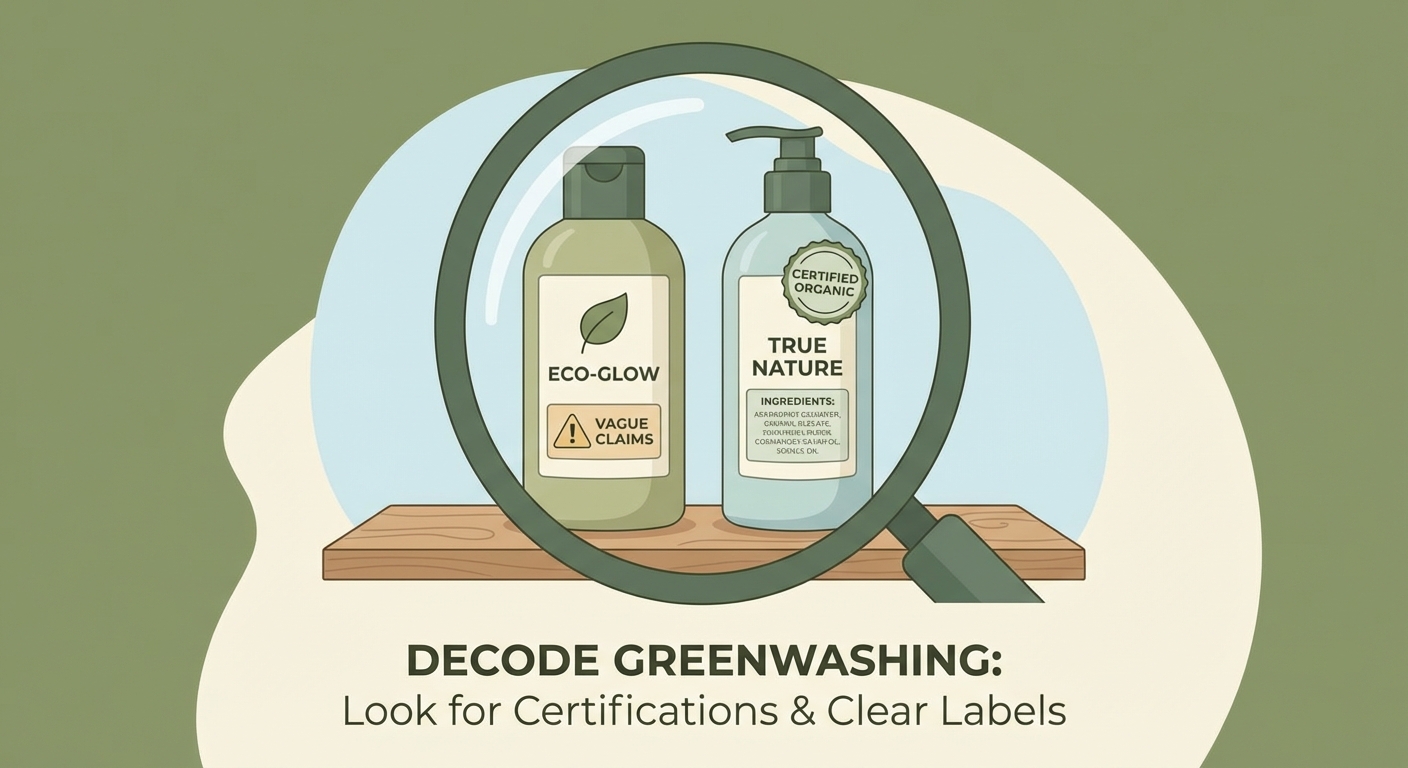
Green bottles. Kraft paper boxes. Leaf illustrations everywhere.
This is visual greenwashing, and it’s incredibly effective.
A study found that consumers associate earth tones and nature imagery with environmental responsibility, even when the product inside has zero sustainable attributes. Brands know this. They design packaging to trigger your eco-conscious feelings without changing their actual practices.
Check these elements:
- Is the “recyclable” symbol there, but the packaging is actually mixed materials that can’t be recycled?
- Does the box look like cardboard but feel suspiciously glossy (probably coated in plastic)?
- Are there leaves and trees on a product made entirely from synthetic ingredients?
- Is the bottle green-tinted plastic instead of actually recycled material?
Some brands even use excessive packaging to make products look premium and “natural.” That beautiful box with tissue paper and a leaflet? It’s creating more waste, not less. When you’re building a sustainable beauty routine, packaging matters as much as ingredients.
Hidden parent companies tell the real story
That small “indie” brand with the gorgeous sustainability story? It might be owned by a massive corporation with a terrible environmental record.
This is one of the sneakiest forms of greenwashing. Large companies buy up smaller sustainable brands, keep the eco-friendly marketing, but slowly change formulations and practices to increase profits.
Here’s how to check:
- Search “[brand name] parent company” online
- Look at the parent company’s environmental record and controversies
- Check if the brand’s practices changed after acquisition
- See if the parent company has conflicting product lines (selling both “natural” and heavily synthetic products)
A truly sustainable company usually maintains consistent values across all their brands. If the parent company produces conventional beauty products with known environmental issues, that “green” subsidiary might just be a marketing strategy.
Certifications matter, but not all of them
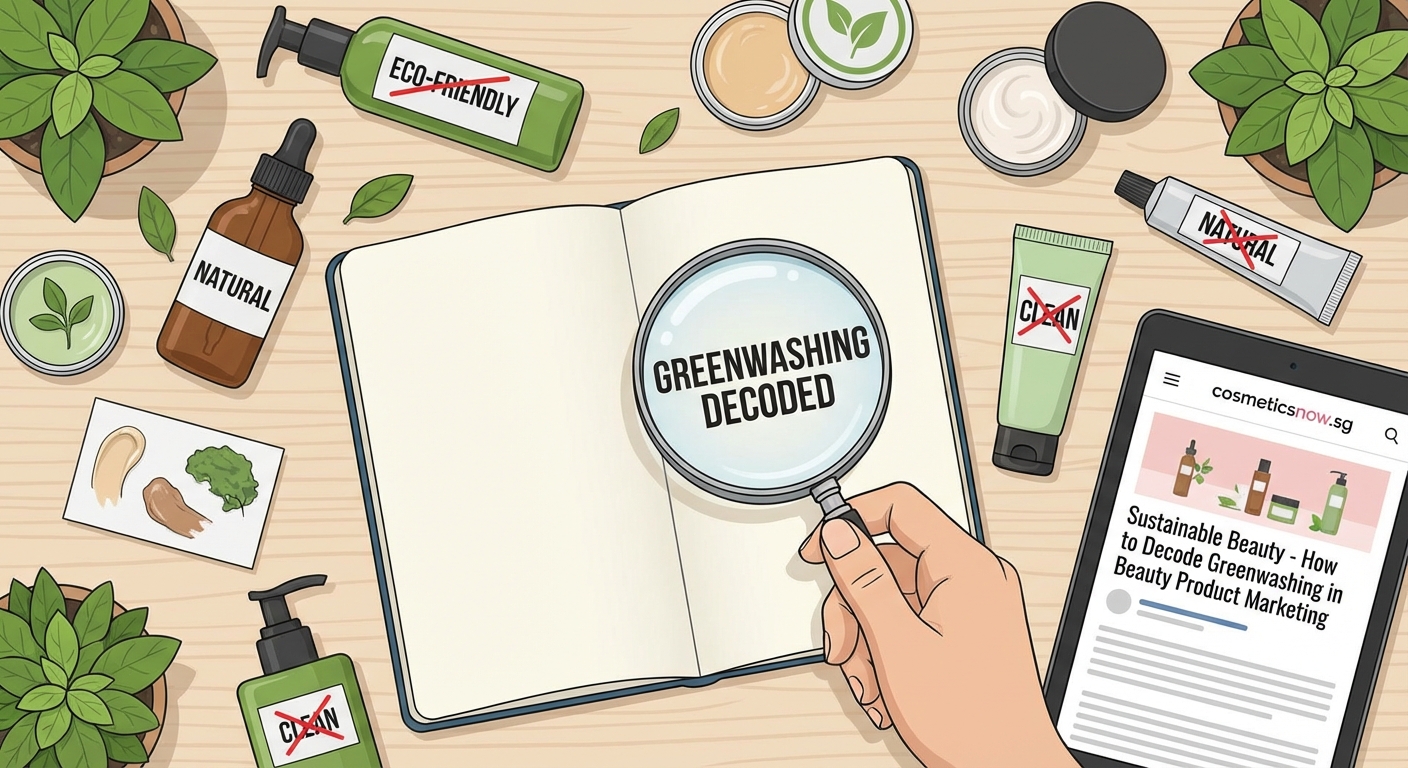
You see a seal on the bottle. It looks official. It must mean something, right?
Sometimes. Other times, it’s a logo the brand made up themselves.
Real certifications require third-party verification, regular audits, and specific standards. Fake ones just require a graphic designer.
| Legitimate Certification | What It Actually Verifies | Red Flag “Certifications” |
|---|---|---|
| USDA Organic | 95%+ organic ingredients, strict farming standards | “Naturally derived” badges with no certifying body |
| Leaping Bunny | No animal testing at any production stage | “Cruelty-free” without external verification |
| B Corp | Social and environmental performance standards | Generic “eco-friendly” seals |
| EWG Verified | Ingredient safety and transparency | “Dermatologist approved” (doesn’t mean sustainable) |
| Cradle to Cradle | Product lifecycle and recyclability | “Green certified” without naming the certifier |
Look for the certifying organization’s name. If you can’t find who issued the certification, it’s probably meaningless. Real certifications have websites where you can verify a brand’s status.
The ingredient list reveals everything
Brands love to highlight one or two “natural” ingredients on the front of the package while hiding dozens of problematic ones in the fine print.
“Infused with organic rosehip oil!” sounds great until you realize it’s ingredient number 23 out of 30, meaning there’s barely any in the formula.
“If a brand truly cares about sustainability, they’ll be transparent about their entire ingredient list, not just the marketable ones. Check what comes first. Those are the ingredients that actually make up most of the product.” – Environmental Cosmetics Researcher
Ingredients are listed by concentration. The first five ingredients typically make up 70-90% of the product. If you see water, synthetic polymers, and petroleum derivatives at the top, followed by one botanical extract at the bottom, that’s greenwashing.
Also watch for:
- “Fragrance” or “parfum” (can hide hundreds of undisclosed chemicals)
- Multiple names for the same synthetic ingredient
- Tiny amounts of expensive natural ingredients listed prominently
- Absence of preservatives (products need them; claiming otherwise is misleading)
Carbon neutral claims need backup
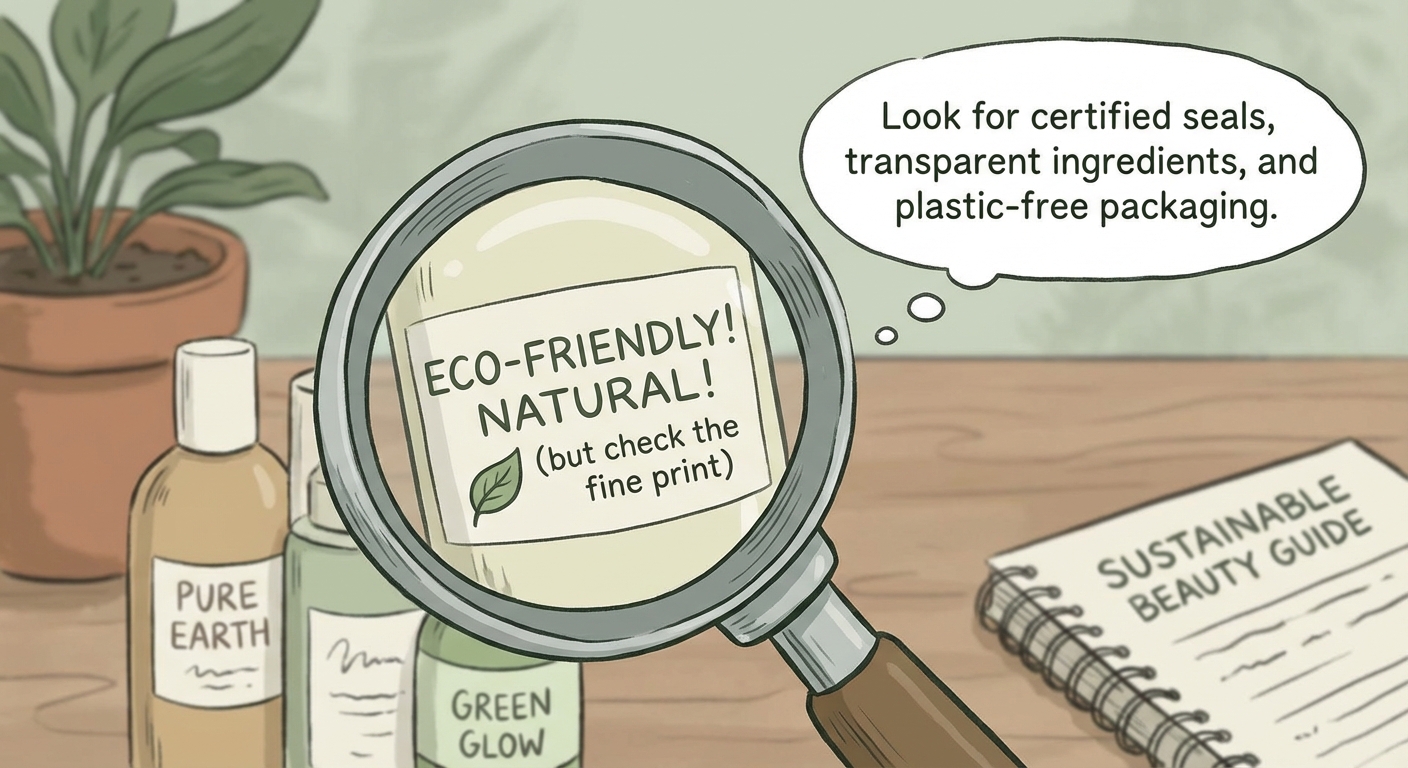
“Carbon neutral shipping!” “Net zero by 2030!” “Climate positive brand!”
These claims sound impressive. They’re also easy to fake.
Many brands achieve “carbon neutrality” by purchasing cheap carbon offsets rather than actually reducing emissions. Some offsets fund projects that would have happened anyway. Others support tree-planting initiatives that fail within a few years.
Real climate action includes:
- Specific emission reduction targets with yearly progress reports
- Transparency about what percentage of “neutrality” comes from offsets versus actual reduction
- Third-party verification of carbon calculations
- Details about the offset projects and their effectiveness
If a brand claims carbon neutrality but won’t share their methodology, that’s a red flag. Genuine sustainable brands publish sustainability reports with actual data. They’ll tell you their current emissions, their reduction strategies, and exactly how they’re measuring progress.
The refill and recycling illusion
“Refillable packaging!” sounds sustainable. But is it really?
Some brands offer refills that cost almost as much as buying new, making them impractical for most consumers. Others create refill systems that require special trips to specific stores. The friction is intentional. It lets them claim sustainability while knowing most customers will just buy new products.
Similarly, “recyclable” packaging means nothing if your local recycling facility can’t actually process it. Beauty packaging often combines materials (plastic pumps on glass bottles, metallic labels on plastic tubes) that make recycling impossible.
Questions to ask:
- Are refills actually cheaper and easier to access?
- Can I recycle this in my standard curbside pickup, or does it require special facilities?
- Are the different materials separable for proper recycling?
- Does the brand offer a take-back program?
Some brands like those focusing on zero-waste makeup routines have figured out truly sustainable refill systems. They make refills significantly cheaper, widely available, and genuinely reduce waste. That’s the standard to look for.
Selective sustainability is still greenwashing
A brand might genuinely use sustainable palm oil while still using excessive plastic packaging. They’ll advertise the palm oil achievement everywhere while staying quiet about the plastic problem.
This is cherry-picking. They’re highlighting one sustainable practice to distract from multiple unsustainable ones.
Watch for brands that:
- Talk endlessly about one ingredient source while ignoring manufacturing impact
- Focus on product sustainability but use excessive shipping materials
- Highlight renewable energy in one facility while operating others conventionally
- Emphasize recyclable bottles but fill them with environmentally harmful formulations
True sustainability addresses the entire lifecycle: ingredient sourcing, manufacturing, packaging, shipping, product use, and disposal. A brand focused on only one aspect is likely greenwashing the rest.
Testing the brand’s commitment
The easiest way to spot greenwashing? Ask specific questions.
Email the brand. Ask about their sustainability practices. Request data.
Genuine sustainable brands love these questions. They’ll send you detailed answers, link to reports, and appreciate your interest. Greenwashing brands will send vague marketing language or ignore you entirely.
Try these questions:
- What percentage of your packaging is actually recycled versus recyclable?
- Can you share your most recent sustainability report?
- What specific steps have you taken to reduce emissions this year?
- How do you verify your suppliers meet your environmental standards?
- What are your biggest sustainability challenges right now?
That last question is particularly revealing. Honest brands will admit they’re still working on certain areas. Greenwashing brands will claim everything is perfect.
The price point paradox
Here’s an uncomfortable truth: genuinely sustainable beauty products usually cost more.
Sustainable ingredient sourcing, ethical labor, eco-friendly packaging, and transparent supply chains are expensive. If a brand claims to be completely sustainable while pricing products at conventional beauty prices, something doesn’t add up.
This doesn’t mean all expensive products are sustainable (plenty of luxury brands greenwash too). But if a brand is significantly cheaper than others making similar claims, investigate why.
Some legitimate reasons for lower prices:
- Direct-to-consumer model cutting out retailer markups
- Simpler formulations with fewer ingredients
- Minimal packaging (actually sustainable, not just marketed that way)
- Newer brand still building market share
But if they’re cheap AND have elaborate packaging AND claim premium sustainable ingredients AND offer constant sales? That’s mathematically impossible without cutting corners somewhere.
Social media reveals the truth
Check a brand’s social media comments and reviews. Look for customers asking about sustainability practices.
How does the brand respond?
- Do they provide specific information?
- Do they acknowledge limitations honestly?
- Do they engage meaningfully or copy-paste marketing language?
- Do they delete critical comments?
Also look at what the brand posts about. Genuinely sustainable brands regularly share:
- Behind-the-scenes looks at their facilities and processes
- Updates on sustainability goals with actual progress metrics
- Educational content about environmental issues
- Honest discussions about challenges and failures
Greenwashing brands post aesthetically pleasing photos of products in nature, inspirational quotes about the earth, and vague statements about “doing better” without specifics. If you’re trying to spot genuine eco-friendly innovations, their content will tell you everything.
The six-month test
Real sustainability takes time. Greenwashing is reactive.
When a sustainability trend hits the news, watch how brands respond. Genuine sustainable brands were already working on these issues. They have infrastructure and practices in place. They can provide immediate, detailed information about their existing efforts.
Greenwashing brands suddenly announce new initiatives that won’t launch for months or years. They make vague commitments without timelines. They jump on every trend without follow-through.
Track brands over six months:
- Did they deliver on promised initiatives?
- Are they still talking about the sustainability issue, or did they move on to the next trend?
- Have they published measurable progress?
- Do they acknowledge when they fall short of goals?
Consistency matters more than perfection.
Building your greenwashing detection toolkit
You don’t need to become an environmental scientist to spot greenwashing. You just need a systematic approach.
Before buying any “sustainable” beauty product:
- Read the full ingredient list, not just the marketing claims
- Search for third-party certifications and verify them
- Research the parent company’s environmental record
- Look for specific data rather than vague claims
- Check if the brand publishes regular sustainability reports
- Read customer reviews mentioning sustainability
- Compare the brand’s claims to their actual practices
Save time by following independent beauty sustainability reviewers and organizations. They do the deep research and call out greenwashing publicly.
Also remember that no brand is perfect. Even genuinely sustainable companies have areas they’re still improving. The difference is honesty. Look for brands that acknowledge their challenges and show consistent progress, not ones claiming to have solved everything.
Making your shopping count
Learning to spot greenwashing protects more than just your wallet. Every purchase is a vote for the kind of beauty industry you want to see.
When you buy from genuinely sustainable brands, you’re funding better practices. When you call out greenwashing, you’re pushing brands to do better. When you share what you’ve learned, you’re helping others make informed choices.
Start with one category. Maybe it’s your daily skincare routine. Research the products you use most often. Replace them one at a time with genuinely sustainable alternatives. You don’t have to overhaul everything at once.
The beauty industry changes when customers demand transparency. Your questions matter. Your choices matter. And your willingness to look past pretty packaging to the truth behind it matters most of all.