Your bathroom shelf probably looks like a plastic bottle graveyard. Shampoo, conditioner, body wash, face cleanser. Each one comes in its own container, and most of them end up in landfills. The beauty industry produces over 120 billion units of packaging every year, and a massive chunk of that is non-recyclable plastic. But there’s a shift happening. Solid beauty bars are popping up everywhere, promising the same results without the waste. The question is, do they actually work as well as their liquid counterparts?
Solid beauty bars eliminate plastic packaging while delivering comparable or superior performance to bottled products. They last longer, travel easier, and cost less per use. The switch requires minor adjustments in application technique, but most users adapt within days. Quality matters more than format, making informed product selection essential for success.
Understanding the real difference between solid bars and liquid bottles
The gap between solid beauty bars vs plastic bottles isn’t just about packaging. The formulations differ fundamentally.
Liquid products need preservatives to stay stable. Water creates the perfect breeding ground for bacteria and mold. That’s why your shampoo bottle lists parabens, phenoxyethanol, or other antimicrobial agents. Solid bars skip this problem entirely. Without water, microbes can’t thrive.
This changes the ingredient list dramatically. A solid shampoo bar can pack more active ingredients into a smaller space. No need for fillers or stabilizers. You’re paying for performance, not water weight.
The concentration difference is real. One solid bar typically equals two to three plastic bottles of product. That small puck in your hand contains the same cleansing power as multiple liquid versions. Your money goes further, and your cabinet stays clearer.
Why plastic bottles became the beauty standard in the first place
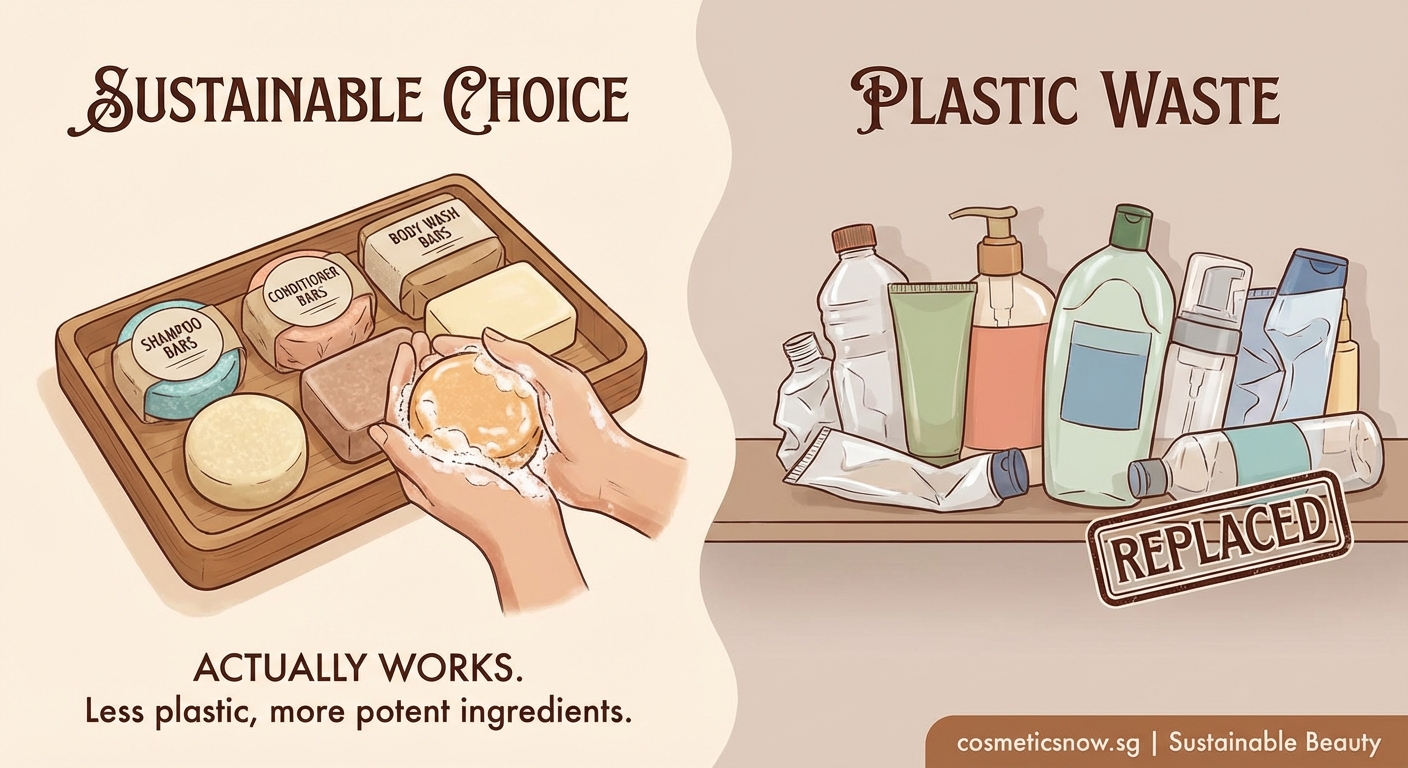
Plastic bottles took over beauty aisles for practical reasons. They’re cheap to manufacture, easy to ship, and familiar to consumers. The pump mechanism feels luxurious. The transparent container lets you see exactly how much product remains.
Marketing teams loved plastic. Bigger bottles looked like better value, even when filled mostly with water. Sleek packaging photographs beautifully for advertisements. The weight feels substantial in your hand, creating a perception of quality.
But convenience came with consequences. Most bathroom plastics aren’t recyclable through standard programs. The pump mechanisms contain multiple materials that can’t be separated. Even bottles marked with recycling symbols often end up in landfills because facilities can’t process them economically.
The beauty industry recognized this problem years ago. Some brands introduced recycling programs, but participation rates stayed low. Consumers needed a solution that didn’t require extra steps or special drop-off locations.
Making the switch from bottles to bars without compromising results
Transitioning to solid beauty bars requires adjusting your technique. The application differs from squeezing liquid into your palm.
Here’s how to get the best performance from each bar type:
- Wet your hair or skin thoroughly before applying the bar directly
- Rub the bar in circular motions to create lather or product buildup
- Set the bar aside and work the product through with your hands
- Rinse completely, as concentrated formulas can leave residue if rushed
- Store bars on a draining dish to prevent mushiness between uses
The learning curve lasts about a week for most people. Your hands need to remember new movements. The sensory experience feels different. But the actual cleaning power matches or exceeds bottled versions when you use proper technique.
Building a sustainable beauty routine doesn’t mean sacrificing effectiveness. It means choosing products formulated intelligently from the start.
Product categories where bars outperform bottles
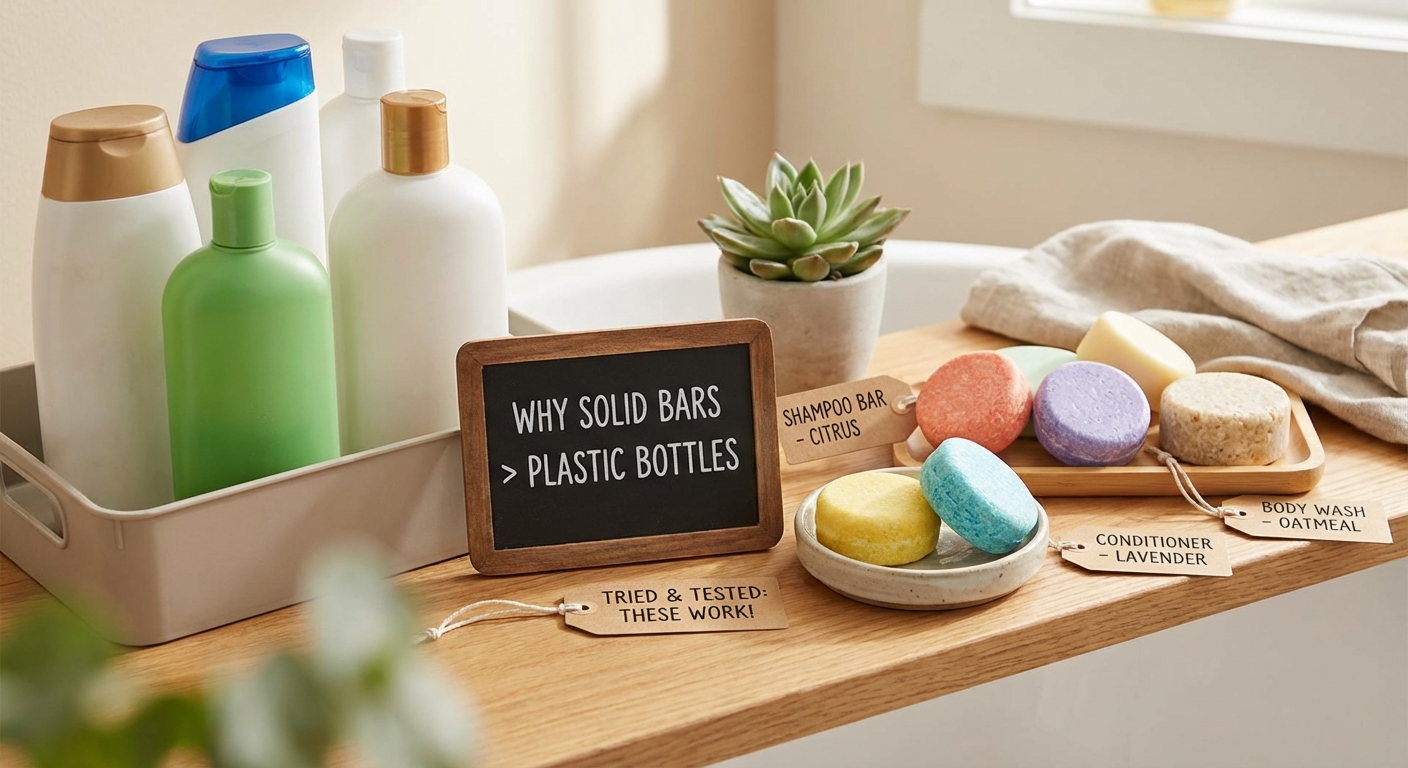
Some beauty categories translate to bar format better than others. Understanding these differences helps you prioritize your switches.
Shampoo bars work exceptionally well for most hair types. The concentrated formula cleans effectively without stripping natural oils. Many users report improved scalp health after switching, possibly because bars contain fewer irritating additives.
Body cleansers in bar form last significantly longer than shower gel. A quality bar survives 60-80 showers easily. The solid format also makes travel-friendly beauty routines much simpler, since bars don’t count toward liquid limits.
Face cleansers require more careful selection. Skin reacts differently to concentrated formulas. Look for bars specifically designed for facial use, not multi-purpose options. The pH balance matters more here than anywhere else.
Conditioner bars get mixed reviews. Hair length and texture determine success rates. People with very long or curly hair sometimes struggle with even distribution. Those with shorter styles often prefer bars for their simplicity.
Common mistakes people make when trying solid beauty bars
Switching formats sounds simple, but several pitfalls trip up newcomers.
| Mistake | Why it happens | Better approach |
|---|---|---|
| Leaving bars in standing water | Convenient shower placement | Use a draining soap dish or wall-mounted holder |
| Applying to dry skin or hair | Following bottle product habits | Always wet thoroughly first for proper activation |
| Expecting identical lather | Comparing to sulfate-heavy liquids | Judge by clean feeling, not bubble volume |
| Using too much product | Overcompensating for unfamiliarity | Start small and add more only if needed |
| Storing multiple bars together | Saving space | Keep bars separate to prevent color/scent transfer |
The storage issue deserves special attention. A soggy bar dissolves faster and performs worse. Proper drainage between uses extends lifespan dramatically. Some people keep bars in different rooms to ensure they dry completely.
“The biggest complaint I hear about solid bars is mushiness, and it’s always a storage problem, not a product problem. A bar that drains properly can last three months. The same bar sitting in water might last three weeks.” – Professional esthetician with 15 years of experience
Breaking down the actual cost comparison over time
Price tags deceive when comparing solid beauty bars vs plastic bottles. The initial purchase price tells only part of the story.
A typical drugstore shampoo bottle costs $8 and lasts about 6 weeks with daily use. That’s roughly $1.33 per week.
A quality shampoo bar costs $12-15 and lasts 10-12 weeks with the same usage pattern. That works out to $1.00-1.25 per week.
The savings multiply across your entire routine. Replacing shampoo, conditioner, body wash, and face cleanser with bar equivalents saves $100-150 annually for a single person. Families see even bigger differences.
Transportation costs factor in too. Shipping heavy water-filled bottles burns more fuel than compact bars. Some brands pass these savings to customers through lower prices or free shipping thresholds.
Environmental impact beyond just the plastic waste
The sustainability conversation extends past packaging. Manufacturing processes, ingredient sourcing, and end-of-life disposal all matter.
Water usage during production differs dramatically. Liquid products require water as an ingredient, plus water for cleaning manufacturing equipment between batches. Solid bars eliminate the first requirement and reduce the second.
Carbon footprints shrink with bars. Lighter shipping weights mean fewer trucks and lower emissions. Concentrated products require less warehouse space, reducing the energy needed for climate control.
Ingredient sourcing plays a role too. Many bar manufacturers prioritize plant-based ingredients that biodegrade safely. Liquid formulas often include synthetic compounds that persist in water systems after going down the drain.
Understanding the hidden environmental costs of your beauty routine reveals impacts you might not have considered.
Which solid bars actually deliver on their promises
Not all bars perform equally. Quality varies wildly across brands and price points.
For shampoo bars, look for these features:
– pH balanced formulas (4.5-5.5 for most hair types)
– Clear ingredient lists without hidden sulfates
– Specific formulations for your hair needs (color-treated, curly, fine, etc.)
– Minimal fragrance if you have sensitive skin
Conditioner bars need different criteria:
– Emollient-rich formulas with natural oils
– Protein additions for damaged hair
– Lightweight options for fine hair types
– Heavier formulations for thick or coarse textures
Body cleansing bars should include:
– Moisturizing ingredients like shea butter or coconut oil
– Gentle surfactants that don’t strip skin
– Exfoliating options for rough patches
– Unscented varieties for sensitive skin
Facial cleansing bars require the most scrutiny:
– Dermatologist-tested formulations
– Non-comedogenic ingredients
– Targeted solutions for acne, dryness, or aging
– Proper pH levels that won’t disrupt skin barrier
Testing different brands helps you find what works for your specific needs. Many companies offer sample sizes or variety packs for this purpose.
Adapting your shower routine for maximum bar efficiency
Your shower setup needs minor modifications to accommodate solid products effectively.
Install a multi-tier soap holder that keeps bars separate and draining. Wall-mounted options work better than corner shelves because air circulates around all sides.
Consider a small mesh bag for shampoo bars. Rubbing the bag through your hair distributes product more evenly than direct application. The bag also extends bar life by preventing small pieces from washing away.
Temperature matters more with bars than bottles. Very hot water softens bars quickly, leading to waste. Lukewarm water activates the formula without causing excessive melting.
Timing your routine differently can help too. Apply your shampoo bar, set it aside to dry while you wash your body, then rinse your hair. This prevents the bar from sitting in running water unnecessarily.
Addressing specific concerns for different hair and skin types
Individual biology determines how well you’ll adapt to solid beauty bars.
Oily hair types often see the fastest improvements. Bars clean thoroughly without over-stripping, which can actually reduce oil production over time. The scalp adjusts to gentler cleansing within 2-3 weeks.
Dry or damaged hair needs moisture-rich formulations. Look for bars containing argan oil, avocado oil, or shea butter. Some people alternate between a cleansing bar and a conditioning bar for optimal results.
Curly or textured hair requires extra attention to conditioning. The bar format makes it harder to achieve slip for detangling. Applying conditioner bar to very wet hair helps, as does following with a leave-in product.
Sensitive skin benefits from unscented, minimal-ingredient bars. Patch test new products on your inner arm before using on your face or scalp. Protecting your skin barrier becomes easier when you eliminate unnecessary additives.
Acne-prone skin should seek bars with salicylic acid or tea tree oil. Avoid heavy moisturizing bars on your face, saving those for body use only.
The truth about transition periods and adjustment symptoms
Switching from bottles to bars can trigger temporary changes in your skin and hair. Understanding these helps you push through instead of giving up prematurely.
Many people experience an adjustment period lasting 1-3 weeks. Your scalp might produce more oil initially as it recalibrates from harsh sulfates to gentler cleansing. This is normal and temporary.
Hair texture might feel different at first. Bars don’t coat hair with silicones like many bottled products do. Your natural texture emerges, which can feel strange if you’ve used conventional products for years.
Skin might react to the concentration difference. If you experience dryness, you’re probably using too much product or not rinsing thoroughly enough. If you notice breakouts, the bar might be too heavy for your skin type.
These adjustment symptoms don’t mean bars don’t work for you. They mean your body is adapting to a different formulation. Most issues resolve within a month.
Creating a complete bar-based beauty routine that actually works
Building an entire routine around solid products requires strategic planning.
Start with one product category. Master shampoo bars before adding conditioner bars. Get comfortable with body bars before attempting facial cleansers. This staged approach prevents overwhelm.
Keep one backup bottle of your old product during the transition. If you have an important event and don’t want to risk a bad hair day, you have a safety net. This reduces pressure and anxiety about the switch.
Your morning skincare routine can incorporate solid cleansers easily. The time difference is minimal once you develop muscle memory for the application technique.
Mix formats strategically. Some products work better in liquid form for your specific needs. That’s fine. Reducing plastic by 80% still makes a significant impact. Perfection isn’t required.
Track your usage to understand true costs and environmental savings. Note when you start each bar and when it runs out. This data helps you make informed purchasing decisions and appreciate the longevity difference.
Smart storage solutions that extend bar lifespan
Proper storage transforms bar performance and longevity.
Between uses, bars need complete drainage. Soap dishes with raised ridges work better than flat surfaces. The more airflow underneath, the faster bars dry.
Bathroom humidity affects bars significantly. If possible, store bars outside the shower between uses. A small basket on your bathroom counter works perfectly.
For travel, let bars dry completely before packing. Wrap them in beeswax wraps or store in metal tins with ventilation holes. Plastic bags trap moisture and create mush.
Multiple users sharing a shower should have separate storage areas for their bars. This prevents cross-contamination and ensures each bar dries properly between uses.
Consider a rotation system if you use multiple bars for different purposes. Label storage containers clearly to avoid confusion, especially if bars look similar.
Why some people return to bottles and how to avoid their mistakes
Understanding common failure points helps you succeed where others quit.
The most frequent complaint involves inconvenience. People miss the pump-and-go simplicity of bottles. Combat this by optimizing your storage setup from day one. Make bars as accessible as bottles were.
Inconsistent results frustrate some users. This usually stems from technique issues, not product quality. Watch tutorial videos specific to your hair or skin type. Small adjustments in application method make huge differences.
Family resistance derails many transitions. Get buy-in before switching shared products. Let each person choose their own bar varieties. The investment in personal preference pays off in sustained usage.
Unrealistic expectations cause disappointment. Bars won’t transform damaged hair into perfect locks overnight. They’re a delivery system for ingredients, not magic. Judge them by the same standards you’d apply to bottled products.
Price sensitivity makes some people choose the cheapest bars available. These often perform poorly, confirming negative assumptions about all bars. Invest in quality products from reputable brands, at least initially.
Finding your perfect bar matches through smart testing
Selecting the right bars for your needs requires experimentation, but you can minimize waste and expense.
Read ingredient lists carefully. If a bottled product works well for you, find a bar with similar active ingredients. The format matters less than the formulation.
Start with variety packs when available. Many brands offer sampler sets with multiple bar types. This lets you test different formulas without committing to full-size purchases.
Join online communities focused on sustainable beauty. Members share detailed reviews and recommendations based on specific hair and skin types. Their experiences help you avoid costly mistakes.
Pay attention to your body’s feedback. Improved scalp health, reduced irritation, or better hair texture indicate you’ve found a good match. Negative changes signal the need to try something different.
Give each bar a fair trial period of at least two weeks. Initial impressions can mislead as your body adjusts to new formulations.
Making bars work for your entire household
Families face unique challenges when switching to solid beauty bars.
Children adapt easily to bars, often preferring them to bottles. The novelty appeals to kids, and the no-spill format reduces bathroom messes. Choose mild, tear-free formulas for young ones.
Teenagers might resist initially due to peer pressure or attachment to specific brands. Let them research sustainable options themselves. Zero-waste beauty routines often appeal to socially conscious teens.
Elderly family members might struggle with grip strength needed to handle bars. Look for bars with embedded ropes or handles. Alternatively, use the mesh bag method mentioned earlier for easier handling.
Partners with very different hair or skin types need separate products. Color-code storage containers or use labeled dishes to prevent mix-ups.
Budget the transition over several months. Replace bottles with bars as products run out naturally. This spreads the cost and prevents waste from discarding half-full bottles.
Your bathroom cabinet transformation starts with one bar
The shift from plastic bottles to solid beauty bars doesn’t require a complete overnight overhaul. Start with whichever product you use most frequently. Master that switch, then add another category. Within a few months, you’ll have transformed your routine without the stress of dramatic change.
The environmental impact of your choice extends beyond your bathroom. Every bar you choose instead of a bottle sends a market signal. Brands notice purchasing patterns. Your wallet votes for the kind of products you want companies to make.
Performance matters more than format. A poorly formulated bar serves nobody, regardless of its sustainability credentials. Choose quality products that work for your specific needs, and the plastic reduction becomes a bonus rather than a compromise.
Your shower routine can be just as effective, just as luxurious, and significantly more sustainable. The bars are ready when you are.