The leaves are changing, the air is getting crisp, and your summer makeup suddenly feels wrong. Your dewy bronzer looks out of place. Your bright coral lipstick doesn’t match the mood anymore. But here’s the good news: you don’t need to replace everything in your makeup bag. With a few simple adjustments and creative techniques, you can transform your warm-weather products into a perfect fall routine.
You can successfully transition makeup from summer to fall without purchasing new products by adjusting application techniques, layering existing shades, and modifying textures. Switch from dewy to matte finishes, deepen light colors with mixing, change placement strategies, and adapt your skincare base. These budget-friendly methods help you create seasonally appropriate looks using what you already own.
Adjust Your Base for Cooler Weather
Fall air is different. It’s drier, cooler, and your skin responds accordingly.
Your summer foundation routine probably focused on oil control and staying matte. Fall requires the opposite approach. Your skin needs more hydration now.
Start by switching your moisturizer application. Apply a richer layer before makeup. Wait three minutes for absorption. This creates a smoother canvas without changing your actual foundation.
If your summer foundation feels too light now, mix a tiny drop of your winter shade with it. No winter shade? Use a small amount of bronzer mixed directly into your foundation. This warms up the color without buying anything new.
The complete step-by-step guide to building your first skincare routine can help you understand how to layer products for maximum effectiveness.
Your application method matters too. Summer calls for light, barely-there coverage. Fall lets you build more. Use a damp sponge instead of a brush for fuller coverage from the same foundation. The moisture in the sponge changes how the product sits on your skin.
Transform Your Summer Colors Into Fall Shades
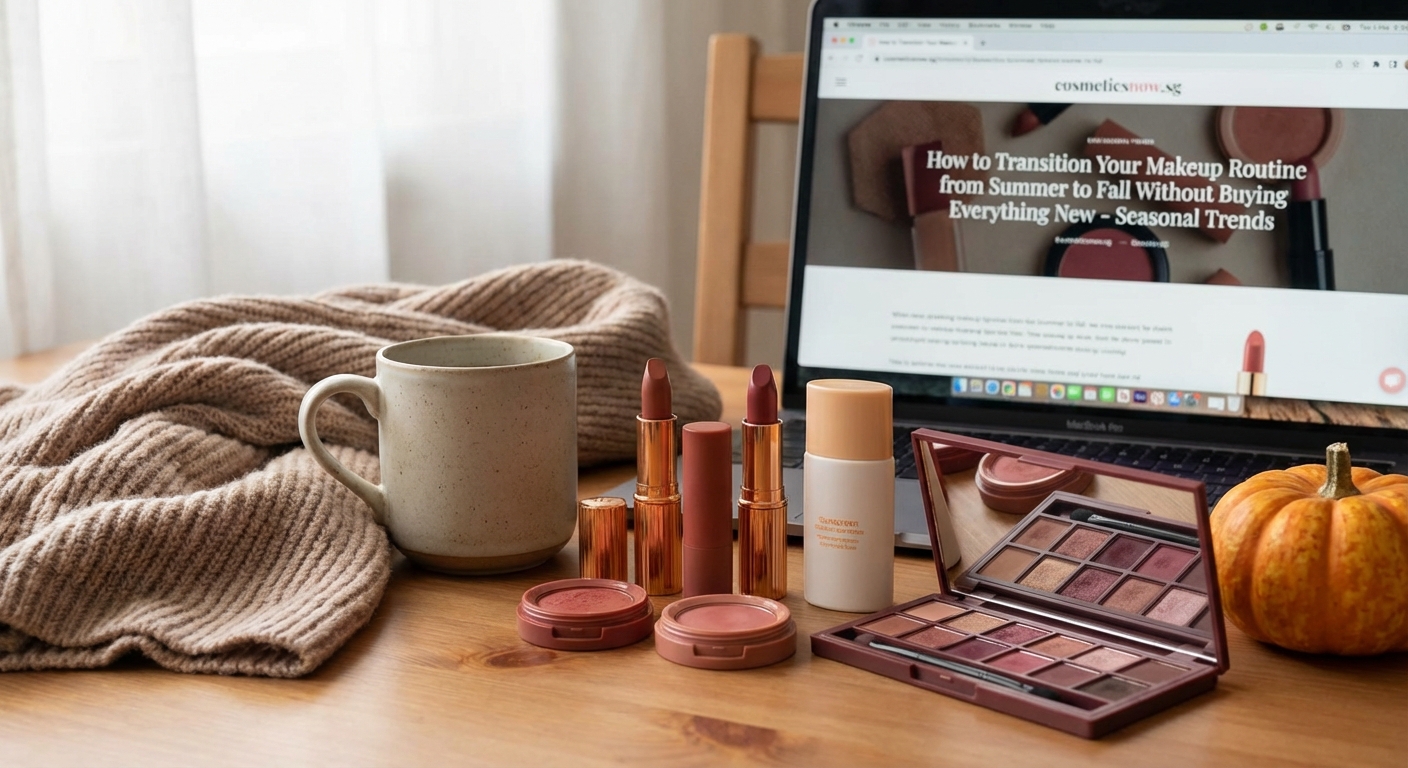
That bright pink blush doesn’t need to disappear. It just needs company.
Layer your summer blush under a deeper shade you already own. Apply the bright color first, then dust a berry or mauve tone over it. The result? A complex, dimensional flush that looks intentional and seasonal.
Your coral lipstick can become the perfect fall nude. Apply it, then press a deeper berry or brown shade over the center of your lips. Blend slightly. The coral creates warmth underneath while the darker shade gives fall vibes.
Here’s a mixing guide for common summer shades:
| Summer Product | What to Layer Over It | Result |
|---|---|---|
| Bright pink blush | Mauve or plum blush | Deep rose flush |
| Coral lipstick | Brown or berry lip color | Warm autumn nude |
| Golden highlighter | Bronze eyeshadow | Subtle contour |
| Light peach eyeshadow | Taupe or brown shadow | Soft smoky eye |
| Shimmery bronzer | Matte bronzer | Dimensional warmth |
Don’t throw away those shimmery summer products either. They work beautifully as eyeshadow bases in fall. Apply your glittery gold highlighter on your lids, then press matte brown shadows over it. The shimmer peeks through for depth without looking too sparkly.
Change Where You Apply Products
Placement changes everything.
Your summer bronzer went on your cheekbones, temples, and nose. In fall, move it lower. Apply it under your cheekbones instead of on top. This creates shadow rather than sun-kissed warmth.
Blush placement shifts too. Summer blush sits high on the apples of your cheeks. Fall blush goes slightly lower and extends toward your ears. This creates a sophisticated flush instead of a fresh-from-the-beach glow.
Your highlighter strategy needs adjustment. Summer highlighting focuses on the high points: cheekbones, nose bridge, cupid’s bow. Fall highlighting should be more subtle. Try these alternative placements:
- Inner corners of eyes only
- Just under the arch of your brow
- A tiny dot on your cupid’s bow (not the whole area)
- Center of your eyelids instead of cheekbones
The sunset blush technique shows how placement and blending create completely different effects with the same products.
Modify Textures Without Buying New Products
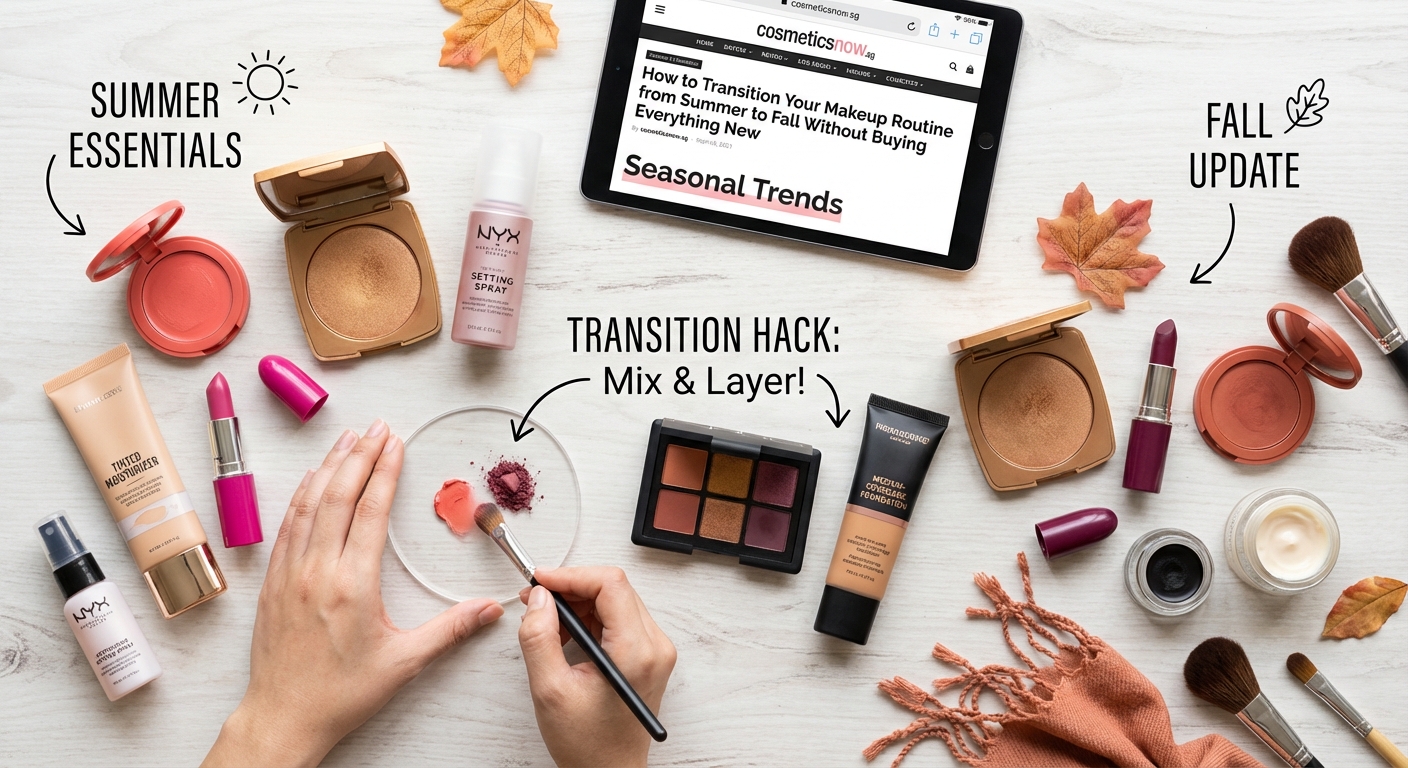
Texture defines the season more than color.
Summer loves dewy, glowy, fresh-faced looks. Fall embraces more matte, velvety finishes. You can change textures using products you already own.
Set your dewy foundation with translucent powder in fall. Not everywhere, just on your T-zone. This keeps some glow while preventing the all-over shine that reads as summery.
Turn cream products into powder finishes by applying them, waiting 30 seconds, then pressing translucent powder over them. This works for cream blushes, highlighters, and even eyeshadows.
Going the other direction? Make powder products creamier by mixing them with your moisturizer or facial oil. This technique works perfectly for:
- Powder blushes that feel too dry for fall skin
- Eyeshadows you want to use as cream shadows
- Bronzers that need to blend more seamlessly
Your setting spray changes everything too. Mist your face before applying powder products in fall. This makes them adhere better and look less dusty on drier skin.
Repurpose Summer Products for Different Uses
That bright eyeshadow palette isn’t useless now. It just has new jobs.
Bright summer eyeshadows become beautiful eyeliners in fall. Wet an angled brush, pick up the shadow, and line your eyes. The color looks more sophisticated and wearable as a liner than as shadow.
Your shimmery body lotion from summer? Mix a pump with your foundation for subtle all-over glow. Or apply it to your collarbones and shoulders for evening looks.
Lip glosses feel too sticky and summery for fall weather. But they make excellent eyeshadow toppers. Apply matte fall shadows, then press clear or nude gloss over the center of your lid. Instant dimension.
“The most sustainable makeup routine isn’t about buying seasonal collections. It’s about learning to see your existing products through different lenses. Every product has at least three uses if you get creative.” – Professional Makeup Artist
Consider these unexpected product swaps:
- Summer bronzer becomes fall eyeshadow
- Bright pink blush becomes lip color when mixed with balm
- Gold highlighter becomes inner corner eye brightener
- Peach eyeshadow becomes cream blush alternative
- Clear lip gloss becomes brow gel
Understanding what’s the correct order to apply your makeup products helps you experiment with these alternative uses more effectively.
Adjust Your Eye Makeup Strategy
Eyes tell the seasonal story more than any other feature.
Summer eye makeup stays light, bright, and minimal. Fall eyes can go deeper and more dramatic without feeling overdone.
Take your summer eyeshadow palette and focus on different shades. Those colors you ignored in summer (the browns, taupes, deeper shades) become your fall stars. The bright colors you loved? They work as pops of color in your inner corner or lower lash line.
Eyeliner application changes seasonally too. Summer often means no liner or just a subtle wing. Fall lets you smoke it out. Apply your liner, then immediately blend it with a small brush before it sets. This creates soft definition instead of harsh lines.
If you want to learn precise application techniques, check out winged eyeliner for beginners for methods that work year-round.
Your mascara application can shift too. Summer calls for separated, natural lashes. Fall lets you build more volume. Apply one coat, let it dry completely, then add a second coat only to the outer lashes. This creates subtle drama.
Master the Art of Lip Color Layering
Lips are the easiest place to show seasonal transition.
Your summer lip colors don’t need to hide until next June. They become the base for more complex fall looks.
Start with your brightest summer shade. Apply it all over your lips. Then take a deeper, more muted color and apply it only to the center of your lips. Press your lips together once. The result is a gradient that feels current and seasonal.
Or try this reverse technique: Apply a deep fall color all over, then press your bright summer shade just in the center. This creates a subtle ombre that makes both colors more wearable.
Lip liner changes everything too. Outline your lips with a brown or mauve liner, then fill in with your summer coral or pink. The liner instantly makes bright colors feel more grounded and appropriate for fall.
Here’s a step-by-step lip layering process:
- Exfoliate lips gently with a damp washcloth
- Apply a thin layer of lip balm and let it absorb
- Line lips with a neutral or slightly darker liner
- Fill in with your summer shade
- Blot once with tissue
- Apply a deeper shade to the center only
- Press lips together to blend
The techniques in how to make your lipstick last all day without touch-ups work perfectly with these layering methods.
Rethink Your Contouring Approach
Contouring serves different purposes in different seasons.
Summer contouring mimics natural shadows from sun exposure. Fall contouring creates structure and definition for lower light conditions.
Use the same bronzer, but change where and how you apply it. Draw it lower on your face. Instead of temples and cheekbones, focus under your jawline and below your cheekbones.
Your application tool matters more in fall. Switch from a fluffy brush to a smaller, more precise brush. This gives you control for sharper definition.
If you have a cream contour product from summer, it still works in fall. Just set it with powder immediately after application. This prevents the creamy texture from looking too dewy.
The guide on contouring 101 shows how face shape affects placement more than season, helping you adapt techniques year-round.
Create Depth With What You Have
Fall makeup is all about dimension and depth.
Layer multiple products in the same family to create complexity. Instead of one brown eyeshadow, use three shades of brown. Instead of one blush, layer two or three.
This doesn’t mean buying more. It means using products you already own in combination. Your bronzer, a brown eyeshadow, and a taupe blush can all work together on your cheeks for a sophisticated fall flush.
Build color gradually. Apply, blend, assess. Apply more, blend again. This prevents the harsh, obvious application that can happen with deeper fall shades.
Your highlighting strategy needs depth too. Instead of one bright highlighter, try layering a subtle champagne shade under a slightly deeper gold. This creates glow that doesn’t look flat or one-dimensional.
Common mistakes to avoid:
- Applying fall colors as heavily as summer shades (start lighter)
- Forgetting to blend between layers (each layer needs blending)
- Using the same brushes for everything (different textures need different tools)
- Skipping primer when layering multiple products (it prevents patchiness)
- Applying powder products over unset cream products (always set first)
Adapt Your Routine for Fall’s Unique Challenges
Fall weather creates specific makeup challenges.
Wind, temperature changes between indoors and outdoors, and drier air all affect how makeup performs. Your summer products can handle these issues with slight modifications.
Set everything more thoroughly. Use setting spray before and after makeup application. This sandwich method locks everything in place despite weather changes.
Carry blotting papers instead of powder for touch-ups. Fall skin tends toward dryness, so adding more powder throughout the day can look cakey. Blotting papers remove excess oil without adding product.
Your makeup removal routine needs adjustment too. Fall makeup often involves more layers and longer-wearing application. The right way to remove makeup without damaging your skin becomes even more important as you layer products.
Reapply lip balm more frequently under your lip color. Fall air strips moisture from lips faster. A hydrated base prevents your lip color from settling into lines or looking patchy.
Seasonal Transition Timeline
You don’t need to change everything at once.
Week one: Adjust your base. Change your moisturizer, modify your foundation application, and update your setting routine.
Week two: Shift your color placement. Keep the same products but move where you apply them.
Week three: Start layering colors. Experiment with combining summer and deeper shades.
Week four: Refine your complete look. Fine-tune what works and adjust what doesn’t.
This gradual approach lets you test techniques without feeling overwhelmed. It also helps you identify which summer products truly work in fall and which ones need to wait until next year.
The concept behind mastering the art of seasonal makeup switches applies here: small, intentional changes create bigger impact than dramatic overhauls.
Make Your Existing Collection Work Harder
Every product in your collection has multiple potential uses.
Your foundation can become concealer when mixed with a heavier cream. Your lipstick becomes cream blush. Your eyeshadow becomes liner, brow powder, or even contour.
This mindset shift saves money and reduces waste. Instead of asking “what do I need to buy for fall,” ask “how can I use what I have differently?”
Create a small palette of your most versatile products. These are items that work across seasons with minor adjustments:
- A neutral brown eyeshadow palette
- A buildable foundation
- A cream product that works on cheeks and lips
- A versatile nude lip liner
- A translucent setting powder
These core items support your seasonal products rather than replace them. They help you modify and adapt without starting from scratch.
Your Fall Makeup Routine Starts Now
You have everything you need already sitting in your makeup bag.
The shift from summer to fall isn’t about replacing products. It’s about reimagining them. Your bright coral lipstick becomes a base for deeper colors. Your dewy highlighter transforms into eyeshadow. Your summer bronzer finds new placement on your face.
Start with one technique from this guide. Maybe it’s layering your summer blush under a deeper shade. Or applying your foundation with a damp sponge for more coverage. Try it for three days and see how it feels.
Then add another technique. Build your fall routine gradually, using what you own in smarter ways. Your wallet will thank you, and you’ll develop skills that make you better at makeup year-round.
The best part? These techniques work in reverse too. When spring arrives, you’ll know exactly how to transition your fall products back to warm-weather looks. Nothing goes to waste. Everything gets used. And you’ll look perfectly polished through every season.