That shimmering glow in your eyeshadow? The subtle luminosity in your foundation? There’s a good chance it comes from mica, a naturally occurring mineral that gives makeup its signature sparkle. But behind that beautiful shimmer lies a complex story of child labor, environmental damage, and questionable sourcing practices that most beauty brands would rather you not know about.
Mica in makeup creates shimmer and glow but often comes from mines using child labor and unsafe conditions. This mineral appears in most cosmetics, from eyeshadows to highlighters. Learning to identify ethically sourced mica and choosing certified brands helps protect vulnerable communities while still enjoying your favorite products. Synthetic alternatives exist but have different performance characteristics worth understanding.
What exactly is mica and why is it everywhere in your makeup bag
Mica is a silicate mineral that splits into thin, flexible sheets. These sheets reflect light, creating the shimmery, glowing effect you see in countless beauty products.
The cosmetics industry uses mica because it’s incredibly versatile. It works in powder formulas, liquid foundations, lip glosses, and cream products. Unlike synthetic alternatives, natural mica gives a soft, diffused glow rather than chunky glitter particles.
You’ll find mica listed on ingredient labels as “mica,” “CI 77019,” or “potassium aluminum silicate.” Sometimes brands use terms like “mineral shimmer” or “natural pearl” to describe mica-based products.
The mineral comes in different grades and particle sizes. Fine-milled mica creates subtle radiance in foundation that looks natural and professional. Larger particles produce intense sparkle in eyeshadows and highlighters.
The uncomfortable truth about where your shimmer comes from
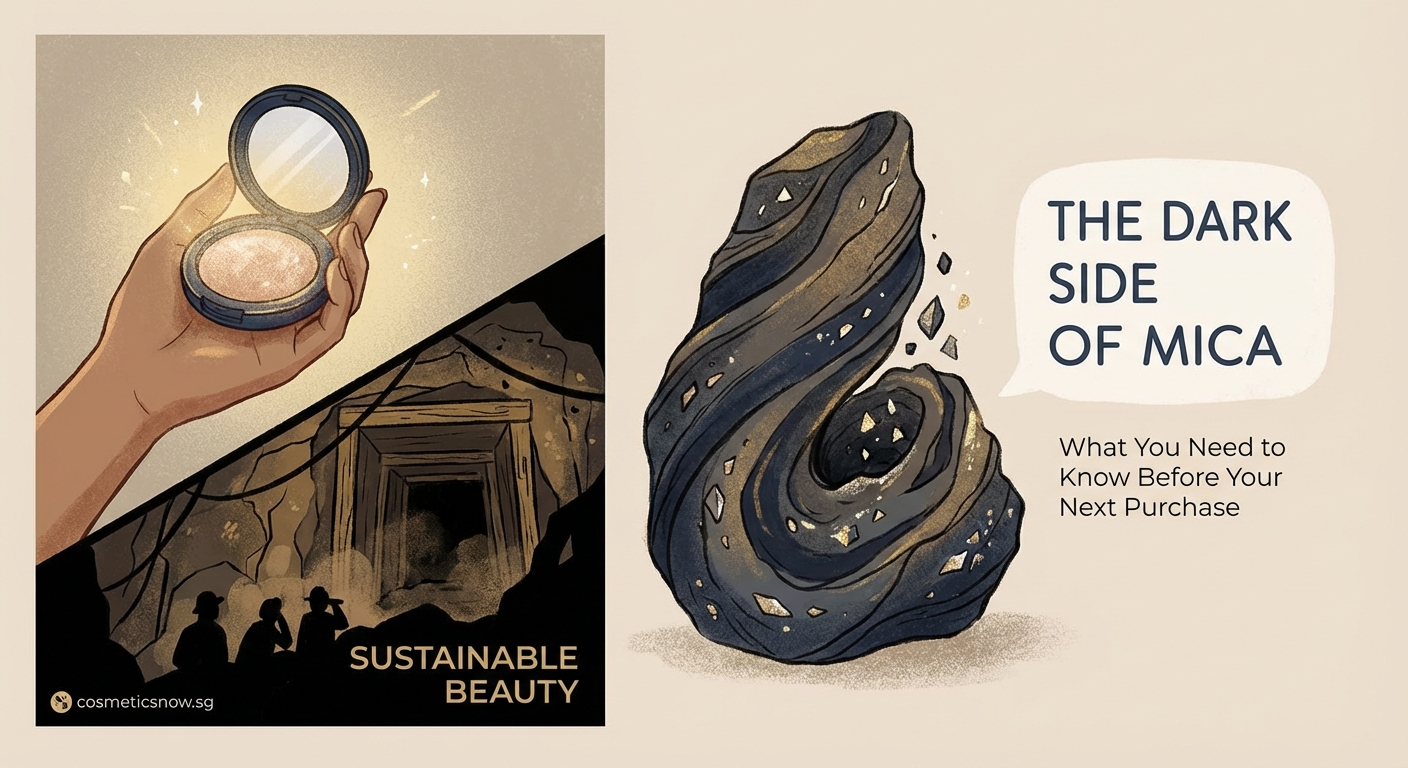
Most mica used in cosmetics originates from mines in India, Madagascar, and parts of China. The problem? Many of these mines operate illegally and employ children as young as five years old.
Children work in dangerous conditions, crawling into narrow mine shafts without safety equipment. They earn pennies per day while missing school and risking serious injury or death from mine collapses.
A 2016 investigation found that major beauty brands unknowingly sourced mica from suppliers using child labor. The supply chain is intentionally opaque, making it difficult to trace mica from mine to makeup counter.
Environmental damage compounds the ethical concerns. Illegal mining destroys forests, contaminates water sources, and leaves behind unstable land prone to collapse.
Some regions have legal, regulated mica mining operations. However, the vast majority of mica enters a complex supply chain where illegal and legal sources mix together before reaching manufacturers.
How to identify mica in your current makeup collection
Start by checking ingredient lists on your existing products. Mica appears near the beginning of ingredient lists in shimmery products, indicating a high concentration.
Products most likely to contain mica include:
- Eyeshadows (especially metallic and shimmer finishes)
- Highlighters and illuminators
- Bronzers with shimmer
- Shimmering blushes
- Foundation with “luminous” or “radiant” claims
- Lip glosses with shine
- Setting powders with light-reflecting properties
Matte products generally contain less mica or none at all. However, even some matte formulas include small amounts for a subtle glow.
Pull out your makeup bag right now and check five products. You’ll probably find mica in at least three of them.
The presence of mica isn’t inherently bad. The issue is whether brands source it responsibly or turn a blind eye to exploitation in their supply chain.
Brands taking real action versus those just talking about it
Several beauty companies have committed to ethical mica sourcing with verifiable programs and third-party audits.
Look for these certifications and programs:
| Certification/Program | What It Means | Brands Using It |
|---|---|---|
| Responsible Mica Initiative | Eliminates child labor in mica supply chains | L’Oréal, Estée Lauder, Coty |
| Fair Trade Certified | Ensures fair wages and safe conditions | Limited cosmetic brands |
| Synthetic Mica Only | Uses lab-created alternatives | Lush, some indie brands |
| Transparent Supply Chain | Publicly shares mine sources | Rare, but growing |
Some brands have eliminated natural mica entirely, using synthetic alternatives instead. Others work directly with mining communities to improve conditions and provide education for children.
Be skeptical of vague claims like “ethically sourced” without supporting evidence. Real commitment includes published supplier lists, third-party audits, and community investment programs.
Sustainable beauty brands often lead the way in transparent sourcing practices.
Understanding synthetic mica and whether it’s actually better
Synthetic mica, also called fluorphlogopite or synthetic fluorphlogopite, is lab-created to mimic natural mica’s properties.
Benefits of synthetic mica:
- No child labor concerns
- Consistent quality and purity
- Often better color payoff
- More sustainable production
The downsides? Synthetic mica requires energy-intensive manufacturing processes. Some makeup artists claim it doesn’t blend as seamlessly as natural mica, though formulation improvements continue narrowing this gap.
Cost plays a role too. Synthetic mica typically costs more than natural mica, which can increase product prices.
From a purely ethical standpoint, synthetic mica eliminates the human rights issues associated with mining. However, it’s not a perfect solution if environmental impact matters to you.
Some brands use a hybrid approach, combining small amounts of ethically sourced natural mica with synthetic alternatives to balance performance, cost, and ethics.
Step-by-step guide to building an ethically sourced makeup collection
Making the switch to responsibly sourced products doesn’t mean throwing out your entire collection tomorrow. Here’s a practical approach:
-
Audit your current collection. Identify which products contain mica and which brands manufacture them. Focus on items you use daily rather than occasional products.
-
Research brand commitments. Visit company websites and look for detailed information about mica sourcing. Vague sustainability pages don’t count. Look for specific programs, certifications, and progress reports.
-
Replace strategically as products run out. When your highlighter hits pan, choose a replacement from a brand with verified ethical sourcing. This approach spreads out costs and reduces waste.
-
Prioritize high-mica products first. Eyeshadows and highlighters contain the most mica. Replacing these creates the biggest impact compared to products with trace amounts.
-
Support transparent indie brands. Smaller companies often have shorter supply chains and more direct relationships with suppliers, making verification easier.
-
Consider matte alternatives. Makeup techniques that don’t rely on shimmer can look equally stunning while eliminating mica concerns entirely.
“The beauty industry has enormous purchasing power. When consumers demand ethical sourcing, brands respond. Your choices matter more than you think.” – Sarah Thompson, Sustainable Beauty Advocate
The real performance differences you’ll notice with ethical alternatives
Let’s be honest about what changes when you switch to ethically sourced or synthetic mica products.
Texture feels slightly different. Some synthetic mica formulas apply more smoothly, while others feel stiffer in the pan. Natural ethically sourced mica typically performs identically to conventional mica.
Color intensity varies. Synthetic mica often delivers more vibrant, true-to-pan color. This can be a benefit or require adjustment in your application technique.
Blending characteristics change subtly. Natural mica tends to diffuse more softly on skin. Synthetic versions sometimes need extra blending to avoid harsh lines.
Longevity remains comparable. Both natural and synthetic mica hold up similarly throughout the day when used with proper makeup application techniques.
The learning curve is minimal. After using a new product twice, most people adapt to any performance differences without thinking about it.
Price points increase moderately. Expect to pay 15-30% more for verified ethical products compared to conventional alternatives. However, prices continue dropping as more brands adopt responsible practices.
Common misconceptions about mica that keep people buying unethically
Myth: All natural ingredients are automatically ethical.
Natural doesn’t mean fair or sustainable. The “clean beauty” movement sometimes conflates natural sourcing with ethical practices, but these are separate issues.
Myth: Expensive luxury brands automatically use ethical mica.
Price doesn’t guarantee ethics. Some luxury brands have been linked to problematic supply chains while budget brands have implemented strong ethical programs.
Myth: Small amounts of mica don’t contribute to the problem.
Every purchase matters. Even trace amounts in multiple products add up to significant demand that perpetuates exploitative mining.
Myth: You need shimmer for makeup to look good.
Matte products create stunning looks. The beauty industry has conditioned consumers to expect shimmer, but it’s not essential for beautiful makeup.
Myth: Individual consumers can’t make a difference.
Collective action works. When enough people demand change, brands respond to protect market share and reputation.
Reading labels like a pro to spot greenwashing tactics
Brands use clever language to appear ethical without making verifiable commitments. Here’s what to watch for:
Phrases like “working toward” or “committed to improving” sound positive but lack concrete action. Real progress includes specific timelines and measurable goals.
“Sustainably sourced” without certification means nothing. Anyone can claim sustainability. Look for third-party verification.
“Conflict-free mica” is a made-up term without industry-standard definition. Unlike conflict-free diamonds, no recognized body certifies conflict-free mica.
Beautiful marketing about “empowering communities” needs backing evidence. Genuine programs include published reports showing actual community benefits.
Learning to decode greenwashing helps across all beauty purchases, not just mica-related products.
Check for these red flags:
- No supplier information available
- Sustainability claims buried in fine print
- Defensive or vague responses to direct questions
- No third-party audits or certifications
- Sustainability page unchanged for years
Practical alternatives when you can’t find ethical options
Sometimes you genuinely can’t find an ethical version of a specific product. Here are workable solutions:
Choose matte formulas instead of shimmer versions. Modern matte eyeshadows and bronzers perform beautifully without mica concerns.
Use cream products strategically. Cream highlighters and eyeshadows often contain less mica than powder formulas while delivering similar effects.
Embrace your natural skin texture. The current beauty trend favors skin that looks like skin rather than airbrushed perfection. Building a skincare routine that creates genuine radiance reduces reliance on shimmery makeup.
Mix products creatively. A matte eyeshadow with a tiny amount of ethically sourced loose shimmer gives you control over mica usage.
Support brands making progress even if they’re not perfect yet. Companies actively working toward solutions deserve recognition compared to those ignoring the issue.
Speak up and ask questions. Contact brands directly asking about their mica sourcing. Customer inquiries signal demand for transparency and push companies toward better practices.
How the industry is slowly changing and what still needs work
Progress is happening, though not fast enough. Major beauty corporations have joined initiatives addressing child labor in mica mining.
The Responsible Mica Initiative launched in 2017 with goals to eliminate child labor by 2022. That deadline passed without full success, but participating brands continue working toward solutions.
Some positive developments:
- More brands publishing supplier lists
- Investment in community schools near mining areas
- Development of better synthetic alternatives
- Increased consumer awareness and pressure
- Stricter regulations in some regions
Remaining challenges include:
- Illegal mines operating outside regulatory reach
- Complex supply chains mixing ethical and unethical sources
- Economic pressure on impoverished mining communities
- Limited enforcement in remote areas
- Cost barriers preventing universal adoption of synthetics
The beauty industry generates billions in annual revenue. Allocating even a small percentage toward ethical sourcing would transform conditions in mining communities.
Your purchasing decisions contribute to this momentum. Brands track consumer preferences closely and adjust accordingly.
Building a makeup routine that aligns with your values
Creating an ethical makeup collection doesn’t require perfection. It requires intentional choices and continuous learning.
Start with one category. Maybe this month you focus on finding an ethical eyeshadow palette. Next month, tackle highlighters.
Balance ethics with other priorities. If you have sensitive skin, finding products that work for your skin matters too. Look for overlap between ethical brands and formulas suitable for your needs.
Remember that removing makeup properly extends product life, reducing how often you need replacements and lowering overall consumption.
Join communities focused on ethical beauty. Online groups share brand recommendations, alert members to problematic practices, and provide support for making sustainable choices.
Track your progress rather than aiming for perfection. If half your makeup collection comes from ethical sources, that’s meaningful impact compared to none.
Consider the bigger picture of your beauty routine. Ethical sourcing matters, but so do sustainable packaging choices, ingredient safety, and animal testing policies.
Making informed choices that actually matter
The shimmer in your makeup shouldn’t come at the cost of children’s safety, education, and futures. But feeling guilty about past purchases helps no one.
What matters now is making better choices moving forward. Research brands before your next purchase. Ask questions. Support companies doing the right thing. Speak up when brands fall short.
You don’t need to throw away products you already own. Use them up while planning better replacements. Waste helps no one, and the damage from those products already happened.
The beauty industry responds to consumer demand. Every ethical purchase sends a message that responsible sourcing matters. Every question asked pushes brands toward greater transparency.
Your makeup bag can reflect both your aesthetic preferences and your values. It just takes a little more attention to what you’re buying and who you’re supporting with your dollars. Start with one product, one brand, one informed choice at a time.