You’ve seen it all over TikTok and Instagram. That flawless, almost translucent complexion that looks airbrushed in real life. Celebrities and influencers seem to have cracked some secret code to skin so smooth and radiant it resembles actual glass. The term “glass skin” has become one of the most searched beauty phrases of the year, but what does it actually mean, and can you really achieve it without professional treatments or filters?
Glass skin is a Korean beauty trend describing complexion that appears smooth, luminous, and almost transparent, like polished glass. This look emphasizes extreme hydration, minimal texture, and a dewy finish rather than matte coverage. Achieving it requires consistent skincare focused on hydration layers, gentle exfoliation, and strategic makeup application. The trend prioritizes skin health over heavy makeup, making it accessible to anyone willing to invest time in their routine.
Understanding the glass skin phenomenon
Glass skin originated in South Korea, where skincare routines are treated as essential self-care rather than optional maintenance. The term literally describes skin that looks as smooth and reflective as a pane of glass.
This isn’t about covering imperfections with makeup. It’s about transforming your actual skin texture and hydration levels.
The look has three defining characteristics. First, your skin appears luminous without looking oily or greasy. Second, pores seem virtually invisible. Third, the complexion has a translucent quality that catches light beautifully.
Think of it as the opposite of the matte, contoured Instagram face that dominated a few years ago. Glass skin celebrates natural radiance and skin that looks healthy from within.
The trend gained massive traction because it photographs incredibly well. That dewy, lit-from-within glow translates beautifully on camera without heavy editing.
But here’s what makes it different from other beauty trends. Glass skin requires actual skincare work, not just makeup tricks. You can’t fake this look with highlighter alone.
The science behind that luminous glow
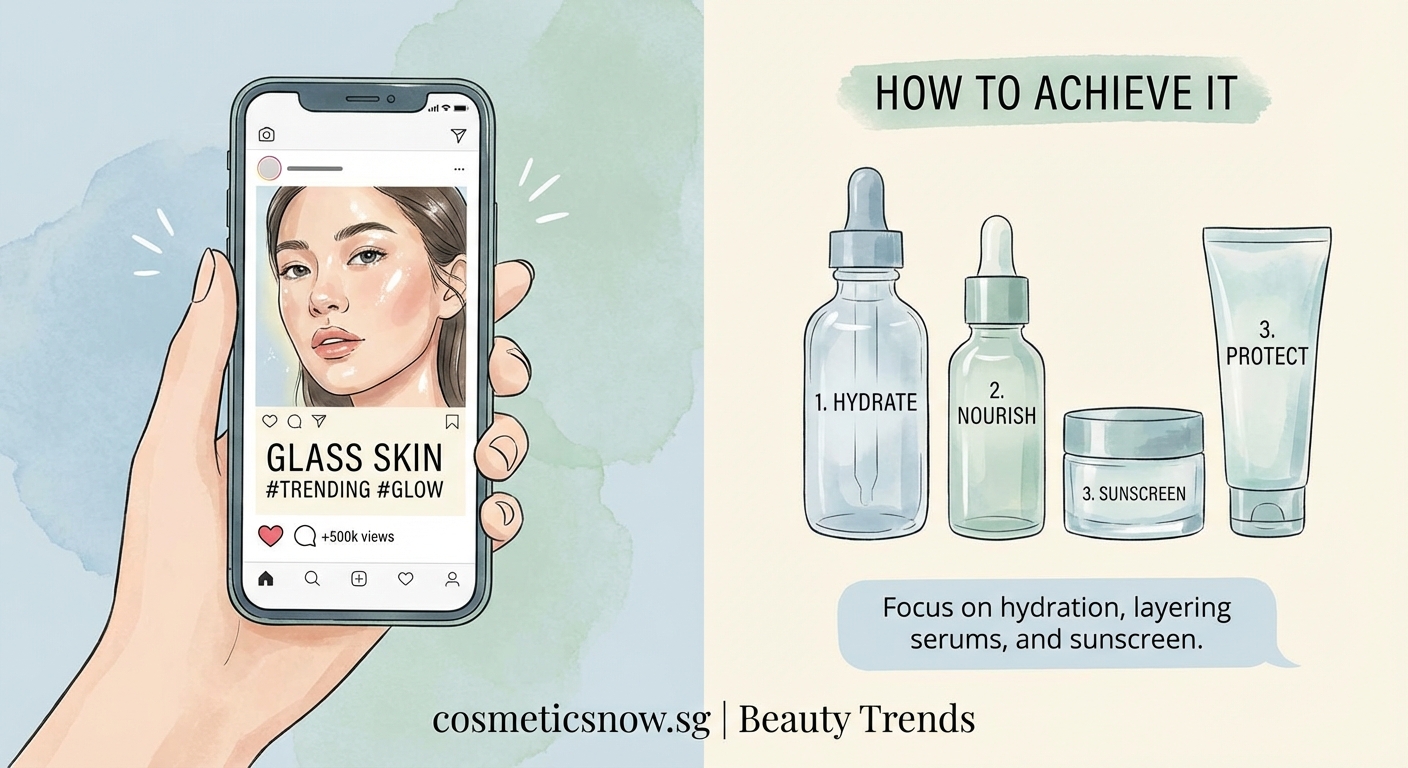
Your skin’s appearance depends heavily on hydration levels in the outermost layer, called the stratum corneum. When these cells are plump with moisture, they reflect light evenly and create that coveted glow.
Dehydrated skin has a rough, uneven texture that scatters light in multiple directions. This makes your complexion appear dull and emphasizes fine lines.
Glass skin techniques focus on flooding your skin with hydrating ingredients that bind water to skin cells. Ingredients like hyaluronic acid can hold up to 1,000 times their weight in water.
The multiple thin layers of hydrating products create a reservoir of moisture that keeps skin looking plump throughout the day. This layering technique is fundamental to K-beauty routines.
Proper exfoliation also plays a crucial role. Removing dead skin cells allows light to bounce off the fresh, healthy cells underneath. This creates that reflective quality.
Your skin barrier health matters enormously. A compromised barrier leads to water loss and inflammation, both of which prevent that smooth, glassy appearance. Building your first skincare routine starts with understanding these fundamentals.
Essential steps to achieve glass skin
Getting that glass skin glow requires a specific approach to your routine. Here’s the step-by-step process that actually works.
1. Double cleanse every evening
Start with an oil-based cleanser to remove makeup, sunscreen, and sebum. Follow with a water-based cleanser to remove any remaining impurities.
This two-step process ensures your skin is truly clean without stripping away natural oils. Clean skin absorbs the hydrating products that come next much more effectively.
2. Exfoliate gently and consistently
Use a chemical exfoliant with AHA or BHA two to three times per week. Physical scrubs are too harsh and can create microtears that disrupt your skin texture.
Chemical exfoliants dissolve the bonds between dead skin cells, revealing the fresh layer underneath. This step is non-negotiable for achieving that smooth surface.
3. Layer hydrating toners and essences
Apply a hydrating toner immediately after cleansing while your skin is still damp. Pat it in gently with your hands.
Follow with an essence, which is lighter than serum but packed with hydrating ingredients. These products prep your skin to absorb everything that comes next.
The Korean method involves applying toner in multiple thin layers, waiting a few seconds between each application. This “7-skin method” floods your skin with hydration.
4. Apply targeted serums
Choose serums based on your specific concerns. Niacinamide helps with pore appearance and brightness. Hyaluronic acid provides intense hydration.
Layering your serums properly makes a significant difference in results. Apply thinnest to thickest consistency.
5. Seal everything with moisturizer
Your moisturizer acts as a seal, preventing all that hydration from evaporating. Choose a formula appropriate for your skin type.
Even oily skin needs moisturizer. Skipping this step will actually make your skin produce more oil to compensate for dehydration.
6. Never skip sunscreen
UV damage breaks down collagen and creates uneven texture. Daily SPF 30 or higher protects your investment in all those skincare products.
Sunscreen also prevents the hyperpigmentation that disrupts that even, translucent appearance glass skin requires.
“Glass skin isn’t achieved overnight. It’s the result of consistent hydration, gentle exfoliation, and protecting your skin barrier. Think of it as a marathon, not a sprint. Your skin will gradually transform when you stick with the routine.” – Licensed Esthetician Sarah Chen
Products that actually make a difference
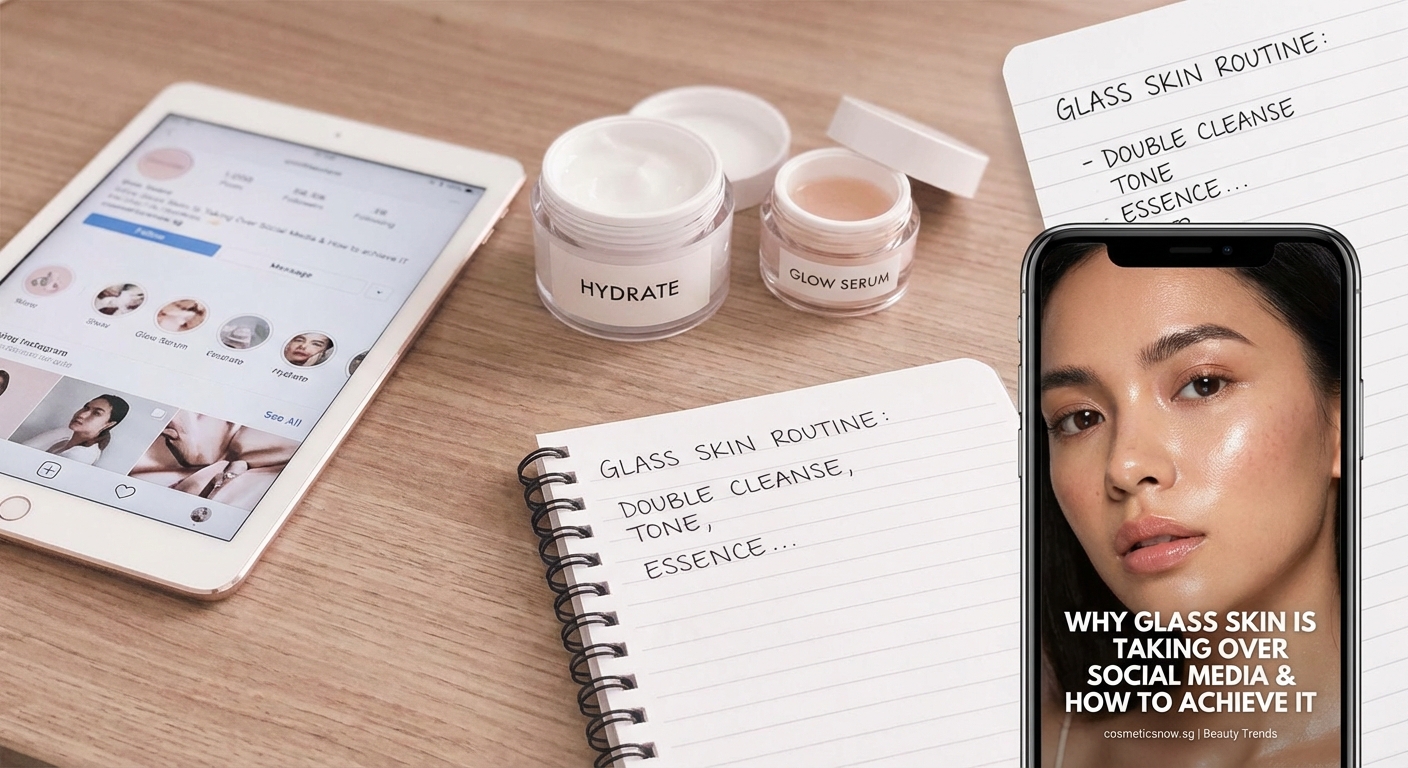
Not every product will help you achieve glass skin. Here’s what to look for when building your routine.
Hydrating ingredients to prioritize:
- Hyaluronic acid in multiple molecular weights
- Glycerin for moisture retention
- Ceramides to strengthen skin barrier
- Niacinamide for pore refinement and brightness
- Snail mucin for repair and hydration
- Centella asiatica for calming and healing
Textures that work best:
Watery essences and lightweight serums layer better than thick creams. You want products that absorb completely rather than sitting on top of your skin.
Gel-based moisturizers work beautifully for this look, especially if you have combination or oily skin. They provide hydration without heaviness.
What to avoid:
Heavy silicone-based primers can create a barrier that prevents your skincare from working. Matte foundations will fight against the dewy finish you’re trying to achieve.
Products with high alcohol content will dehydrate your skin and work against your glass skin goals. Check ingredient lists carefully.
Common mistakes that prevent glass skin
Even with the right products, certain habits will sabotage your results. Here are the pitfalls to avoid.
| Mistake | Why It Hurts Your Results | What to Do Instead |
|---|---|---|
| Over-exfoliating | Damages skin barrier, causes inflammation and texture issues | Limit chemical exfoliation to 2-3 times weekly |
| Skipping moisturizer on oily skin | Triggers more oil production, disrupts hydration balance | Use lightweight gel moisturizer daily |
| Using too many actives at once | Creates irritation that prevents smooth texture | Introduce new products one at a time |
| Applying products to dry skin | Reduces absorption and effectiveness | Pat products into damp skin |
| Inconsistent routine | Prevents cumulative hydration benefits | Stick with routine for at least 6 weeks |
Many people make the mistake of thinking more products equal better results. The truth is that consistency matters more than quantity.
Your skin needs time to adjust to new products. Give each new addition at least two weeks before deciding if it works for you.
Another common error is focusing only on nighttime skincare. Your morning routine is equally important for maintaining that hydrated, glowing appearance throughout the day.
Makeup techniques that enhance the glass skin look
Once your skincare creates the foundation, strategic makeup amplifies the effect. The goal is enhancement, not coverage.
Start with a hydrating primer that adds glow rather than mattifying your skin. Look for formulas with light-reflecting particles.
Choose a lightweight, dewy foundation or even better, a tinted moisturizer. You want your actual skin to show through. Applying foundation like a professional means using less product than you think you need.
Apply foundation only where you need coverage. Use your fingers to warm the product and press it into skin rather than wiping it across your face.
Cream products work better than powders for this look. Cream blush and highlighter blend seamlessly and maintain that dewy finish.
Place highlighter strategically on the high points of your face. The bridge of your nose, cheekbones, and cupid’s bow catch light naturally.
Skip setting powder entirely, or use it only on your T-zone if absolutely necessary. Powder will dull that glossy finish you worked so hard to create.
Finish with a hydrating facial mist to meld everything together and add an extra boost of radiance.
Lifestyle factors that support glass skin
Your skincare routine is only part of the equation. What you do outside your bathroom affects your skin just as much.
Hydration from within makes a visible difference. Drinking adequate water helps your skin cells stay plump and healthy. Aim for at least eight glasses daily.
Sleep quality directly impacts your complexion. During deep sleep, your skin repairs damage and produces new collagen. Aim for seven to nine hours nightly.
Your diet influences skin inflammation and oil production. Foods high in omega-3 fatty acids support skin barrier health. Sugar and processed foods can trigger inflammation that disrupts your skin texture.
Stress hormones increase oil production and trigger breakouts. Finding ways to manage stress protects your glass skin progress. Even 10 minutes of daily meditation helps.
Exercise increases blood flow to your skin, delivering oxygen and nutrients that create that natural glow. Just remember to remove your makeup properly before working out.
Room humidity matters more than most people realize. Dry indoor air pulls moisture from your skin. A humidifier in your bedroom helps maintain hydration overnight.
Adapting glass skin for different skin types
Glass skin isn’t exclusive to one skin type. The approach just needs adjustment based on your specific needs.
For oily skin:
Focus on lightweight, water-based products that won’t clog pores. You still need hydration, but skip heavy creams in favor of gel formulas.
Use a BHA exfoliant to keep pores clear. Salicylic acid works inside pores to prevent congestion that disrupts smooth texture.
For dry skin:
Layer multiple hydrating products and seal with a richer moisturizer. Your routine might include seven or eight steps to achieve adequate hydration.
Add a facial oil as your final step to lock in moisture overnight. This prevents transepidermal water loss while you sleep.
For combination skin:
You might need different products for different zones. Use lighter formulas on your T-zone and richer products on dry areas.
Consider building a nighttime routine that addresses multiple concerns without overloading your skin.
For sensitive skin:
Introduce products slowly and patch test everything. Focus on calming ingredients like centella and avoid potential irritants.
Your barrier health is especially important. Prioritize products that strengthen and protect rather than actives that might cause irritation.
Realistic timeline for seeing results
Social media makes it seem like glass skin happens overnight. The reality requires more patience.
Most people notice initial improvements within two weeks. Your skin will feel more hydrated and look slightly more radiant.
The real transformation happens around the six-week mark. This is when consistent hydration and exfoliation create visible changes in skin texture.
Pore appearance takes longer to improve. Expect to wait two to three months before seeing significant refinement in pore size and visibility.
Remember that your skin completely renews itself approximately every 28 days. Each skin cycle brings you closer to that glass skin goal.
Some factors work against faster results. If you’re dealing with dehydration from years of harsh products, your skin needs time to repair and rebalance.
Age affects how quickly your skin responds. Younger skin typically shows results faster because cell turnover happens more rapidly.
Environmental factors matter too. Living in a dry climate or experiencing harsh winters means you’ll need to adjust your routine and possibly wait longer for results.
Track your progress with photos taken in consistent lighting. Week-to-week changes are subtle, but comparing photos from month one to month three will show dramatic differences.
Why glass skin works beyond the aesthetic
The glass skin trend represents a shift in how we think about beauty. Instead of covering skin with heavy makeup, it celebrates skin health as the foundation of beauty.
This approach encourages people to invest in their skin rather than just camouflaging concerns. The result is complexions that genuinely improve over time.
The focus on hydration benefits your skin health in ways that go beyond appearance. Well-hydrated skin functions better as a protective barrier and heals more efficiently.
Glass skin techniques also tend to be gentler than aggressive anti-aging treatments. You’re working with your skin rather than against it.
The trend has made Korean beauty principles accessible to a global audience. More people now understand the value of prevention and maintenance over correction.
Perhaps most importantly, glass skin looks beautiful without filters or editing. In a world of heavily manipulated images, there’s something refreshing about a beauty trend that translates to real life.
Making glass skin work for your lifestyle
Not everyone can commit to a 10-step routine twice daily. Here’s how to adapt the principles to fit your actual life.
If mornings are rushed, streamline to the essentials. Cleanser, toner, serum, moisturizer, and sunscreen can take under five minutes with practice.
Save the elaborate layering for evenings when you have more time. A realistic morning routine can still deliver results.
Invest in multi-tasking products. A hydrating serum with niacinamide addresses multiple concerns in one step.
Prepare your products the night before. Line them up in order so you can move through your routine efficiently.
Consider which steps matter most for your skin. If you’re naturally oily, you might skip some hydrating layers that dry skin types need.
Travel doesn’t have to derail your progress. Decant products into travel containers or look for mini versions of your favorites.
The key is consistency over perfection. Doing a simplified routine every day beats doing an elaborate routine sporadically.
Your path to that coveted glow
Glass skin represents more than just another beauty trend. It’s a philosophy that prioritizes skin health and natural radiance over heavy coverage and contouring. The luminous, translucent complexion you see flooding your social media feeds is absolutely achievable with the right approach and realistic expectations.
Start with the basics of hydration and gentle exfoliation. Build your routine gradually, introducing products one at a time so you can identify what actually works for your skin. Remember that this transformation takes weeks, not days, but the results are worth the patience. Your skin will thank you for the consistent care, and that glass-like glow will become your new normal rather than an occasional good skin day.