You’ve probably noticed the drawer full of empty lipstick tubes, foundation bottles with stubborn pumps, and mascara wands you’re not sure what to do with. Most beauty packaging ends up in landfills because we simply don’t know where else to put it. The good news? There are real, practical ways to recycle beauty products that actually make a difference.
Recycling beauty products requires more than tossing them in your curbside bin. Most cosmetic containers need special preparation like removing pumps, cleaning residue, and using brand takeback programs or specialized recycling services. Understanding which materials are recyclable, how to properly prepare containers, and where to send them helps reduce beauty waste while maintaining your commitment to sustainable choices without compromising your routine.
Why Most Beauty Products Don’t Belong in Your Regular Recycling Bin
Your curbside recycling program probably won’t accept beauty containers. These products combine multiple materials in tiny packages that sorting facilities can’t process efficiently.
A typical foundation bottle might have a glass container, plastic pump, metal spring, and rubber gasket. Recycling facilities need single-material items they can quickly sort and process. Mixed materials get rejected and sent to landfills anyway.
Small containers create another problem. Items smaller than a credit card fall through sorting equipment and contaminate other recycling streams. That empty lip balm tube? Too small to process, even if it’s technically recyclable plastic.
Product residue makes things worse. Leftover makeup, oils, and creams contaminate recycling batches. One mascara tube with product inside can ruin an entire batch of recyclable plastic.
Step-by-Step Process for Preparing Beauty Containers
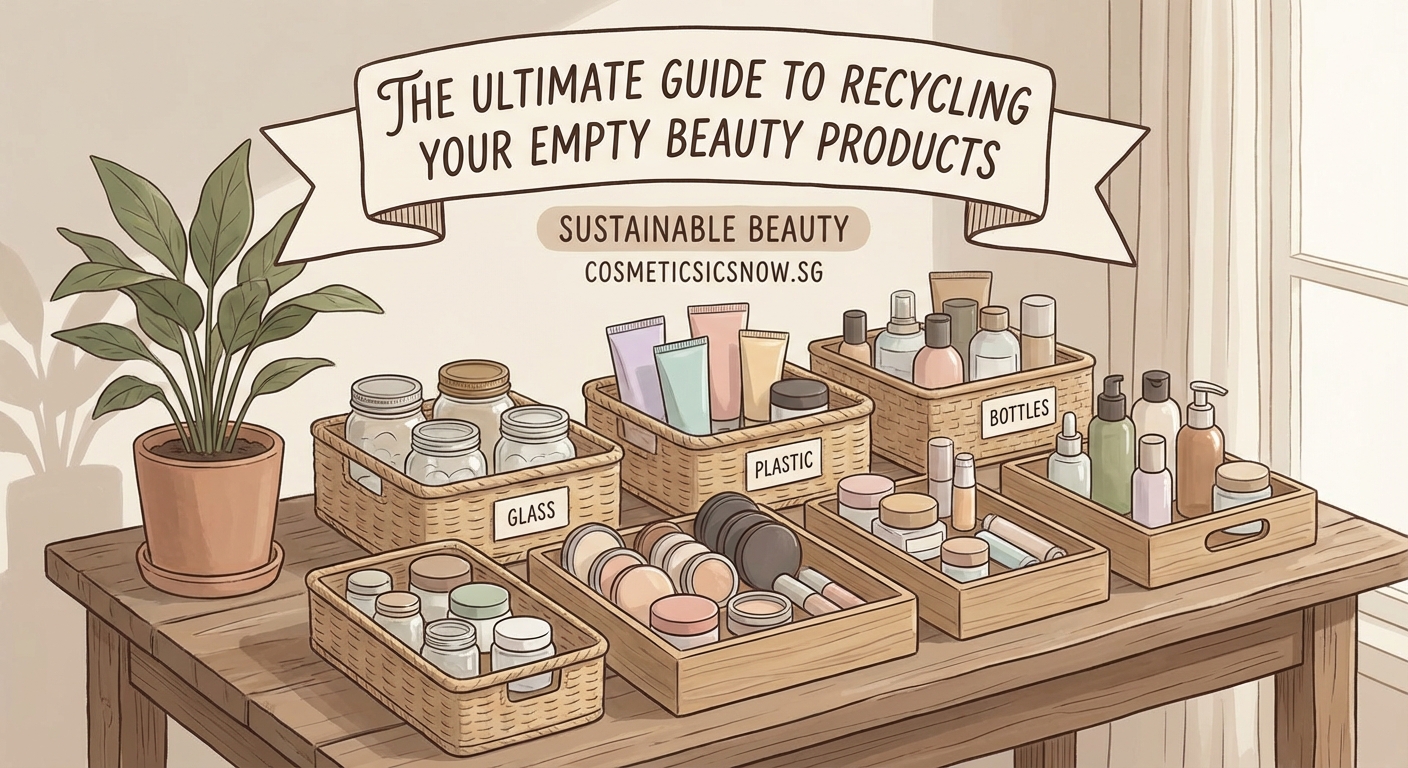
Getting your beauty empties ready for proper recycling takes a few minutes but makes all the difference.
1. Empty Every Last Drop
Scrape out remaining product with a small spatula or cotton swab. This applies to everything from moisturizers to foundations. The cleaner the container, the better chance it has of being recycled.
For stubborn cream products, let the container sit upside down overnight. Gravity does most of the work for you.
2. Disassemble Components
Pull apart every piece you can separate by hand. Remove pumps from bottles, twist off caps, take out any stoppers or droppers.
Most pumps contain metal springs that need separate processing. Caps are often different plastic types than bottles. Separating these parts gives each material the best recycling chance.
3. Rinse Thoroughly
Wash containers with warm soapy water. You don’t need them spotless, but visible product should be gone.
For oil-based products, use dish soap. It cuts through residue better than regular hand soap. Let everything dry completely before recycling.
4. Check Material Codes
Look for the recycling symbol with a number inside. Numbers 1, 2, and 5 are most commonly accepted. Numbers 3, 4, 6, and 7 need special programs.
No number? Check if the container is glass, aluminum, or steel. These materials have better recycling options than mystery plastics.
Brand Takeback Programs That Actually Work
Many beauty brands now accept their empty containers back, regardless of where you bought them. These programs handle the recycling complexity for you.
MAC Cosmetics pioneered the Back-to-MAC program. Return six empty primary packaging containers to any MAC counter and receive a free lipstick. They accept any brand’s packaging, not just their own.
Kiehl’s takes back any brand’s empty bottles and tubes at their stores. Bring five empties and get travel-size products as a thank you.
Origins runs the Return to Origins program. Bring back any brand’s empty skincare and makeup containers to their counters for proper recycling.
Lush offers the Five Pot Program. Return five clean black pots and choose a free fresh face mask. They reuse the pots for new products.
Nordstrom partners with beauty brands for in-store recycling. Drop off empties from participating brands at their beauty counters.
These programs work because brands have relationships with specialized recyclers who can process mixed materials and small containers that regular facilities reject.
Common Recycling Mistakes That Send Your Empties to Landfills
Even with good intentions, these errors doom your recycling efforts.
| Mistake | Why It Fails | Better Approach |
|---|---|---|
| Leaving pumps attached | Mixed materials can’t be sorted | Remove all pumps and droppers |
| Recycling tiny items | Falls through sorting equipment | Collect in larger container first |
| Tossing product-filled containers | Contaminates recycling batches | Clean thoroughly before recycling |
| Assuming all plastic recycles | Different types need different processing | Check material codes and local rules |
| Putting sheet masks in recycling | Made from non-recyclable materials | Always trash these |
| Recycling aerosol cans with product | Pressurized cans are hazardous | Empty completely, remove caps |
The biggest mistake? Assuming your curbside bin accepts everything. Call your local recycling facility and ask specifically about beauty containers. Their answer might surprise you.
Specialized Recycling Services for Beauty Products
When brand programs and curbside recycling won’t work, specialized services fill the gap.
TerraCycle offers free and paid beauty recycling programs. Their free programs accept specific brands through mail-in boxes. Paid programs let you recycle any beauty packaging for a fee.
Create a collection box at home. Once full, print a shipping label and send it off. TerraCycle handles everything from there, breaking down containers and processing each material type.
Pact Collective provides mail-in recycling for beauty and personal care packaging. Purchase a collection box, fill it with clean empties, and ship it back. They process items that traditional recycling can’t handle.
Ridwell operates in select cities, offering pickup service for hard-to-recycle items including beauty packaging. Members receive bags for collection and scheduled pickups.
These services cost money or require effort, but they genuinely recycle materials that would otherwise become waste.
What to Do With Different Types of Beauty Packaging
Different materials need different approaches. Here’s what works for common beauty containers.
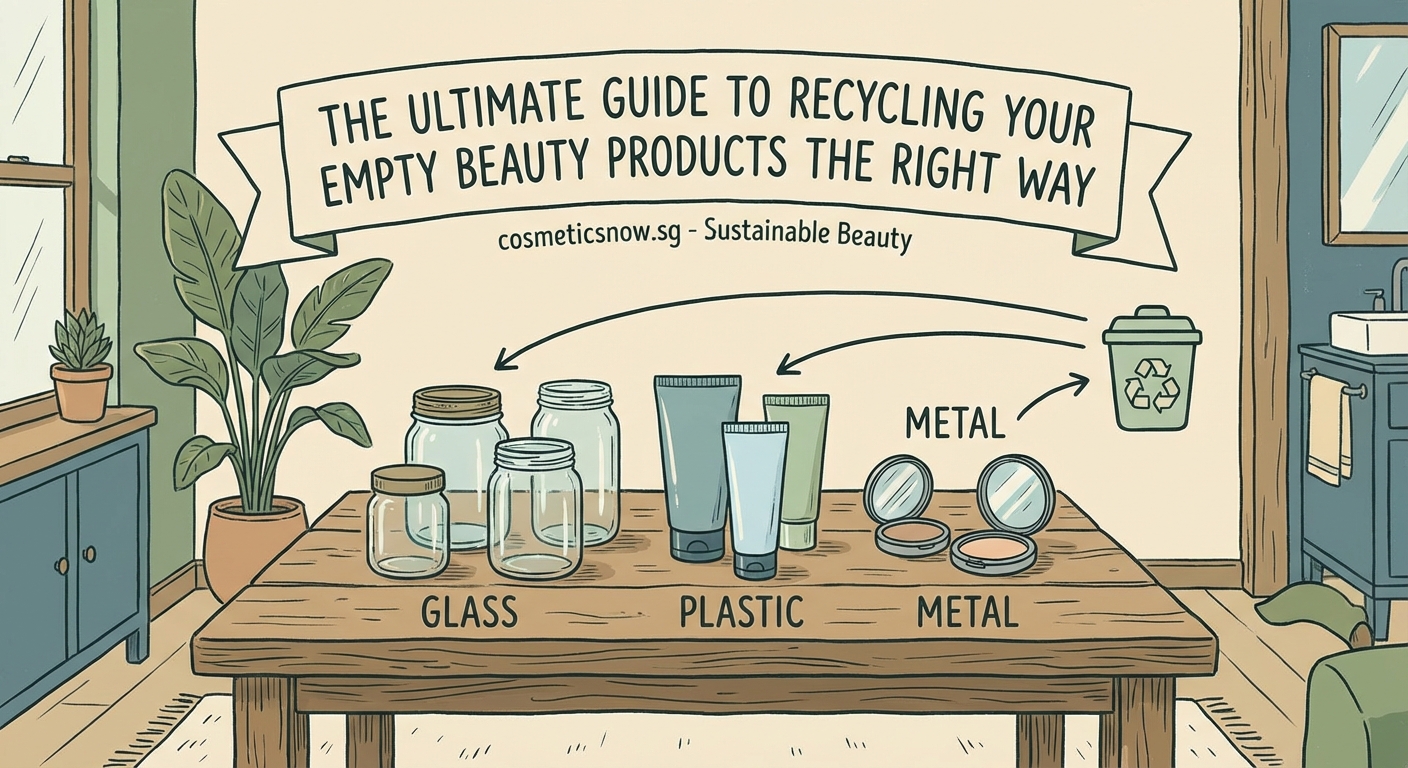
Glass Bottles and Jars
Remove all plastic or metal components first. Rinse clean. Glass bottles from serums, foundations, and perfumes usually recycle through curbside programs if they’re larger than a credit card.
Small glass items like sample vials need specialized programs. Save them for brand takeback or TerraCycle.
Plastic Tubes and Bottles
Check the number inside the recycling symbol. Types 1, 2, and 5 often work in curbside programs after cleaning and removing caps.
Squeeze tubes for creams and cleansers rarely recycle curbsides. These need specialized programs or brand takeback.
Metal Compacts and Tins
Aluminum and steel recycle easily once you remove any plastic or glass inserts. Eyeshadow pans, blush compacts, and product tins work well in curbside recycling after cleaning.
The magnetic closures don’t need removal. They separate during the recycling process.
Pumps and Sprayers
These almost never recycle through regular programs. The combination of plastic, metal springs, and rubber gaskets makes them impossible for standard facilities to process.
Save pumps for specialized recycling services or check if brands accept them in takeback programs.
Building a Beauty Recycling Station at Home
Create a simple system that makes recycling beauty products automatic rather than a chore.
Start with three containers. Label them: “Needs Cleaning,” “Ready for Curbside,” and “Needs Special Program.”
When you finish a product, toss the empty in “Needs Cleaning.” Once a week, spend ten minutes disassembling and washing everything in that container.
Clean items go into either “Ready for Curbside” or “Needs Special Program” based on material type. When the curbside container fills, add it to your regular recycling. When the special program container fills, ship it off or take it to a brand counter.
This system prevents empties from piling up in drawers while keeping recycling manageable. Just like building a sustainable beauty routine takes planning, creating good recycling habits needs structure.
“The beauty industry produces 120 billion units of packaging every year. Only a tiny fraction gets recycled. Individual actions matter, but we need brands to design packaging for recyclability from the start.” – Environmental researcher studying cosmetic waste
Understanding Which Beauty Items Never Recycle
Some beauty products and packaging can’t be recycled no matter what you do. Knowing these helps you make better purchasing decisions.
Sheet masks combine multiple materials in ways that can’t be separated. The fabric, serum, and packaging layers bond together. These always go to trash.
Makeup sponges and applicators are too contaminated with product and bacteria to recycle. Toss them.
Cotton rounds and swabs are single-use items that can’t be recycled. Consider reusable alternatives instead.
Nail polish bottles contain chemical residue that’s nearly impossible to clean completely. Most programs won’t accept them.
False eyelashes and their packaging are too small and mixed-material to recycle.
Sample packets of skincare or makeup are too small for recycling equipment. The thin plastic also isn’t valuable enough to process.
Knowing these limitations helps you focus recycling efforts where they actually work. It also guides you toward products with better end-of-life options.
Making Smarter Purchase Decisions
The best recycling strategy starts before you buy. Choose products designed for easier recycling.
Look for single-material packaging. Glass jars with metal lids recycle better than plastic bottles with plastic pumps attached.
Larger containers reduce packaging waste overall. That 100ml moisturizer creates less waste per use than five 20ml bottles.
Refillable options eliminate packaging waste after the initial purchase. Brands offering refill programs or refill pouches deserve your support.
Concentrated products in smaller packages often have less environmental impact than diluted versions in larger containers. Waterless beauty products reduce both packaging and shipping emissions.
Products in aluminum tubes recycle more easily than plastic tubes. Aluminum has high recycling value and gets processed readily.
What Happens After You Recycle Beauty Products Correctly
Understanding the recycling journey helps you see why proper preparation matters.
Clean, separated materials arrive at processing facilities. Workers or machines sort items by material type. Glass goes one direction, plastic another, metal to a third area.
Each material gets cleaned again, then broken down. Glass melts and reforms into new containers. Plastic gets shredded, melted, and reformed. Metal melts and becomes new products.
Mixed materials or contaminated items get pulled from the line and sent to landfills. That’s why your preparation work at home matters so much.
Recycled beauty packaging might become new beauty containers, but it often becomes other products. Recycled plastic becomes outdoor furniture, playground equipment, or textile fibers. Recycled glass becomes new bottles or construction materials.
The recycling process isn’t perfect. Some material quality degrades with each cycle. But recycling still beats sending everything to landfills where it sits for centuries.
Creating a Zero-Waste Beauty Routine
Recycling helps, but reducing waste in the first place works better. Small changes add up.
Switch to bar versions of products. Shampoo bars, conditioner bars, and cleansing bars come in minimal packaging that’s easy to recycle or compost.
Choose products in glass or aluminum over plastic when possible. These materials recycle infinitely without quality loss.
Buy from brands with refill programs. You keep the original container and purchase refills in minimal packaging.
Make some products at home using natural ingredients from your kitchen. Face masks, scrubs, and some treatments work well as DIY options.
Support brands committed to sustainable packaging. Companies investing in plastic-free innovations deserve your dollars.
Consider multi-use products. A tinted moisturizer with SPF replaces three separate products and their packaging.
Recycling Beauty Tools and Accessories
Beyond product containers, beauty tools need proper disposal too.
Makeup brushes with natural bristles and wooden handles can sometimes be composted after removing metal ferrules. Synthetic brushes need trash disposal.
Hair tools like straighteners and blow dryers contain electronics. Take these to e-waste recycling centers, not regular recycling bins.
Compacts and palettes often combine plastic, metal, and mirrors. Remove any remaining product, then send through specialized recycling programs.
Perfume atomizers can be refilled if the mechanism still works. Empty bottles become decorative items or go through glass recycling after removing the spray mechanism.
Makeup bags made from synthetic materials rarely recycle. Natural fiber bags can sometimes be composted if they’re worn out beyond donation.
Donate gently used tools rather than recycling them. Someone else can get more use from that barely-touched eyeshadow palette or extra hair dryer.
Teaching Others About Beauty Product Recycling
Your recycling efforts multiply when you share knowledge with friends and family.
Start conversations about beauty waste. Most people don’t realize how much packaging their routine generates until someone points it out.
Share brand takeback programs. Tell friends about the free products they can get for returning empties. Incentives motivate action.
Organize collection drives. Gather empties from friends and family, then ship them together through TerraCycle or similar programs. Group efforts save on shipping costs.
Gift sustainable beauty products. Introduce others to brands with better packaging through birthday or holiday presents.
Post about your recycling routine on social media. Show your collection system, explain your process, and answer questions. You’ll inspire others to start their own systems.
The more people who recycle beauty products correctly, the more pressure brands feel to create recyclable packaging in the first place.
Making Beauty Recycling Part of Your Routine
Recycling beauty products doesn’t need to be complicated or time-consuming. Set up a simple system, learn which programs work for your products, and stick with it.
Start small if the full process feels overwhelming. Pick one category like skincare bottles or makeup compacts and master recycling those first. Add other categories as the habit solidifies.
Your empty containers don’t need to become waste. With a few minutes of preparation and the right recycling channels, those beauty products can have a second life. The planet benefits, and you get the satisfaction of knowing your beauty routine doesn’t end in a landfill.