You stand in front of the mirror, applying the same makeup techniques you’ve used for years. But lately, something feels off. The foundation that once made your skin glow now settles into lines you didn’t know existed. Your eyeshadow seems to disappear by noon. And that lipstick shade you loved? It’s suddenly making you look tired instead of polished.
The truth is, makeup that once enhanced your features can work against you as your skin changes. But here’s the good news: small adjustments make a massive difference.
Certain makeup techniques add years to your appearance, but simple changes reverse the effect. From foundation application to eyebrow shaping, understanding which products and methods suit mature skin helps you look fresh, radiant, and naturally youthful. Avoid heavy powders, dark lip liners, and harsh contouring while embracing hydrating formulas, strategic placement, and softer colors that complement your evolving complexion.
Using the Wrong Foundation Formula
Heavy, matte foundations settle into fine lines and emphasize texture. They create a mask-like appearance that draws attention to every crease and pore.
Your skin produces less oil as you age. Matte formulas designed for oily skin will cling to dry patches and make your complexion look dull.
Switch to hydrating, luminous foundations with a satin or dewy finish. These formulas contain moisturizing ingredients that plump the skin and reflect light away from imperfections.
Apply foundation with a damp beauty sponge rather than a brush. The bouncing motion presses product into skin without dragging or emphasizing texture. If you want to master proper application techniques, learning how to apply foundation like a professional makeup artist will transform your entire routine.
Look for foundations labeled “radiant,” “luminous,” or “hydrating” on the packaging. These contain light-reflecting particles that create a soft-focus effect on your skin.
Applying Too Much Powder
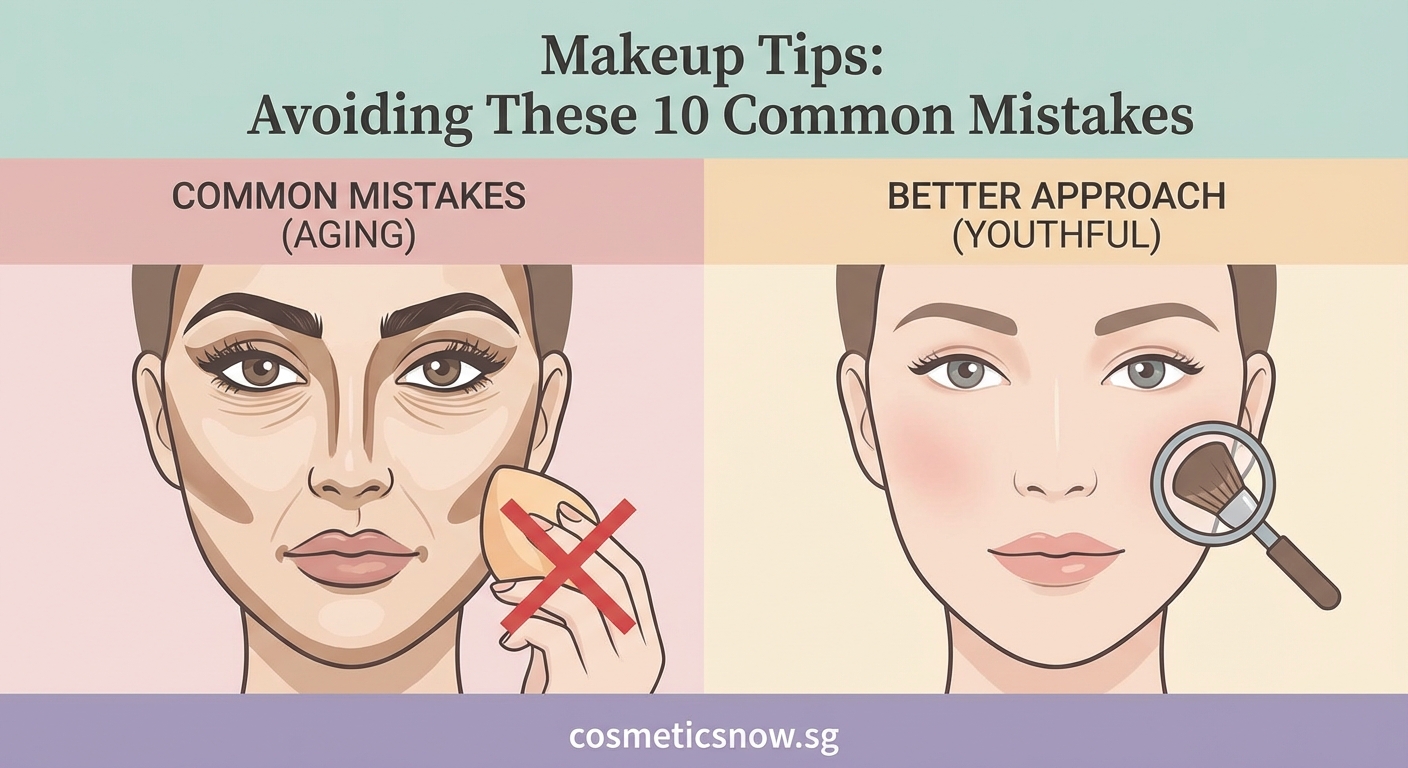
Powder is the biggest culprit when it comes to aging makeup. It settles into every line, crease, and wrinkle throughout the day, creating visible tracks across your face.
Many women over-powder out of habit or fear of shine. But a little natural luminosity makes skin look healthy and youthful.
Here’s how to use powder strategically:
- Skip powder entirely if your skin is dry or normal.
- If you must set makeup, use powder only in your T-zone where oil appears.
- Apply with a light hand using a fluffy brush, never a puff.
- Choose a finely-milled translucent powder rather than pressed powder.
- Set with a hydrating facial mist to meld everything together.
A dewy finish beats a powdered one every time after 40. Your skin will look plumper, fresher, and more alive.
Overdrawing or Neglecting Your Eyebrows
Eyebrows frame your entire face. When they’re too dark, too thick, or drawn on with harsh lines, they create an artificial look that adds years.
On the flip side, sparse or nonexistent brows make your face appear older and less defined.
Your natural brow color lightens with age. Using the same dark brown or black pencil you used in your twenties creates an unnatural contrast.
- Choose a brow product one to two shades lighter than your natural hair color
- Use short, feathery strokes that mimic real hairs
- Focus on filling sparse areas rather than outlining the entire brow
- Brush brows upward with a spoolie for a lifted, youthful effect
- Avoid extending the tail of your brow downward, which drags your face down
A professional brow shaping every few months keeps your arch in the right place. The natural arch should peak above the outer edge of your iris, creating a subtle lift that opens your eyes.
Choosing the Wrong Lip Colors and Application
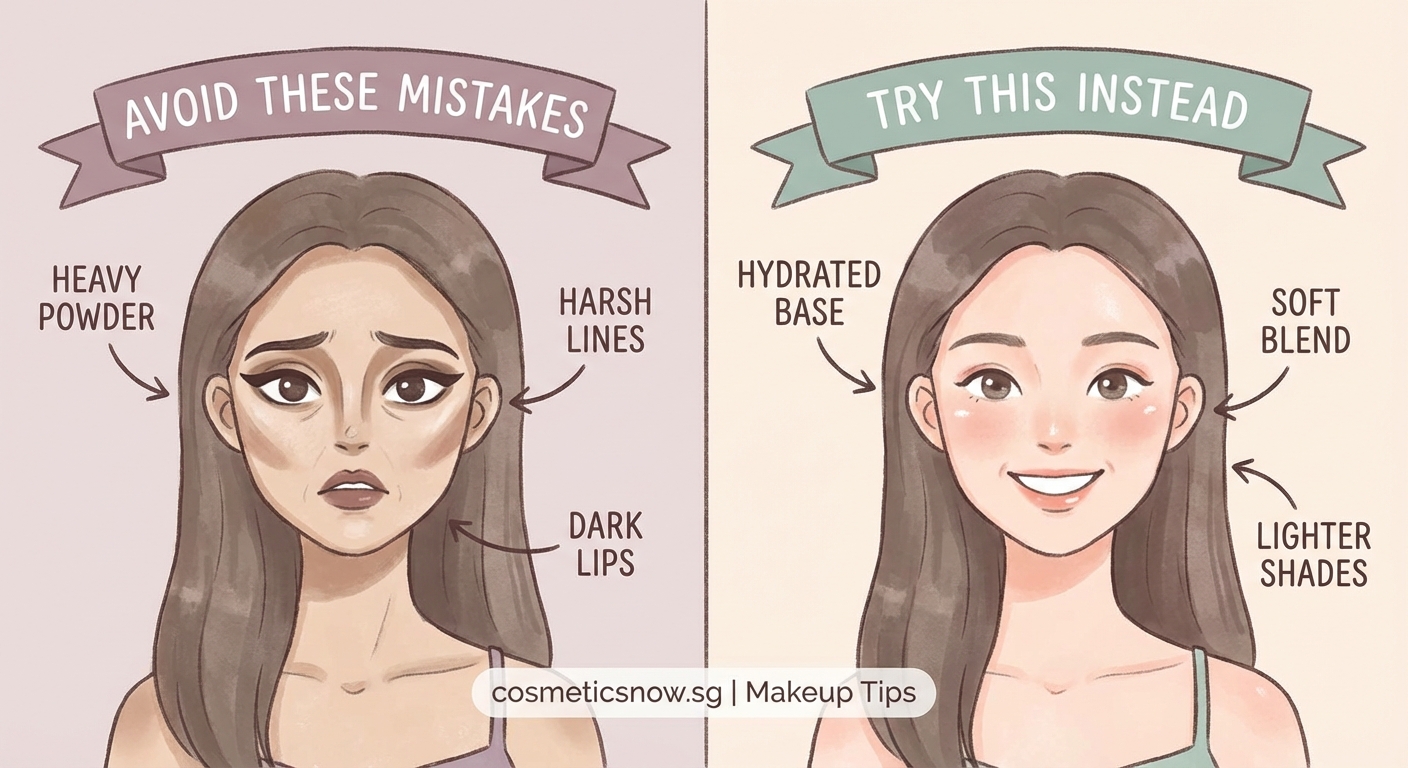
Dark, matte lipsticks make lips appear thinner and more severe. They also emphasize lip lines and create a harsh contrast against your skin.
Lips lose volume and definition over time. Dark lip liner paired with lighter lipstick creates an outdated look that screams “aging.”
Instead, choose these lip-enhancing options:
| Avoid | Choose Instead |
|---|---|
| Dark matte lipsticks | Creamy, satin-finish lipsticks in berry, rose, or coral tones |
| Brown lip liner | Nude or pink liner that matches your natural lip color |
| Frosted or shimmery lipsticks | Subtle sheen or satin finish |
| Lining outside your natural lip line | Precise lining just inside your natural edge |
Apply a hydrating lip balm before lipstick. This prevents feathering and keeps lips looking plump.
Use a lip liner in a shade that matches your lipstick or natural lip color. Fill in your entire lip with the liner before applying lipstick. This creates a base that helps color last longer without settling into lines.
Add a tiny dot of gloss or highlighter to the center of your bottom lip. This creates dimension and makes lips look fuller.
Applying Eyeshadow Incorrectly
Eyeshadow that’s too dark, too sparkly, or applied in the wrong places makes eyes look smaller, tired, and aged.
Your eyelids lose elasticity and may develop a slight hood. The same eyeshadow techniques from your youth no longer work with your current eye shape.
Heavy application in the crease creates a sunken appearance. Shimmery shadows settle into creases and emphasize texture.
Follow these guidelines for flattering eye makeup:
- Use matte or satin-finish shadows rather than glitter or chunky shimmer
- Apply a light, neutral shade across the entire lid as a base
- Place medium-toned color slightly above your natural crease to lift the eye
- Keep the darkest shade at the outer corner only
- Blend thoroughly so there are no harsh lines
- Use a small amount of light shimmer on the inner corner to brighten eyes
Cream eyeshadows work beautifully on mature lids. They don’t settle into creases as readily as powder, and they create a smooth, luminous finish.
If you need help with eye techniques, there are specific makeup tricks for hooded eyes that actually work regardless of your age.
Skipping Primer
Primer creates a smooth canvas for makeup and helps it last all day without sliding into lines.
Many women skip this step thinking it’s unnecessary. But primer is actually more important as skin ages.
A good primer fills in fine lines, minimizes pores, and creates a barrier between your skin and makeup. This prevents foundation from settling into creases.
Choose a hydrating, silicone-based primer for dry skin. Look for ingredients like hyaluronic acid or glycerin.
For oily areas, use a mattifying primer only in the T-zone.
Apply primer after moisturizer and sunscreen but before foundation. Use your fingertips to gently press it into skin, focusing on areas with visible texture or large pores.
Wait one to two minutes before applying foundation. This gives the primer time to set.
Using Harsh Contouring Techniques
Heavy contouring with dark brown powders creates muddy streaks that look unnatural in daylight. This technique can make your face look gaunt rather than sculpted.
Mature skin doesn’t need dramatic contouring. Subtle definition works better.
“The goal isn’t to create shadows where none exist. It’s to gently enhance your natural bone structure with soft, blended color.” – Professional Makeup Artist
Replace harsh contouring with these softer techniques:
- Use a bronzer only one to two shades darker than your skin tone.
- Apply it lightly to the hollows of your cheeks, temples, and jawline.
- Blend thoroughly with a fluffy brush using circular motions.
- Choose a matte bronzer without shimmer or orange undertones.
- Add a subtle highlight to the high points of your face for dimension.
For more guidance on flattering techniques, check out contouring techniques that actually work for your 40s.
The key is subtlety. Your contouring should be barely visible up close but create gentle definition from a normal viewing distance.
Ignoring Your Skincare Foundation
Makeup can only do so much. If your skin isn’t properly cared for, even the best products will emphasize problems rather than hide them.
Dehydrated skin makes makeup look cakey and settle into lines. Poor skincare accelerates visible aging.
Your makeup routine should start the night before with proper cleansing and treatment. Building the complete step-by-step guide to building your first skincare routine ensures your canvas is prepped for makeup success.
Morning skincare steps that improve makeup application:
- Cleanse gently to remove overnight oils and products
- Apply a hydrating serum with hyaluronic acid
- Use an eye cream to plump the delicate under-eye area
- Apply moisturizer and wait five minutes before makeup
- Never skip sunscreen, even under makeup
Well-hydrated skin holds makeup better, looks plumper, and shows fewer fine lines. Think of skincare as the foundation of your foundation.
Neglecting Your Under-Eye Area
The under-eye area shows age first. Dark circles, fine lines, and puffiness become more pronounced without proper treatment and makeup application.
Many women use the wrong concealer shade or apply too much product, creating a reverse raccoon effect that draws attention to the very area they’re trying to hide.
Choose a concealer one shade lighter than your foundation, not three shades lighter. Overly light concealer creates a stark contrast that emphasizes bags and wrinkles.
Apply concealer in an inverted triangle shape under your eye, with the base along your lower lash line and the point extending toward your cheek. This brightens a larger area and lifts your face.
Use your ring finger to gently pat (never rub) concealer into skin. This finger has the lightest touch and won’t pull delicate skin.
Set with a tiny amount of finely-milled powder only if necessary. Too much powder under the eyes emphasizes every line.
For persistent dark circles, use a color-correcting concealer first. Peach or orange tones neutralize purple or blue darkness before you apply your regular concealer on top.
Forgetting to Blend
Harsh lines between makeup and bare skin create an aging, mask-like effect. This includes foundation lines along the jawline, unblended eyeshadow, and stripe-like blush application.
Blending is the difference between makeup that looks applied and makeup that looks like naturally enhanced skin.
Take extra time with these areas:
- Blend foundation down your neck to avoid a color mismatch
- Soften eyeshadow edges with a clean blending brush
- Diffuse blush outward toward your hairline
- Blend contour so there are no visible lines
- Soften lip liner into lipstick for a seamless edge
Use separate brushes for blending than for application. A clean, fluffy brush picks up excess product and softens edges without adding more color.
Natural light is your friend. Check your makeup near a window before leaving the house. Harsh bathroom lighting can hide blending mistakes that become obvious in daylight.
Using Outdated Techniques
Makeup trends and techniques change. Methods that worked in previous decades often look dated now.
Thin eyebrows, frosty lipstick, heavy eyeliner on the lower lash line, and thick foundation all scream “stuck in the past.”
Your makeup should evolve as you do. This doesn’t mean following every trend, but it does mean updating techniques to flatter your current features.
Modern makeup for mature skin focuses on:
- Enhancing rather than covering
- Creating luminosity rather than matte perfection
- Using cream and liquid formulas rather than heavy powders
- Softening features rather than defining them harshly
- Working with your natural coloring rather than fighting it
Consider getting a makeup consultation every few years. A professional can show you updated techniques that work for your specific features and concerns.
Understanding why your makeup routine should change every decade helps you stay current without looking like you’re trying too hard.
Your Path to Ageless Beauty
Small changes in your makeup routine create dramatic results. You don’t need a complete overhaul or expensive products. You simply need to work with your skin rather than against it.
Start by addressing one or two mistakes from this list. Notice how different you look and feel. Then gradually incorporate more changes as you become comfortable with new techniques.
Your goal isn’t to look 20 again. It’s to look like the best, most radiant version of yourself right now. That means enhancing your natural beauty, embracing your experience, and using makeup as a tool to feel confident and polished.
Remember that makeup should make you feel good, not stressed. If a technique doesn’t work for you, skip it. The most important rule is that there are no absolute rules. Find what makes you feel beautiful and build from there.