Your skin feels tight, irritated, and nothing seems to help. Products that used to work now sting. Your complexion looks red and flaky. These are classic signs of a compromised skin barrier, and you’re not alone in experiencing this frustrating condition.
A damaged skin barrier can be repaired through gentle cleansing, strategic moisturizing with ceramides and fatty acids, eliminating irritants, and giving your skin time to heal. Most barriers show improvement within two to four weeks with consistent care. The key is simplifying your routine, not adding more products. Focus on hydration, protection, and patience for lasting results.
Understanding What Your Skin Barrier Actually Does
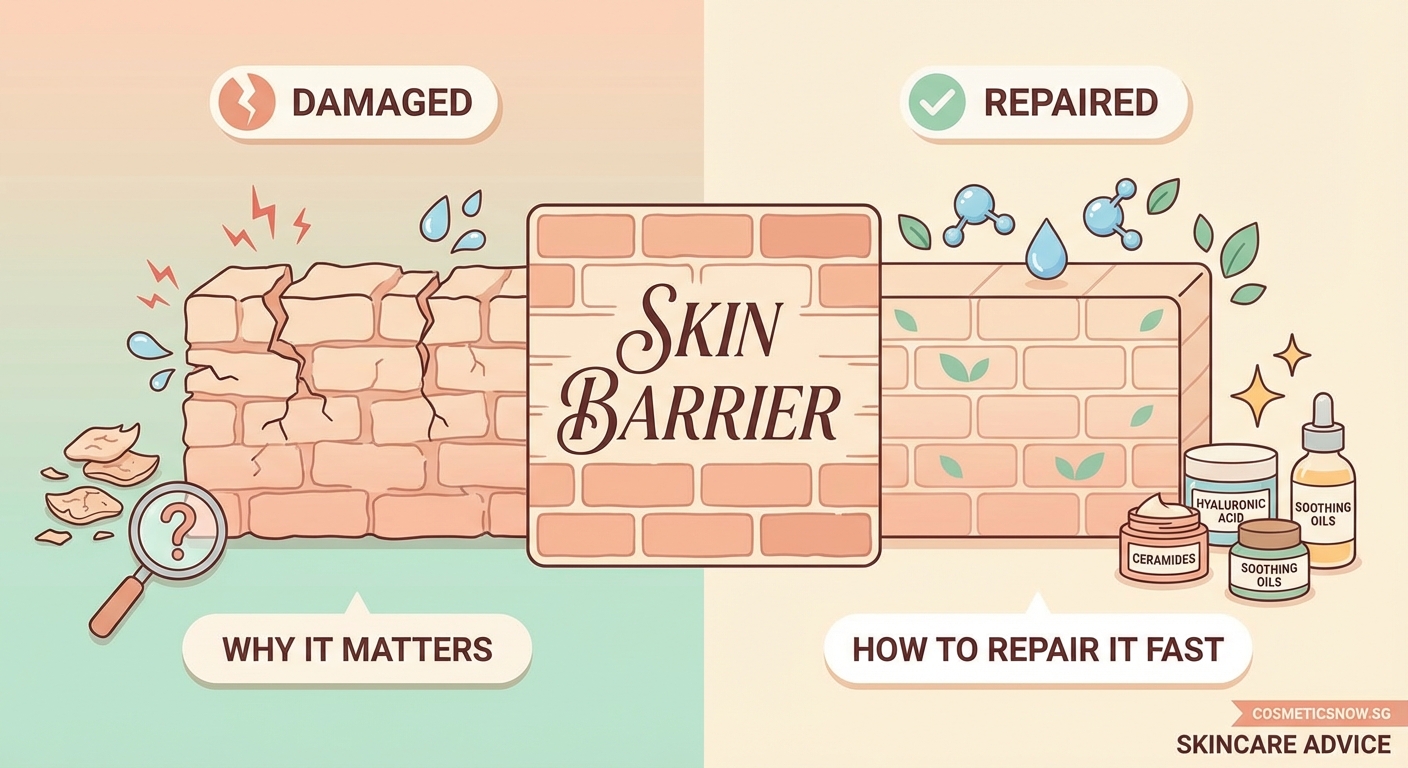
Your skin barrier is the outermost layer of your epidermis. Think of it as a brick wall where skin cells are the bricks and lipids are the mortar holding everything together.
This protective shield keeps water in and irritants out.
When functioning properly, your barrier maintains hydration, prevents infection, and protects against environmental damage. A healthy barrier feels smooth, stays hydrated, and tolerates products without reaction.
Damage occurs from over-exfoliation, harsh cleansers, extreme weather, or using too many active ingredients at once. Your skin loses its ability to retain moisture and becomes vulnerable to irritants.
Signs Your Barrier Needs Immediate Attention
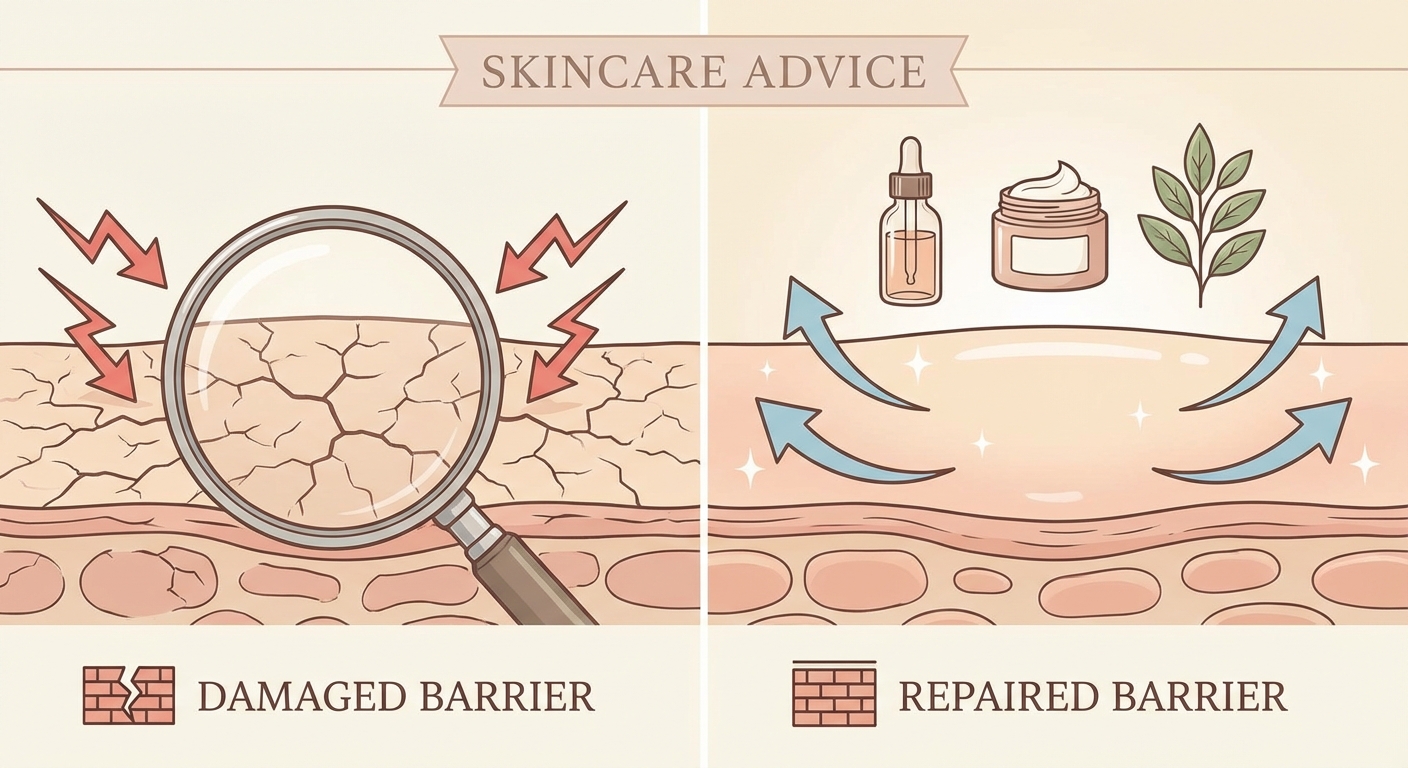
Recognizing barrier damage early speeds up recovery time.
Common symptoms include:
- Persistent dryness that moisturizer doesn’t fix
- Increased sensitivity to products that never bothered you before
- Redness, flaking, or rough texture
- Stinging sensation when applying skincare
- Breakouts in unusual areas
- Tight, uncomfortable feeling even after moisturizing
Your skin might show one or all of these signs. The severity varies based on how compromised your barrier has become.
The 5-Step Repair Protocol That Actually Works
Fixing your skin barrier requires a strategic approach. Here’s the exact method that delivers results:
-
Stop all active ingredients immediately. Put away retinol, acids, vitamin C, and any exfoliating products. Your skin needs a break from chemical activity to focus on healing.
-
Switch to a gentle, non-foaming cleanser. Foaming cleansers strip natural oils your barrier desperately needs. Choose cream or oil-based formulas that clean without compromising your lipid layer.
-
Apply a barrier repair serum or essence. Look for products containing ceramides, cholesterol, and fatty acids in a 3:1:1 ratio. These lipids mirror your skin’s natural composition and accelerate repair.
-
Lock everything in with an occlusive moisturizer. Ingredients like squalane, shea butter, or petrolatum create a protective seal that prevents water loss while your barrier rebuilds.
-
Protect with mineral sunscreen daily. UV damage slows healing and causes further barrier disruption. Zinc oxide and titanium dioxide protect without irritating compromised skin.
Following this protocol consistently for at least two weeks allows your skin to begin meaningful repair.
Ingredients That Speed Up Barrier Recovery
Not all skincare ingredients help during the healing process. Some accelerate repair while others cause setbacks.
Beneficial ingredients:
- Ceramides (especially ceramide 1, 3, and 6-II)
- Niacinamide at 2-5% concentration
- Hyaluronic acid for hydration
- Colloidal oatmeal to soothe inflammation
- Centella asiatica for calming and repair
- Panthenol (vitamin B5) for moisture retention
Ingredients to avoid until healed:
- All exfoliating acids (AHA, BHA, PHA)
- Retinoids and retinol
- Vitamin C (especially L-ascorbic acid)
- Alcohol denat or SD alcohol
- Fragrance and essential oils
- Physical scrubs
The complete step-by-step guide to building your first skincare routine can help you understand proper product layering once your barrier has recovered.
Common Mistakes That Delay Healing
Many people unknowingly sabotage their barrier repair efforts. Avoid these pitfalls:
| Mistake | Why It Hurts | Better Approach |
|---|---|---|
| Using too many products | Overwhelms compromised skin | Stick to 3-4 products maximum |
| Hot water cleansing | Strips protective oils | Use lukewarm water only |
| Over-moisturizing | Can cause congestion | Apply thin layers, let absorb |
| Switching products frequently | Doesn’t allow time to work | Commit to routine for 4 weeks |
| Skipping sunscreen | UV damage prevents healing | Apply mineral SPF daily |
| Continuing actives too soon | Re-damages fragile barrier | Wait until skin feels normal |
Patience proves harder than following any routine. Your barrier didn’t break overnight and won’t heal that way either.
Building Your Minimal Barrier Repair Routine
Simplicity wins during the healing phase. Here’s a practical morning and evening routine:
Morning routine:
* Rinse face with lukewarm water (no cleanser needed)
* Apply hydrating toner or essence while skin is damp
* Layer barrier repair serum
* Seal with moisturizer
* Finish with mineral sunscreen
Evening routine:
* Gentle cream cleanser to remove sunscreen
* Hydrating toner or essence on damp skin
* Barrier repair serum
* Thicker occlusive moisturizer
* Optional: thin layer of petroleum jelly on extra dry areas
This streamlined approach gives your skin exactly what it needs without overwhelming it. Many people find the right way to remove makeup without damaging your skin particularly helpful during this phase.
How Long Recovery Actually Takes
Timeline expectations help you stay consistent.
Most people notice improvement within 7-10 days. Redness decreases, stinging stops, and skin feels more comfortable.
Significant repair happens around the 2-3 week mark. Your skin tolerates products better and regains its smooth texture.
Complete barrier restoration typically takes 4-6 weeks for moderate damage. Severe cases may need 8-12 weeks of dedicated care.
“The skin barrier regenerates constantly, but when compromised, it needs strategic support to rebuild properly. Consistency with gentle care matters more than expensive products. Give your skin the time and ingredients it needs to heal itself.” — Board-certified dermatologist
Environmental Factors That Impact Healing
Your surroundings affect recovery speed more than you might realize.
Indoor environment:
* Use a humidifier if air feels dry
* Keep bedroom humidity between 40-50%
* Avoid sitting directly in front of heating vents
* Consider a cool mist humidifier for overnight moisture
Outdoor protection:
* Wear a wide-brimmed hat in direct sun
* Cover face with a soft scarf in cold wind
* Avoid chlorinated pools during healing
* Skip saunas and steam rooms temporarily
Lifestyle adjustments:
* Change pillowcases every 2-3 days
* Use fragrance-free laundry detergent
* Pat face dry instead of rubbing
* Avoid touching your face throughout the day
These environmental tweaks create optimal conditions for barrier repair.
When to Reintroduce Active Ingredients
Rushing back to your full routine risks undoing all your progress.
Wait until your skin shows these signs:
* No stinging when applying products
* Consistent hydration throughout the day
* Normal texture without flaking
* Reduced redness and sensitivity
* Products absorb normally
Start with one gentle active ingredient. Niacinamide or a low-percentage PHA makes a good first choice.
Use it twice weekly for two weeks. Monitor your skin’s response carefully.
If tolerance continues, gradually increase to three times weekly. Add a second active only after the first proves completely comfortable.
Understanding how to properly layer your serums for maximum skin benefits becomes important as you rebuild your routine complexity.
Natural Methods for Supporting Barrier Health
Several natural approaches complement your skincare routine.
Dietary support:
* Increase omega-3 fatty acids from fish or flax seeds
* Stay hydrated with at least 8 glasses of water daily
* Eat foods rich in vitamins A, C, and E
* Consider a probiotic supplement for gut-skin connection
Lifestyle habits:
* Get 7-9 hours of quality sleep nightly
* Manage stress through meditation or gentle exercise
* Avoid smoking and limit alcohol consumption
* Exercise moderately without overheating skin
Supplemental care:
* Take evening primrose oil capsules
* Use a silk pillowcase to reduce friction
* Apply aloe vera gel for extra soothing
* Try colloidal oatmeal baths for body skin
These natural methods work alongside topical treatments for comprehensive healing.
Preventing Future Barrier Damage
Once repaired, maintaining your barrier requires ongoing attention.
Establish these protective habits:
- Never skip sunscreen, even on cloudy days
- Introduce new products one at a time
- Limit active ingredients to 2-3 maximum
- Take breaks from exfoliation every few weeks
- Listen when your skin signals sensitivity
Building a sustainable routine matters more than following trends. The weekend reset approach for damaged skin offers periodic intensive care without daily overwhelm.
Balance active treatments with regular barrier support. Your skin thrives on consistency, not constant change.
Product Recommendations by Budget
Barrier repair doesn’t require luxury pricing.
Budget-friendly options:
* CeraVe Hydrating Cleanser
* The Ordinary Natural Moisturizing Factors
* La Roche-Posay Cicaplast Baume B5
* Vanicream Moisturizing Cream
Mid-range choices:
* Stratia Liquid Gold
* Paula’s Choice Omega+ Complex Serum
* First Aid Beauty Ultra Repair Cream
* Aveeno Eczema Therapy Daily Moisturizing Cream
Investment products:
* SkinCeuticals Triple Lipid Restore
* Dr. Jart+ Ceramidin Cream
* Drunk Elephant Lala Retro Whipped Cream
* Tatcha The Dewy Skin Cream
Effective barrier repair exists at every price point. Choose based on your budget and ingredient preferences.
Adjusting Your Approach for Different Skin Types
Barrier damage affects all skin types but requires slight modifications.
Oily skin:
* Use lighter, gel-cream textures
* Focus on niacinamide for oil regulation
* Don’t skip moisturizer thinking oil equals hydration
* Choose non-comedogenic barrier repair products
Dry skin:
* Layer multiple hydrating products
* Use richer, balm-like moisturizers
* Apply facial oil before occlusive cream
* Consider overnight masks 2-3 times weekly
Combination skin:
* Use different products on different zones
* Lighter formulas on oily areas
* Richer products on dry patches
* Maintain consistency with gentle cleansing
Sensitive skin:
* Patch test everything before full application
* Choose fragrance-free formulations exclusively
* Avoid essential oils completely
* Stick with minimal ingredient lists
Your skin type influences product texture but not the core repair principles.
Tracking Your Progress Effectively
Monitoring improvement helps you stay motivated and adjust as needed.
Take photos in consistent lighting every five days. Use the same angle and distance for accurate comparison.
Keep a simple journal noting:
* Daily comfort level (1-10 scale)
* Products used and amounts
* Any reactions or improvements
* Environmental factors (weather, stress, sleep)
This documentation reveals patterns and helps identify what works best for your skin.
Most people underestimate their progress without visual records. Photos often show improvement your mirror doesn’t reveal.
Your Path to Restored Skin Health
Repairing your skin barrier transforms not just your complexion but your entire relationship with skincare. A healthy barrier means products work better, makeup applies smoothly, and your skin feels comfortable throughout the day.
Start today with the simplest version of the repair routine. Remove one harsh product. Add one barrier-supporting ingredient. Give your skin permission to heal at its own pace. Your barrier has remarkable regenerative abilities when given the right support and sufficient time. Trust the process, stay consistent, and watch your skin return to its resilient, healthy state.