You’ve probably noticed the explosion of vegan skincare products claiming to turn back the clock. But when you’re watching fine lines deepen and noticing new wrinkles, you need real results, not just ethical packaging. The question isn’t whether vegan beauty aligns with your values. It’s whether plant-based formulas can actually deliver the same anti-aging punch as conventional treatments.
Vegan anti-aging skincare can match traditional formulas when powered by science-backed plant ingredients like bakuchiol, vitamin C, peptides, and hyaluronic acid. The effectiveness depends on active ingredient concentration and formulation quality, not whether the product contains animal derivatives. Many vegan alternatives now outperform conventional options by combining multiple botanical actives that target collagen production, cellular turnover, and oxidative stress simultaneously.
What makes anti-aging ingredients work
Anti-aging effectiveness comes down to specific mechanisms. Your skin needs ingredients that boost collagen production, accelerate cell turnover, fight free radicals, and maintain hydration.
Traditional anti-aging formulas often rely on retinol, collagen peptides from animal sources, snail mucin, and lanolin. These ingredients have decades of research backing their effectiveness.
Vegan formulas achieve the same results through different pathways. Plant-based retinol alternatives like bakuchiol stimulate collagen without the irritation. Peptides synthesized from plant amino acids signal your skin to produce more structural proteins. Antioxidants from berries, green tea, and vitamin C neutralize damage from UV exposure and pollution.
The science matters more than the source. A well-formulated vegan serum with 15% vitamin C will outperform a poorly stabilized conventional formula every time.
Plant-based powerhouses that actually reverse aging signs
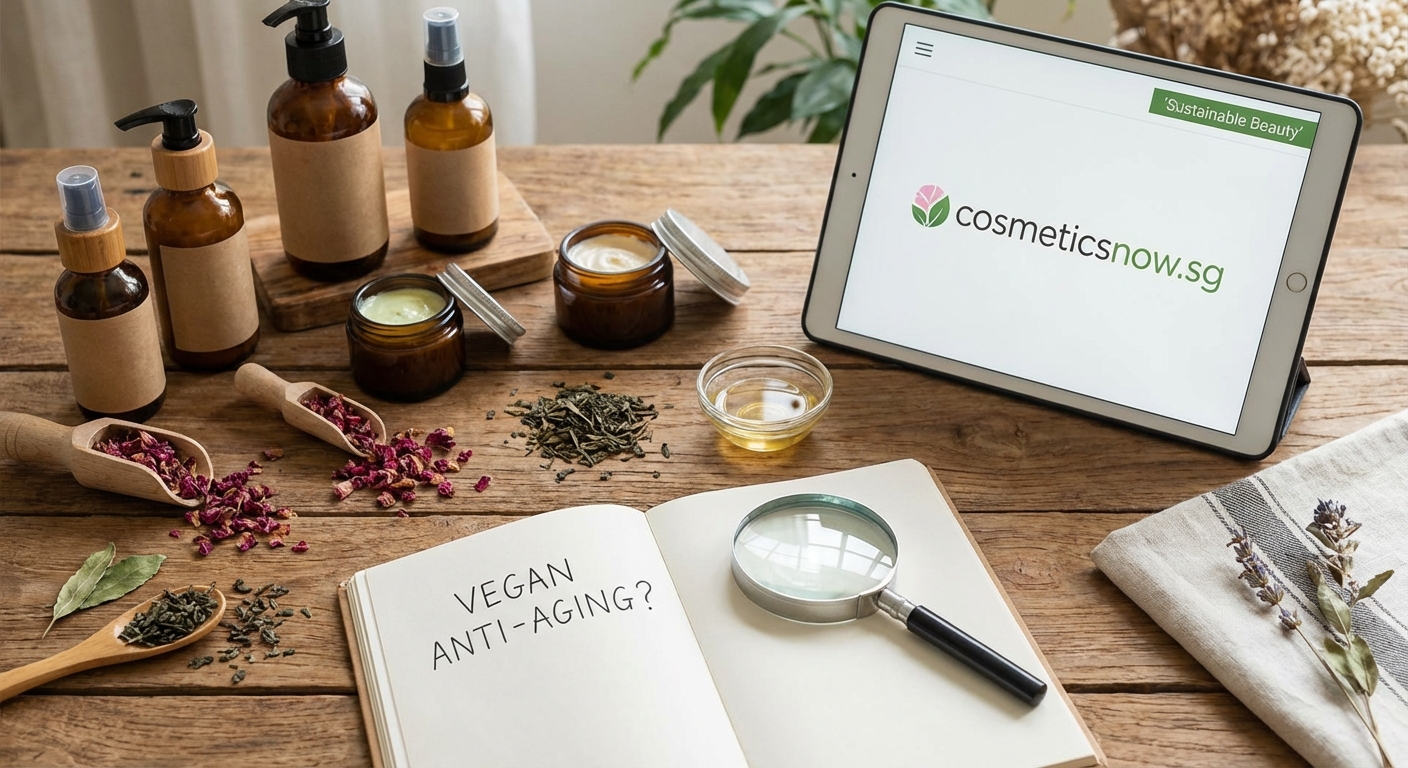
Several vegan ingredients have clinical studies proving their anti-aging capabilities.
Bakuchiol functions like retinol but comes from the babchi plant. Research shows it reduces fine lines and hyperpigmentation without causing redness or peeling. You can use it morning and night, even if you have sensitive skin.
Plant-derived peptides from soy, rice, and pea proteins send signals to fibroblasts, triggering collagen and elastin production. These work identically to animal-sourced peptides at the cellular level.
Vitamin C from kakadu plum contains 100 times more ascorbic acid than oranges. This potent antioxidant brightens skin, fades age spots, and protects against environmental damage while boosting collagen synthesis.
Hyaluronic acid can be vegan when fermented from plant sources rather than extracted from rooster combs. It holds 1000 times its weight in water, plumping skin and reducing the appearance of wrinkles.
Rosehip seed oil delivers natural retinoids, vitamin E, and essential fatty acids that improve skin texture and reduce scar visibility.
These ingredients appear in the complete step-by-step guide to building your first skincare routine alongside traditional options.
How to build an effective vegan anti-aging routine
Follow these steps to create a regimen that actually works:
-
Start with a gentle cleanser that removes makeup and pollution without stripping your skin barrier. Look for plant-based surfactants like coconut-derived cleansers.
-
Apply a vitamin C serum every morning to protect against free radical damage and brighten your complexion. Choose formulas with at least 10% L-ascorbic acid.
-
Use bakuchiol or plant retinol at night to stimulate cell turnover and collagen production. Start three times weekly and increase as your skin adjusts.
-
Layer peptide serums after your retinol alternative to maximize collagen-boosting signals. Understanding how to properly layer your serums for maximum skin benefits prevents ingredient conflicts.
-
Seal everything with a rich moisturizer containing plant ceramides, squalane from olives, and shea butter to lock in hydration and repair your skin barrier.
-
Never skip SPF with mineral zinc oxide or titanium dioxide to prevent new damage. Most premature aging comes from sun exposure, not time.
Comparing vegan versus conventional anti-aging ingredients
| Conventional Ingredient | Vegan Alternative | Effectiveness Comparison |
|---|---|---|
| Retinol | Bakuchiol | Equal wrinkle reduction, less irritation |
| Animal collagen | Plant peptides + vitamin C | Better absorption, stimulates natural production |
| Snail mucin | Hyaluronic acid + aloe | Comparable hydration, faster penetration |
| Lanolin | Squalane from olives | Superior moisture retention, non-comedogenic |
| Beeswax | Candelilla wax | Identical barrier protection, lighter texture |
| Carmine (red pigment) | Beetroot extract | Same color payoff, additional antioxidants |
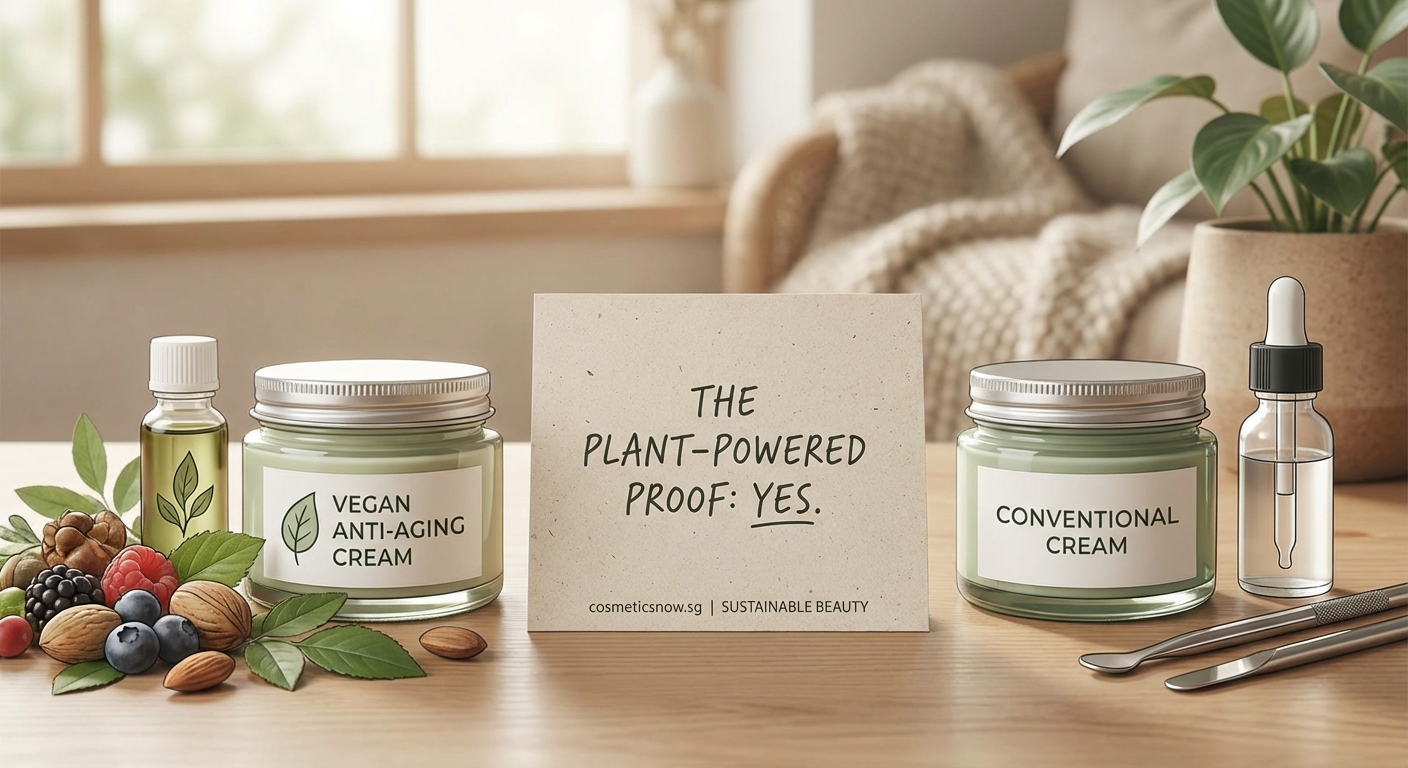
The table shows vegan alternatives often provide additional benefits beyond their conventional counterparts. Plant ingredients frequently contain multiple active compounds rather than single isolated molecules.
Common mistakes when switching to vegan anti-aging products
Many people sabotage their results by making these errors:
-
Expecting overnight miracles. Any anti-aging ingredient, vegan or not, requires 8-12 weeks to show visible results. Your skin cells need time to turn over and produce new collagen.
-
Choosing products based on marketing rather than ingredient lists. A product labeled “vegan” means nothing if it lacks effective actives at proper concentrations.
-
Skipping patch tests. Plant ingredients can cause allergic reactions just like conventional ones. Test new products on your inner arm for 48 hours before applying to your face.
-
Mixing too many actives at once. Combining vitamin C, retinol alternatives, and acids without proper spacing causes irritation and damages your skin barrier.
-
Forgetting that sunscreen matters most. The best anti-aging product you can use is broad-spectrum SPF 30 or higher. No serum can undo sun damage you’re actively creating.
When you’re building a nighttime skincare routine for every skin type, remember that consistency beats perfection.
What research actually says about vegan anti-aging effectiveness
Clinical studies comparing vegan and conventional anti-aging ingredients show compelling results.
A 2019 study published in the British Journal of Dermatology found bakuchiol reduced wrinkles and hyperpigmentation as effectively as retinol over 12 weeks. Participants using bakuchiol experienced significantly less scaling and stinging.
Research from the Journal of Cosmetic Dermatology demonstrated that plant-derived peptides increased skin firmness by 23% after eight weeks of twice-daily application. The results matched animal-sourced peptide performance.
A 2020 analysis in the International Journal of Cosmetic Science showed vitamin C from plant sources (when properly stabilized) performed identically to synthetic ascorbic acid in collagen synthesis and photoprotection.
The limitation isn’t the plant source. It’s formulation quality. Vegan ingredients need proper pH levels, stabilizers, and delivery systems to penetrate skin effectively.
“The molecular structure of an active ingredient determines its effectiveness, not whether it came from a plant or animal. Well-formulated vegan skincare matches conventional products in clinical outcomes while often providing better tolerability.” — Dr. Sarah Chen, Board-Certified Dermatologist
Ingredients to prioritize for specific aging concerns
Different plant actives target different issues:
For deep wrinkles and loss of firmness:
– Bakuchiol or plant retinol
– Peptides from soy or rice
– Vitamin C at 15-20% concentration
– Plant stem cells from edelweiss or grape
For age spots and uneven tone:
– Vitamin C combined with ferulic acid
– Niacinamide from plant fermentation
– Licorice root extract
– Kojic acid from mushrooms
For dryness and crepey texture:
– Hyaluronic acid (vegan-sourced)
– Squalane from olives or sugarcane
– Plant ceramides from wheat or rice
– Shea butter and jojoba oil
For loss of radiance:
– AHAs from fruit acids
– Vitamin E from sunflower seeds
– CoQ10 from fermentation
– Green tea polyphenols
Many of these ingredients appear in discussions about peptide serums and the future of anti-aging skincare.
Reading labels like a scientist
Product claims mean nothing without proper ingredient analysis. Here’s what to check:
Look at concentration. Ingredients appear in descending order by weight. If bakuchiol appears after preservatives (typically less than 1%), the product won’t deliver results.
Check for stabilizers. Vitamin C needs ferulic acid or vitamin E to remain stable. Without these, your serum oxidizes and becomes useless within weeks.
Identify delivery systems. Liposomal encapsulation, nano-particles, or time-release technology help actives penetrate deeper. These technologies matter more than the ingredient source.
Avoid fragrance. Natural or synthetic, fragrance serves no purpose beyond sensory appeal and can trigger inflammation that accelerates aging.
Watch for greenwashing. Terms like “botanical,” “natural,” and “clean” have no regulated definitions. They’re marketing language, not quality indicators.
Budget-friendly vegan options that actually work
Effective vegan anti-aging doesn’t require luxury pricing. Several affordable brands formulate with proper concentrations:
The Ordinary offers bakuchiol serum, plant peptides, and various vitamin C formulas for under $15 per product. Their transparent labeling shows exact percentages.
The Inkey List provides retinol alternatives, peptides, and hyaluronic acid at accessible prices with education-focused marketing.
Versed creates vegan formulas with clinical-strength actives at drugstore prices, often matching department store performance.
CeraVe (mostly vegan) uses plant ceramides and hyaluronic acid in pharmacy-available products recommended by dermatologists.
Price doesn’t determine effectiveness. A $20 serum with 15% vitamin C and ferulic acid outperforms a $200 cream with trace amounts of exotic botanicals.
Addressing texture and absorption concerns
One common complaint about vegan anti-aging products involves texture. Plant-based moisturizers can feel heavy or greasy compared to silicone-rich conventional formulas.
Modern formulation technology solves this problem. Look for products using:
- Lightweight plant oils like squalane, rosehip, or marula that absorb within minutes
- Plant-derived emulsifiers that create silky textures without dimethicone
- Gel-cream hybrids that combine hydration with fast absorption
- Powder-to-serum formulas that eliminate the need for heavy preservatives
Your skin doesn’t care about texture during sleep. Night creams can be richer without affecting daytime appearance. Save lightweight formulas for morning application under makeup.
When to expect visible results
Timeline matters for maintaining realistic expectations:
Weeks 1-2: Improved hydration and surface smoothness. Your skin barrier begins repairing itself.
Weeks 3-4: Reduced dullness and slight brightening as cell turnover accelerates.
Weeks 6-8: Visible reduction in fine lines around eyes and mouth. Skin texture becomes more refined.
Weeks 10-12: Noticeable improvement in deeper wrinkles, firmness, and overall tone evenness.
Months 4-6: Maximum results from current routine. Time to assess whether you need stronger actives or additional treatments.
These timelines apply to both vegan and conventional products. No ingredient, regardless of source, works faster than your skin’s natural renewal cycle.
Combining vegan skincare with professional treatments
Vegan home care works beautifully alongside in-office procedures. Many dermatologists now offer plant-based pre and post-treatment protocols.
Chemical peels, microneedling, and laser treatments all pair well with vegan recovery products. Plant-based ingredients like centella asiatica, calendula, and aloe speed healing without animal-derived growth factors.
Professional-grade vegan skincare lines exist for medical spas and dermatology offices. These formulas contain higher concentrations than retail products while maintaining cruelty-free standards.
Ask your provider about vegan options before scheduling treatments. Most can accommodate preferences without compromising results.
Making the switch without wasting products
Transitioning to vegan anti-aging doesn’t mean tossing your current routine immediately.
Finish products you’ve already purchased unless they cause irritation. Waste contradicts the ethical foundation of choosing vegan beauty.
Replace items one at a time as they run out. Start with your serum, since actives matter most for anti-aging results.
Keep what works. If your conventional sunscreen performs perfectly, use it while researching vegan alternatives. Protection beats perfection.
Track your skin’s response in photos taken under consistent lighting. Monthly comparisons reveal whether new products deliver promised results.
Your skin doesn’t care about philosophy
The bottom line? Is vegan skincare effective for anti-aging? Absolutely, when formulated correctly.
Your skin cells respond to molecular structures, not ingredient origins. A well-made vegan serum with bakuchiol, peptides, and vitamin C will reduce wrinkles just as effectively as conventional retinol formulas.
The advantage of modern vegan anti-aging products extends beyond ethics. Many plant-based formulas combine multiple actives that work synergistically, providing broader benefits than single-ingredient conventional treatments.
Choose products based on ingredient quality, concentration, and formulation science. Read labels carefully. Ignore marketing hype. Give products adequate time to work.
Your aging skin deserves effective treatment that aligns with your values. Vegan anti-aging skincare delivers both when you know what to look for.