Walking into a skincare store feels overwhelming when you see dozens of serums promising everything from glass skin to wrinkle erasure. You stand there reading labels filled with scientific names, wondering which bottle will actually fix your specific problems. The truth is, choosing the right serum isn’t about finding the most expensive option or the one with the longest ingredient list. It’s about matching active ingredients to your exact skin concerns.
Selecting the right serum means identifying your primary skin concern first, then matching it with proven active ingredients. Acne responds to salicylic acid and niacinamide, aging skin needs retinol and peptides, dryness requires hyaluronic acid and ceramides, while hyperpigmentation fades with vitamin C and alpha arbutin. Start with one targeted serum before layering multiple products.
Understanding What Serums Actually Do
Serums work differently than moisturizers or cleansers.
These lightweight formulas pack concentrated active ingredients into a base that penetrates deeper into your skin. Think of them as treatment products rather than basic maintenance.
The molecular size matters here. Serums contain smaller molecules that can slip past your skin’s outer barrier and work on the layers beneath. That’s why a good serum feels different from a cream. It absorbs faster and leaves minimal residue.
Most serums target one or two specific concerns. A brightening serum focuses on dark spots. An anti-aging formula tackles fine lines. Trying to find one product that does everything usually means you get mediocre results across the board.
Your skin can only absorb so much at once. Piling on five different serums doesn’t multiply the benefits. It just wastes product and potentially irritates your skin.
Match Your Primary Concern to the Right Ingredients
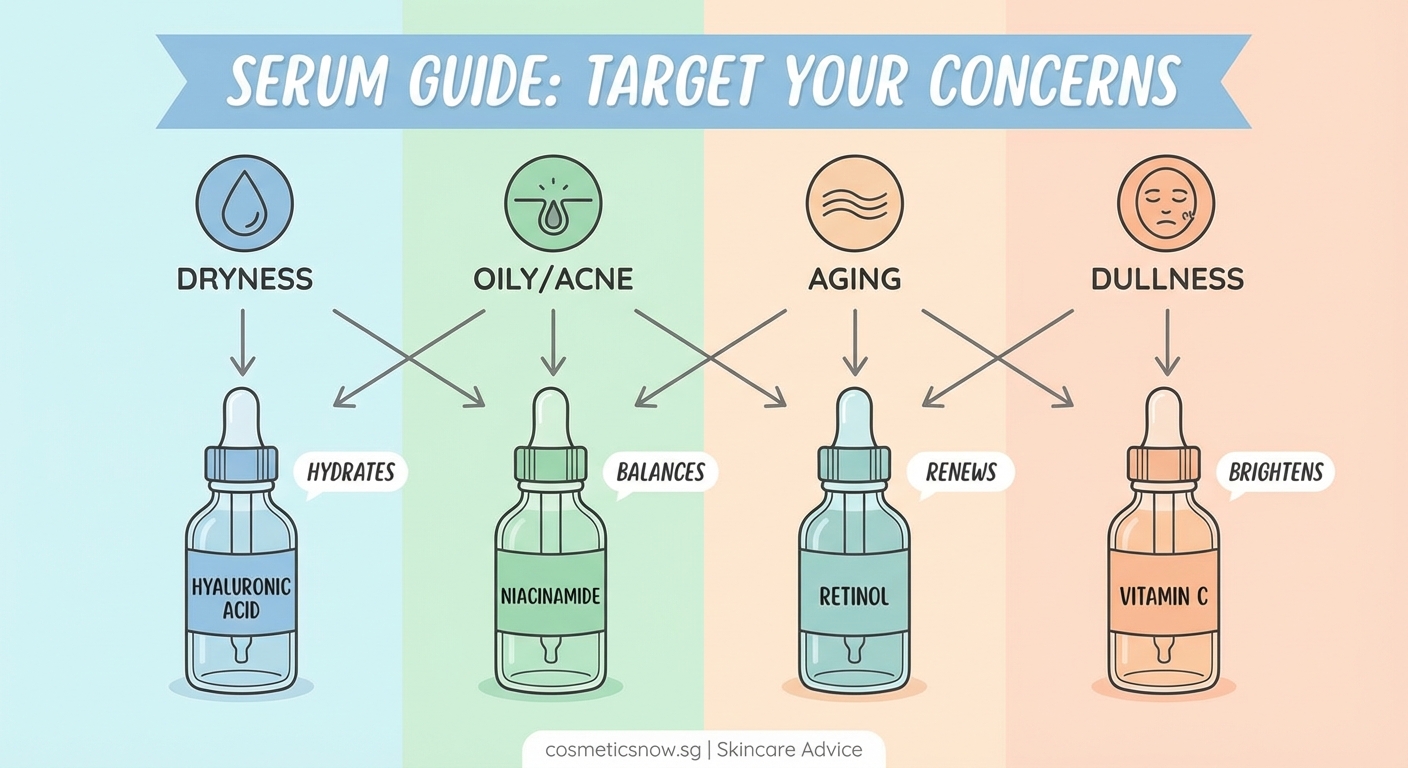
Before you buy anything, write down your top skin issue.
Not three issues. Not five. Pick the one that bothers you most right now.
Here’s how to match concerns with ingredients that actually have research backing them:
For Acne and Breakouts:
– Salicylic acid clears pores by dissolving the oil and dead skin cells that clog them
– Niacinamide reduces inflammation and regulates oil production
– Tea tree oil offers natural antibacterial properties without over-drying
For Aging and Fine Lines:
– Retinol speeds up cell turnover and stimulates collagen production
– Peptides signal your skin to produce more structural proteins
– Bakuchiol provides a gentler alternative to retinol with similar benefits
For Dryness and Dehydration:
– Hyaluronic acid holds up to 1000 times its weight in water
– Glycerin attracts moisture from the air into your skin
– Ceramides repair your skin barrier to prevent water loss
For Hyperpigmentation and Dark Spots:
– Vitamin C inhibits melanin production and brightens existing spots
– Alpha arbutin targets melanin without irritating sensitive skin
– Kojic acid fades stubborn discoloration over time
If you’re just starting the complete step-by-step guide to building your first skincare routine, focus on one active ingredient before adding more.
Reading Labels Like a Professional
Ingredient lists tell you everything you need to know if you understand the language.
Ingredients appear in descending order by concentration. The first five ingredients make up the bulk of any formula. If your target ingredient appears near the end of a long list, you’re getting trace amounts that won’t do much.
Look for concentration percentages when listed. Vitamin C works best between 10-20%. Salicylic acid for acne typically ranges from 0.5-2%. Retinol shows results starting at 0.25% for beginners.
Some ingredients need specific formulations to remain stable. Vitamin C degrades in clear bottles exposed to light. It should come in opaque or dark glass packaging. Retinol needs airless pump containers to prevent oxidation.
Watch for ingredient combinations that cancel each other out. Vitamin C and retinol together can irritate skin. Niacinamide and pure vitamin C (L-ascorbic acid) at high concentrations may reduce effectiveness.
pH levels matter for certain actives. AHAs and BHAs need a pH between 3-4 to work properly. If a product doesn’t list pH, it might not be formulated correctly.
Step-by-Step Process for Choosing Your First Serum
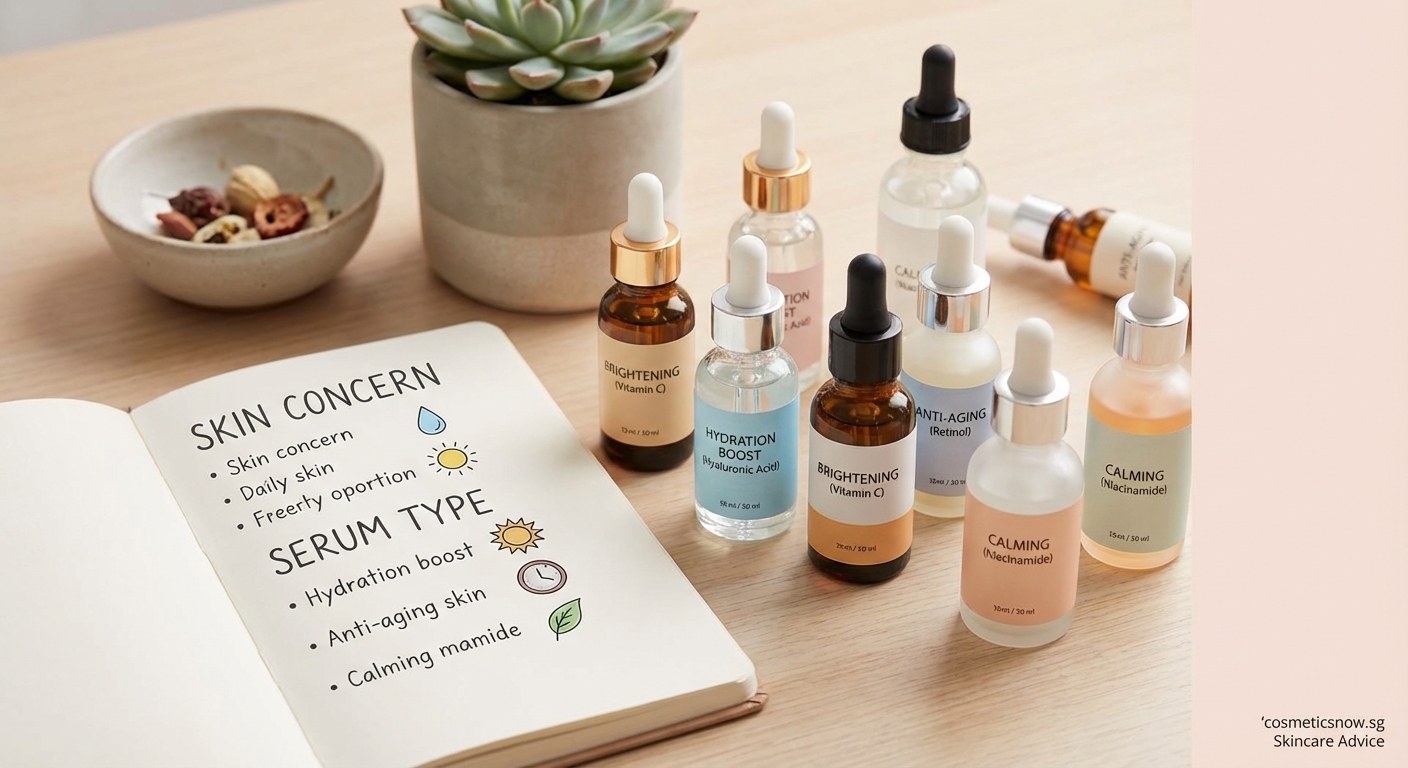
Follow this method to narrow down your options:
-
Identify your primary skin concern by looking at your bare face in natural daylight. Take photos if needed.
-
Research which active ingredient addresses that concern most effectively. Check multiple sources, not just brand marketing.
-
Determine your skin’s sensitivity level. If you react to fragrances or have rosacea, you need gentler formulations.
-
Set a realistic budget. Effective serums exist at every price point. More expensive doesn’t always mean better.
-
Check the ingredient list for your target active near the top, along with supporting ingredients that enhance absorption.
-
Verify the packaging protects the formula. Dark glass, airless pumps, or opaque tubes preserve active ingredients.
-
Read reviews from people with your specific skin type and concern, not just overall star ratings.
-
Start with the lowest effective concentration of any active ingredient. You can always increase strength later.
“The biggest mistake people make is trying to address every skin concern at once. Your skin needs time to adjust to new actives. Choose one problem, give it 8-12 weeks of consistent use, then reassess.” — Board-certified dermatologist
Common Mistakes That Waste Your Money
Buying serums based on trends rather than your actual needs leads to a drawer full of half-empty bottles.
Here’s what trips people up:
| Mistake | Why It Fails | Better Approach |
|---|---|---|
| Using too many serums at once | Ingredients conflict or overwhelm skin | Start with one targeted serum |
| Expecting overnight results | Cell turnover takes 4-6 weeks minimum | Commit to 8-12 weeks before judging |
| Ignoring concentration levels | Too weak does nothing, too strong irritates | Match concentration to experience level |
| Skipping patch tests | Full-face reactions waste product and time | Test on inner arm for 24 hours first |
| Mixing incompatible actives | Reduces effectiveness or causes irritation | Learn basic ingredient interactions |
| Buying based on packaging alone | Pretty bottles don’t equal effective formulas | Prioritize ingredient quality over design |
The serum that works for your friend might not work for you. Skin type, climate, age, and even stress levels affect how products perform.
Layering Serums Without Creating Problems
Once you’ve mastered one serum, you might want to add another for a different concern.
The order matters more than you think.
Apply products from thinnest to thickest consistency. Water-based serums go first, followed by oil-based formulas. This ensures each layer can penetrate properly.
Wait 30-60 seconds between applications. Your skin needs time to absorb each product. Rushing the process means products sit on top of each other rather than sinking in.
Some combinations work beautifully together:
– Vitamin C in the morning with sunscreen for enhanced protection
– Niacinamide and hyaluronic acid for hydration plus pore refinement
– Peptides and retinol at night for comprehensive anti-aging
Others should stay separated:
– Vitamin C and retinol (use at different times of day)
– AHAs/BHAs and retinol (alternate nights instead)
– Multiple strong actives (choose one hero ingredient per routine)
If you want to understand the complete picture, check out how to properly layer your serums for maximum skin benefits.
Testing New Serums Safely
Your skin might love an ingredient in theory but hate it in practice.
Patch testing prevents full-face disasters. Apply a small amount to your inner forearm or behind your ear. Wait 24 hours. Check for redness, itching, or bumps.
Even if the patch test passes, introduce new serums gradually. Use every third night for the first week. If your skin tolerates it well, increase to every other night. Eventually work up to daily use if the product allows.
Watch for signs your skin needs a break:
– Increased redness or sensitivity
– Burning sensation that doesn’t fade
– Excessive dryness or flaking
– New breakouts in unusual areas
– Tightness that moisturizer doesn’t relieve
These symptoms mean you’re either using too much, applying too frequently, or the formula doesn’t suit your skin chemistry.
Keep a simple journal noting when you start new products and any changes you observe. This helps identify what’s working versus what’s causing problems.
Adjusting Your Serum Choice as Seasons Change
Your skin’s needs shift throughout the year.
Summer humidity might make heavy serums feel suffocating. Winter dryness could require more intense hydration. Paying attention to these changes prevents you from forcing products that no longer serve you.
Hot months call for:
– Lighter, gel-based formulas
– More emphasis on oil control
– Antioxidants to combat sun damage
– Hydrating ingredients over occlusive ones
Cold months need:
– Richer, more emollient textures
– Extra barrier repair ingredients
– Humectants paired with occlusives
– Less frequent use of strong exfoliants
Your skin might also change due to hormones, stress, diet, or medications. The serum that worked perfectly last year might need replacing. That’s normal. Skin isn’t static.
Building Your Routine Around Your Serum
Serums don’t work in isolation.
Your cleanser, moisturizer, and sunscreen all affect how well your serum performs. A harsh cleanser strips away the oils your serum needs to penetrate. Skipping moisturizer means your serum’s benefits evaporate. Forgetting sunscreen undoes all the work your brightening serum accomplishes.
Morning routine structure:
1. Gentle cleanser
2. Hydrating or antioxidant serum
3. Moisturizer
4. Sunscreen (non-negotiable)
Evening routine structure:
1. Cleansing oil or balm
2. Water-based cleanser
3. Treatment serum (retinol, acids, etc.)
4. Moisturizer or night cream
Some actives work better at specific times. Vitamin C and antioxidants protect during the day. Retinol and AHAs repair at night when your skin isn’t exposed to UV rays.
For a complete framework on timing, how to build a nighttime skincare routine for every skin type covers the details.
When to Upgrade or Switch Serums
Sticking with a serum that stopped working wastes time and money.
Your skin adapts to certain ingredients over time. What delivered dramatic results initially might plateau after 6-12 months. This doesn’t mean the product is bad. It means your skin reached maximum benefit from that concentration or formula.
Signs it’s time to switch:
– No new improvements after 3 months of consistent use
– Your skin concern has resolved and you need to target something else
– The formula now causes irritation when it didn’t before
– Your skin type has changed (became drier, oilier, more sensitive)
– Better formulations with higher concentrations of your target ingredient now exist
Don’t abandon a product just because you don’t see daily changes. Skin improvement happens gradually. Compare photos from 8 weeks apart rather than day to day.
Consider upgrading when:
– Your skin tolerates the current concentration easily
– You want faster or more dramatic results
– Your budget allows for higher-quality formulations
– New research supports more effective ingredient combinations
Special Considerations for Sensitive Skin
Sensitive skin doesn’t mean you can’t use active ingredients.
It means you need to be more selective and patient. Choose serums with shorter ingredient lists. Fewer components mean fewer potential irritants.
Look for these calming ingredients alongside your actives:
– Centella asiatica (cica)
– Allantoin
– Beta-glucan
– Bisabolol
– Colloidal oatmeal
Avoid common irritants even in “active” formulas:
– Fragrance (synthetic or natural)
– Essential oils
– Denatured alcohol high on the ingredient list
– Harsh preservatives like methylisothiazolinone
Start with the gentlest version of your target active. Bakuchiol instead of retinol. Mandelic acid instead of glycolic acid. Azelaic acid instead of hydroquinone.
Sensitive skin also benefits from buffering techniques. Apply your serum over a thin layer of moisturizer to reduce contact intensity. This slows absorption slightly but prevents irritation.
If you’re dealing with compromised skin, why your skin barrier matters and how to repair it fast explains the foundation you need before adding actives.
Budget-Friendly Serum Shopping Strategies
Effective serums exist at every price point.
Expensive doesn’t automatically mean better. You’re often paying for packaging, marketing, and brand prestige rather than superior ingredients.
Focus your money on these factors:
– Concentration of active ingredients
– Stability of the formula
– Quality of supporting ingredients
– Appropriate packaging for the actives
Save money by:
– Buying larger sizes when you find a formula that works
– Skipping serums with long lists of “exotic” ingredients that don’t address your concern
– Choosing brands that invest in formulation over influencer partnerships
– Using targeted treatments instead of multi-purpose products that do everything poorly
Some affordable brands formulate as well as luxury lines. Check the ingredient list and concentration rather than the price tag. A $15 serum with 10% niacinamide beats a $150 serum with niacinamide listed tenth.
Sample sizes help you test expensive formulas before committing. Many brands offer discovery sets or travel sizes. You’ll know within 2-3 weeks if your skin likes the formula.
Tracking Your Progress Properly
Your memory lies about skin improvements.
Take photos in the same lighting, same angle, same time of day. Natural light near a window works best. Take them weekly for the first month, then monthly after that.
Note these details in your tracking:
– Product name and concentration
– Start date
– Frequency of use
– Any other products you’re using
– Changes in diet, stress, or hormones
– Weather or seasonal shifts
Compare photos from 4, 8, and 12 weeks. Look for:
– Reduction in concern severity
– Improved skin texture
– More even tone
– Better hydration levels
– Fewer breakouts or less irritation
Some concerns improve faster than others. Hydration shows results in 2-3 weeks. Hyperpigmentation takes 8-12 weeks. Deep wrinkles need 3-6 months of consistent retinol use.
Don’t judge results based on how products feel. A serum that tingles isn’t necessarily working better. One that feels like nothing might be transforming your skin quietly.
Your Serum Selection Roadmap
Choosing the right serum stops being overwhelming once you understand the framework.
Start with your biggest concern. Find the proven active ingredient that addresses it. Check the concentration and formula stability. Test it properly. Give it time to work.
Your skin will tell you what it needs if you pay attention. Tightness means more hydration. Persistent spots mean stronger treatment. Irritation means pulling back.
The perfect serum isn’t the one everyone raves about online. It’s the one that solves your specific problem without causing new ones. Trust the process, track your progress, and adjust as needed. Your skin will thank you with visible results that make the effort worthwhile.