You’ve probably seen it all over your feed. That gorgeous, multi-toned blush that looks like a warm sunset melting across cheekbones. It’s not just another makeup trend. The sunset blush technique delivers a dimensional glow that photographs beautifully and flatters every face shape. The best part? It’s easier than it looks once you understand the placement strategy.
The sunset blush technique layers multiple blush shades from light to dark, creating a gradient effect that mimics a sunset. Start with a peachy-pink on your cheekbones, blend a coral shade through the center, and finish with a deeper terracotta or berry tone at the apples of your cheeks. This dimensional approach adds natural-looking warmth and lift to your face while staying camera-ready all day.
What makes the sunset blush technique different
Traditional blush application focuses on one shade swept across the apples of your cheeks. The sunset technique uses three or more shades blended seamlessly together. This creates depth and dimension that single-color blush can’t achieve.
The gradient mimics how light naturally hits your face. Lighter shades sit higher on your cheekbones where light would naturally reflect. Darker tones nestle into the apples of your cheeks, adding warmth without looking muddy.
This technique works particularly well in photos. The multiple tones prevent your face from looking flat under camera flash. Your cheekbones appear more sculpted without heavy contouring.
Choosing your sunset palette
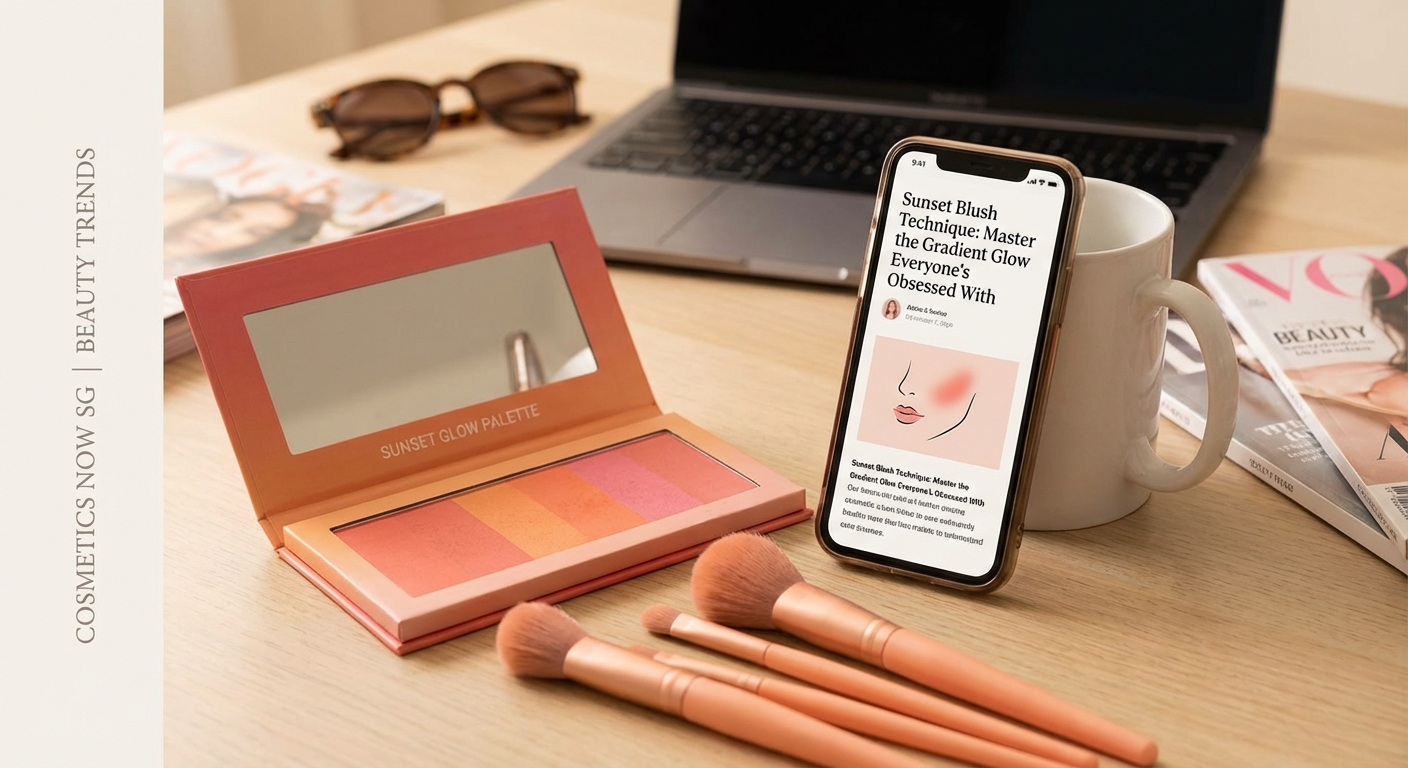
Your shade selection determines whether this technique looks natural or costume-like. Start with three shades in the same color family.
For warm undertones, try:
– Peachy champagne (lightest)
– Warm coral (medium)
– Terracotta or burnt orange (deepest)
For cool undertones, consider:
– Soft pink (lightest)
– Rose (medium)
– Berry or mauve (deepest)
For neutral undertones, blend:
– Apricot (lightest)
– Peachy-pink (medium)
– Dusty rose (deepest)
The shades should blend into each other without harsh lines. Test them on your hand first. If you can see where one shade stops and another starts, they’re too different in tone.
Cream formulas work best for beginners. They blend more easily than powders and create that dewy, lit-from-within glow. Powder formulas give more staying power but require a lighter hand.
Step-by-step sunset blush application
Getting this technique right depends on proper layering and blending. Here’s exactly how to build your gradient.
-
Prep your base. Apply your foundation and concealer first. Set only your T-zone with powder. Leave your cheeks slightly tacky so the blush adheres better. If you’re following how to apply foundation like a professional makeup artist, your base should already be smooth and even.
-
Start with your lightest shade. Using a fluffy brush or your fingertips, apply the lightest color to the highest point of your cheekbones. This sits right below your outer eye corner, extending back toward your hairline. Blend upward toward your temples.
-
Layer your medium tone. Apply the middle shade slightly lower, starting at the apple of your cheek when you smile. Blend it into the lighter shade above, creating a seamless transition. Use circular motions to diffuse any harsh edges.
-
Add your deepest shade. Place the darkest color on the fullest part of your cheek apple. Use less product here than with the other shades. Blend downward slightly and inward toward your nose, but keep most of the color concentrated on the apple.
-
Blend the gradient. Using a clean, dry brush, blend where all three shades meet. The goal is a smooth transition, not distinct stripes. Blend in upward, circular motions to maintain the lifted effect.
-
Set if needed. If you used cream blush, you can set it with a matching powder blush in your medium tone. Use a light dusting only. Too much powder kills the dewy finish.
Tools that make the difference
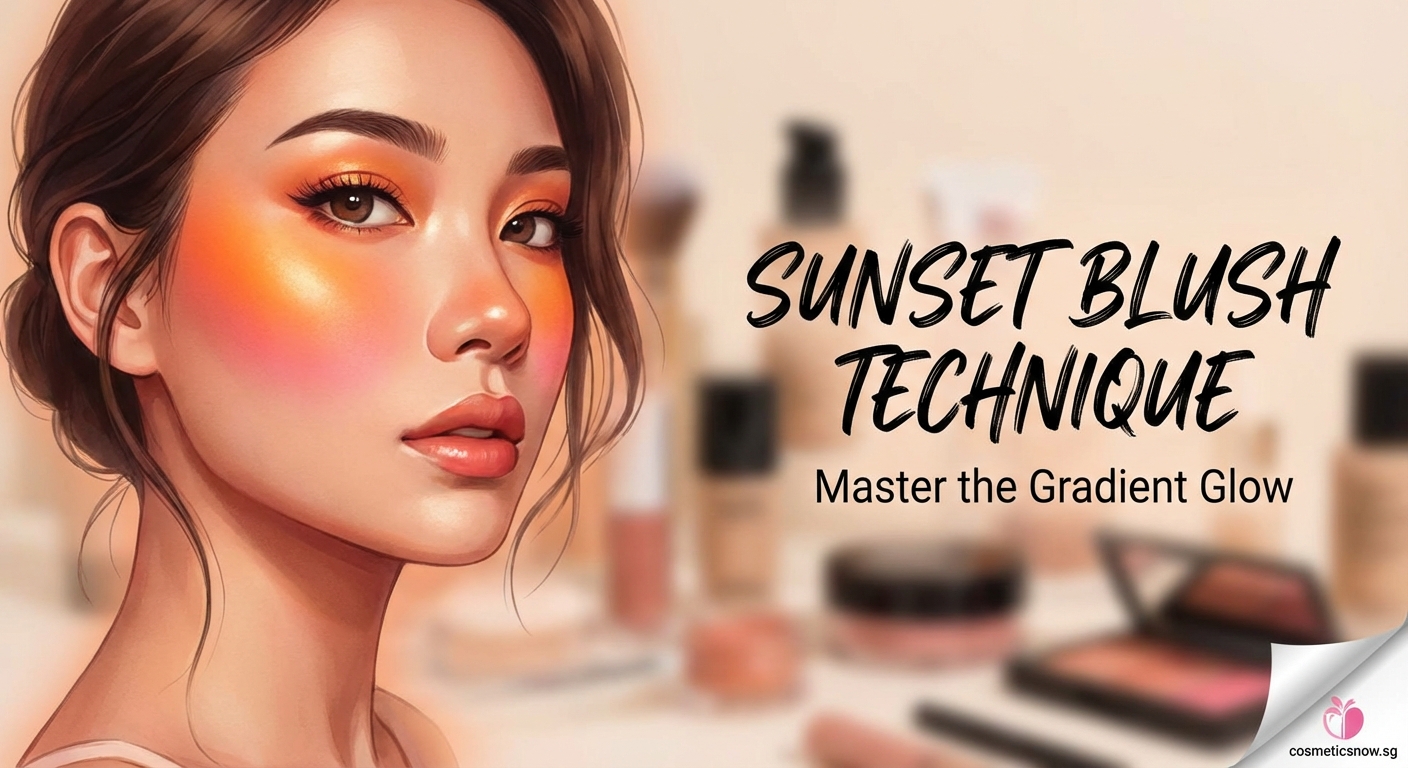
Your brush choice affects how smoothly your gradient blends. Different tools create different effects.
Duo-fiber brushes work beautifully for the lightest shade. The mixed bristle lengths create a diffused, airbrushed effect that prevents harsh edges.
Dense, rounded brushes handle the medium shade best. They pack on enough color while still allowing for blending.
Small, tapered brushes give you precision for the darkest shade. You want control here to avoid placing too much deep color.
Beauty sponges excel at blending all three shades together. After applying each shade with brushes, bounce a damp sponge over your cheeks to seamlessly merge the colors.
Your fingertips work surprisingly well with cream formulas. Body heat warms the product, making it melt into your skin naturally. Pat and blend each shade with clean fingers.
Common mistakes and how to fix them
Even experienced makeup lovers struggle with this technique at first. Here are the issues that trip people up most.
| Mistake | Why it happens | How to fix it |
|---|---|---|
| Muddy, brown-looking cheeks | Using shades too far apart in tone | Choose colors closer together in the same family |
| Harsh lines between colors | Not blending enough between shades | Use a clean brush to blend transition areas longer |
| Blush sitting on top of skin | Applying over too much powder | Set only your T-zone, leave cheeks slightly tacky |
| Looking clownish | Using too much of the darkest shade | Start with less product, build gradually |
| Losing the gradient | Over-blending all three shades | Blend only where colors meet, not the entire area |
| Patchy application | Dry skin texture | Exfoliate and moisturize before makeup application |
The most common fix for any sunset blush mishap? Blend more where the shades meet, but preserve the distinct color zones. You want a gradient, not a single muddy color.
Adjusting the technique for your face shape
The basic sunset technique works for everyone, but slight adjustments enhance different face shapes.
Round faces benefit from angling the gradient upward more dramatically. Place your darkest shade slightly higher than the traditional apple placement. This creates the illusion of more defined cheekbones.
Oval faces can follow the standard placement. Your balanced proportions let the natural gradient shine without adjustment.
Square faces should soften the edges by extending the lightest shade slightly forward toward the nose. This creates a rounder, softer appearance.
Heart-shaped faces need the darkest shade placed slightly lower and more centered. This balances a wider forehead with a narrower chin.
Long faces benefit from a more horizontal gradient. Keep all three shades closer to the center of your face rather than extending back to your hairline.
Understanding contouring 101: where to apply each product based on your face shape helps you adapt the sunset technique to your unique features.
Making your sunset blush last all day
Gradient blush requires extra staying power. Multiple layers of cream product can slip throughout the day without proper setting.
Start with a hydrating primer that includes a grip factor. Tacky primers help cream products adhere without looking cakey.
After applying all three blush shades, wait two minutes. Let the cream products set slightly before adding powder.
Use a light dusting of translucent powder only where you tend to get oily. For most people, this means the center of the cheeks. Leave the outer gradient area slightly dewy.
Consider using a setting spray formulated for cream products. Spray from 8 to 10 inches away, letting it mist over your cheeks rather than saturating them.
Carry your medium-toned blush for touch-ups. This shade sits in the middle of your gradient and can refresh the entire look without disrupting the other colors.
“The sunset technique works because it mimics how light and shadow naturally play across the face. You’re not fighting your bone structure, you’re enhancing it with strategic color placement. The gradient creates dimension that looks effortless, even though it’s carefully constructed.” — Celebrity makeup artist recommendation
Product textures and when to use each
Cream, liquid, and powder blushes all work for sunset techniques, but they shine in different situations.
Cream blush sticks offer the easiest application for beginners. You can draw the color exactly where you want it, then blend with fingers or a sponge. They create that coveted dewy finish and photograph beautifully. Best for normal to dry skin types.
Liquid blush provides the most natural, skin-like finish. The thin consistency blends seamlessly but requires a fast hand. Once it sets, it’s harder to move around. Perfect for creating that “just worked out” flush. Works well on all skin types but especially oily skin since it sets quickly.
Powder blush delivers maximum staying power and works best for oily skin. It’s also easier to build gradually without over-applying. The downside? Powder can emphasize texture and requires more blending skill to create smooth gradients. Set cream blush with powder versions of your shades for all-day wear.
Gel blush sits somewhere between liquid and cream. It has a bouncy, jelly-like texture that blends easily and sets to a natural finish. Gel formulas work particularly well for the lightest shade in your gradient since they create a sheer, luminous effect.
Adapting the sunset technique for different occasions
The intensity of your gradient should match your setting. A soft, barely-there version works for daytime, while a bold, saturated gradient suits evening events.
Daytime office look: Use sheer formulas and keep your darkest shade subtle. The gradient should be visible only in certain lighting. Focus on creating a healthy flush rather than dramatic color.
Brunch or casual daytime: This is where the sunset technique truly shines. Use medium-intensity colors that photograph well in natural light. Your gradient should be noticeable but still natural-looking.
Evening events: Amp up the intensity of all three shades. Use more saturated colors and don’t be afraid of bold contrast between your lightest and darkest tones. Add a touch of highlighter on top of your lightest shade for extra dimension under artificial lighting.
Special occasions: Layer cream and powder versions of your shades for maximum impact and staying power. This creates the most dramatic, long-lasting gradient that holds up through hours of photos and dancing.
Pairing sunset blush with other makeup
Your blush technique influences the rest of your makeup choices. Balance is key.
Eye makeup: Keep eyes relatively simple when wearing a bold sunset blush. A neutral eye with defined lashes lets your cheeks be the focal point. If you want more dramatic eyes, dial back the intensity of your blush gradient. The techniques in winged eyeliner for beginners: 3 foolproof methods that actually work pair beautifully with a soft sunset blush.
Lip color: Choose lip shades that complement your blush palette without competing. If you’re using warm peachy-coral blush tones, try nude-pink or terracotta lips. Cool pink blush gradients pair well with rose or berry lips. Avoid exact matches between your darkest blush shade and your lip color. This can look too coordinated.
Highlighter placement: Apply highlighter only on the very top of your lightest blush shade. This enhances the lifted effect without disrupting your gradient. Skip highlighter in the center or lower parts of your cheeks where your darker shades sit.
Bronzer coordination: If you use bronzer, apply it before your blush gradient. Place it in your typical contour areas, then build your sunset blush on top. The bronzer creates depth while the blush adds warmth and color.
Troubleshooting specific skin concerns
Different skin types and concerns require adjustments to the standard sunset technique.
For dry, flaky skin: Exfoliate thoroughly and apply a rich moisturizer 10 minutes before makeup. Use only cream or liquid blush formulas. Powder will cling to dry patches and emphasize texture. Mix a drop of facial oil into your blush for extra dewiness.
For oily skin: Set your base with powder before applying blush. Use gel or liquid formulas that set quickly, or apply cream blush and immediately set it with powder versions. Blot between your lightest and medium shades if you notice any sliding.
For textured skin: Apply a pore-filling primer before foundation. Use stippling motions rather than sweeping to apply blush, which prevents catching on texture. Cream formulas generally look smoother than powder on textured skin.
For mature skin: Focus the darkest shade slightly higher than traditional placement to combat sagging. Use cream formulas with light-reflecting particles that won’t settle into fine lines. Avoid matte formulas, which can look flat and aging.
For acne-prone skin: Choose non-comedogenic blush formulas. Apply with clean brushes or disposable sponges to prevent bacteria transfer. If you have active breakouts, adjust your placement to avoid irritated areas.
Maintaining healthy skin underneath your makeup matters just as much as technique. Following the complete step-by-step guide to building your first skincare routine ensures your canvas stays smooth and radiant.
Building your sunset blush skills over time
Nobody nails this technique perfectly on the first try. It requires practice and experimentation.
Start by practicing the placement with just one blush shade. Get comfortable with where each zone sits on your face. Once the placement feels natural, add a second shade. Master blending two colors before introducing the third.
Take photos in different lighting. Natural window light, bathroom lighting, and camera flash all reveal different aspects of your blend. What looks perfect in your bathroom mirror might show harsh lines in photos.
Film yourself applying the technique. Watching your own process helps you spot where you’re rushing or not blending enough. You’ll notice habits you didn’t realize you had.
Try the technique with different color families. What works in peachy tones might need adjustment in pink or berry shades. Each color family has a different intensity level.
Experiment with brush versus finger application. Some people achieve better results with brushes, others prefer the control of fingertips. There’s no wrong method if your result looks seamless.
Creating your perfect gradient glow
The sunset blush technique transforms your makeup routine from flat to dimensional. It adds that professional, editorial quality to everyday looks without requiring advanced skills.
Start with three shades in the same color family. Apply the lightest tone to your upper cheekbones, layer the medium shade through the center, and place the darkest color on your cheek apples. Blend where the shades meet while preserving distinct color zones.
Your gradient should look like a warm, natural flush that happens to be perfectly placed and impossibly even. Practice the placement, experiment with different formulas, and adjust for your unique face shape. The technique becomes second nature after a few tries, and the results are worth every minute of practice.
Grab your favorite blush shades and give it a try. Your cheekbones are about to get a whole lot more interesting.