You wake up to find strands on your pillow. You run your fingers through your hair and notice more pieces coming away. Your brush fills up faster than it used to. Hair breakage feels like a losing battle, but understanding what’s actually happening can change everything.
Hair breakage happens when strands snap along the shaft rather than falling from the root. Common causes include heat damage, chemical processing, rough handling, and protein-moisture imbalances. The good news? Most breakage is reversible with targeted care changes. This guide shows you exactly what’s causing your hair to break and the specific steps to restore strength and resilience to every strand.
Understanding what hair breakage actually means
Hair breakage differs from normal shedding.
When hair falls out naturally, you’ll see a small white bulb at the end. That’s the root. It’s completely normal to lose 50 to 100 hairs daily this way.
Breakage shows up differently. The strands snap somewhere along the length. No bulb. Just a blunt or frayed end where the hair gave out.
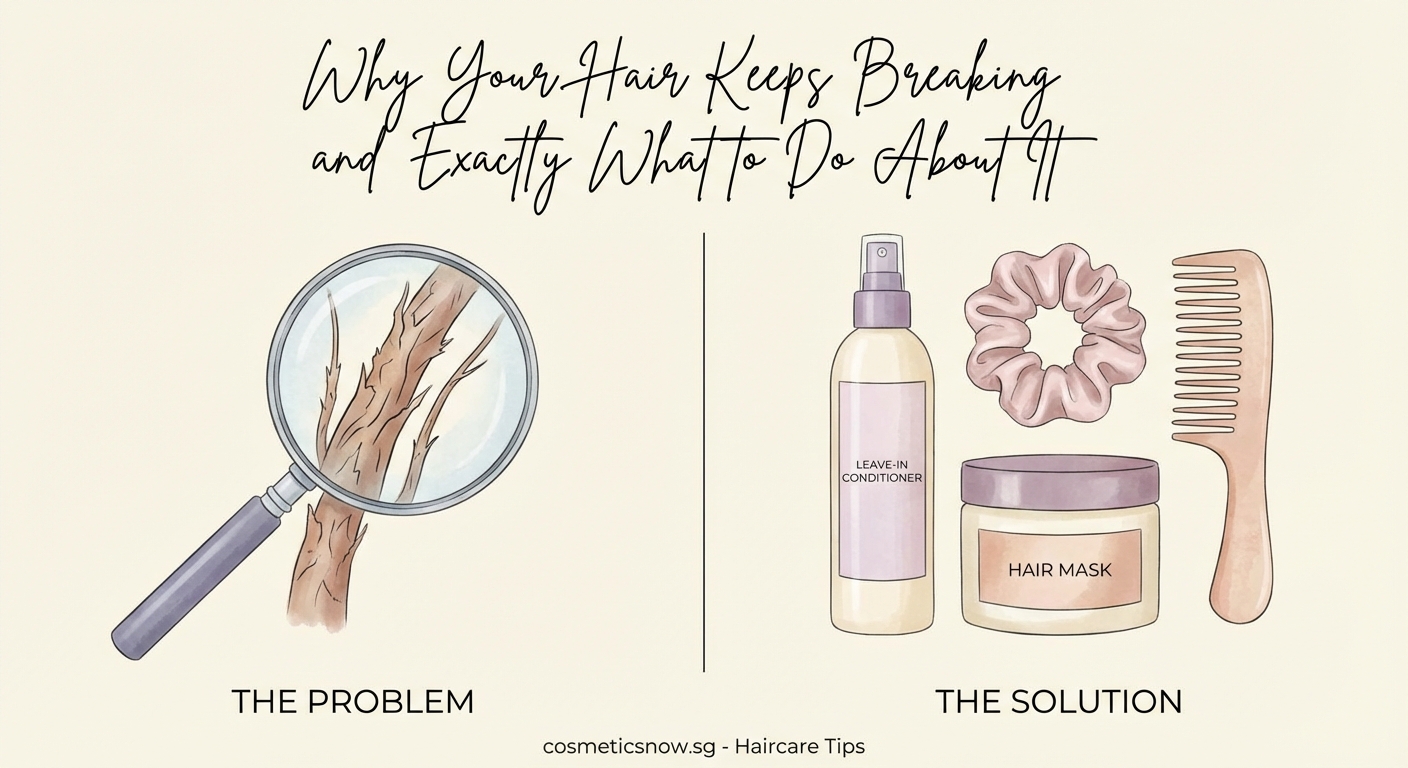
Your hair shaft consists of three layers. The outermost layer, called the cuticle, acts like protective shingles on a roof. When these shingles lift or chip away, the inner cortex becomes exposed. That’s when breakage begins.
Healthy hair can stretch about 30% of its length when wet before snapping. Damaged hair loses this elasticity. It becomes brittle and breaks with minimal tension.
The most common reasons your hair keeps breaking
Heat styling without protection
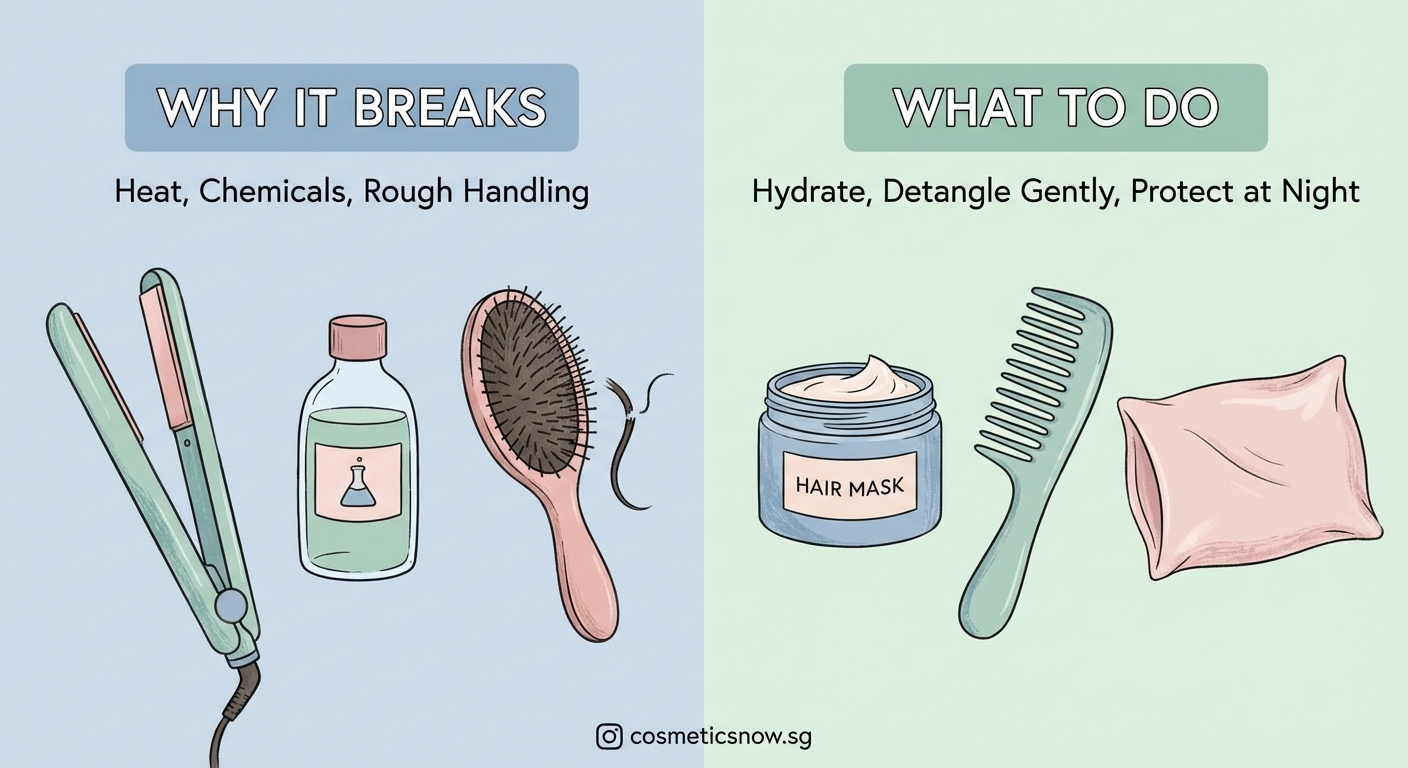
Flat irons reach temperatures up to 450°F. Curling wands can hit 400°F. Your hair starts to experience damage at just 300°F.
Every time you apply direct heat without a barrier, you’re essentially cooking the protein structure inside your hair. The cuticle cracks. Moisture evaporates. The cortex weakens.
Even blow dryers cause damage when held too close or used on the highest setting repeatedly.
Chemical treatments that compromise structure
Hair color, relaxers, perms, and keratin treatments all alter your hair’s natural structure.
Bleach is particularly harsh. It strips melanin from deep within the cortex, leaving microscopic holes throughout the shaft. This porous, weakened structure breaks easily.
Overlapping chemical treatments multiplies the damage. Bleaching already colored hair or relaxing previously relaxed sections creates severe weak points.
Mechanical damage from daily habits
The way you handle your hair matters more than you think.
Brushing wet hair when it’s most vulnerable causes immediate breakage. Using the wrong brush type creates unnecessary friction. Tight hairstyles pull on the same sections repeatedly, creating stress fractures.
Even your cotton pillowcase creates friction while you sleep. Your hair rubs against it all night, lifting the cuticle and causing breakage.
Moisture and protein imbalances
Hair needs both moisture and protein to stay strong.
Too much protein makes hair stiff and brittle. It snaps like dry spaghetti. Too much moisture without protein makes hair stretchy and weak. It breaks like overcooked noodles.
Finding the right balance for your specific hair type prevents both scenarios.
How to identify your specific type of breakage
Different breakage patterns point to different problems.
| Breakage Location | Likely Cause | What to Check |
|---|---|---|
| Around hairline | Tight styles, friction | Ponytail placement, headbands |
| Mid-shaft | Heat damage, rough handling | Styling tools, brushing technique |
| Ends only | Normal wear, need for trim | Last haircut date, split ends |
| Throughout length | Chemical damage, severe dryness | Recent treatments, deep conditioning frequency |
| Crown area | Sleeping position, friction | Pillowcase material, nighttime protection |
Perform a simple strand test. Take a shed hair and gently pull both ends. Healthy hair stretches slightly before breaking. Brittle hair snaps immediately. Overly elastic hair stretches excessively without snapping.
Check your hair when wet too. Does it feel gummy or mushy? That’s too much moisture. Does it feel rough and straw-like? That’s protein overload or severe damage.
Your step-by-step plan to stop breakage immediately
1. Cut out the biggest damage sources first
Start with heat. Give your styling tools a break for at least two weeks. Let your hair air dry. Embrace your natural texture.
If you must use heat, never exceed 350°F. Apply a heat protectant to every section before styling. This creates a barrier that absorbs some of the thermal damage.
Space out chemical treatments by at least eight weeks. Better yet, let your hair fully recover before the next service.
2. Change how you handle wet hair
Your hair is most fragile when saturated with water.
Never brush wet hair with a regular brush. Use a wide-tooth comb instead. Start from the ends and work up gradually. Better yet, detangle in the shower while conditioner is still in your hair.
Don’t wrap your hair in a regular towel. The friction causes immediate damage. Use a microfiber towel or an old t-shirt instead. Press the water out gently rather than rubbing.
3. Rebuild strength with targeted treatments
Your hair needs both moisture and protein, but in the right amounts.
Start with a protein treatment if your hair feels mushy, stretches excessively, or lacks definition. Look for hydrolyzed proteins in the ingredient list. Use these treatments every two to three weeks.
Follow up with deep moisture conditioning. Look for ingredients like shea butter, coconut oil, or glycerin. Apply to clean, damp hair. Leave on for 20 to 30 minutes under a shower cap. The warmth helps ingredients penetrate deeper.
Alternate between protein and moisture treatments based on how your hair responds. Some hair types need more protein. Others need more moisture. Pay attention to texture changes after each treatment.
4. Protect your hair while you sleep
Switch to a silk or satin pillowcase. These materials create less friction than cotton. Your hair glides across the surface instead of catching and breaking.
Consider protective styles for sleeping. A loose braid or pineapple (high, loose ponytail) keeps hair contained without tension.
Apply a small amount of oil to your ends before bed. This extra protection prevents overnight dryness and friction damage.
5. Adjust your daily styling routine
Stop using rubber bands or elastics with metal parts. These grab and break hair. Switch to spiral hair ties or silk scrunchies instead.
Avoid tight hairstyles. Ponytails, buns, and braids should never pull on your scalp. If you can feel tension, it’s too tight.
Change where you place your ponytail daily. Constant stress on the same section creates permanent weak spots.
When styling dry hair, always use a leave-in conditioner or styling cream first. Never apply heat or manipulate completely dry, unprotected hair.
6. Trim strategically, not desperately
Split ends travel up the hair shaft if left untrimmed. A small trim every eight to twelve weeks prevents this progression.
You don’t need to cut off inches. A dusting that removes just the damaged tips works better for length retention while preventing further breakage.
“Healthy hair grows from a foundation of proper care, not from avoiding scissors. Regular micro-trims prevent the need for dramatic cuts later. Think of it as maintenance, not loss.” — Professional hairstylist wisdom
The products and tools that actually make a difference
Not all haircare products work the same way.
Look for shampoos without sulfates. Sulfates strip too much natural oil, leaving hair vulnerable to breakage. Your scalp might need adjustment time, but the long-term benefits are worth it.
Choose conditioners with slip. This means they make hair slippery enough to detangle easily. Ingredients like behentrimonium methosulfate and cetyl alcohol provide this quality.
Invest in a good detangling brush. The Tangle Teezer and Wet Brush brands specifically design their bristles to glide through hair with minimal pulling.
Your hairdryer matters too. Look for ionic technology and multiple heat settings. Ionic dryers reduce frizz and cut drying time, which means less heat exposure overall.
Heat protectants aren’t all equal. Silicone-based protectants create the best thermal barrier. Apply them to damp hair before any heat styling.
Common mistakes that keep breakage happening
Many people unknowingly sabotage their progress.
Over-washing strips protective oils. Most hair types only need washing two to three times weekly. Your scalp care routine should focus on cleansing the scalp without over-drying the lengths.
Using too many products creates buildup. This buildup prevents moisture from penetrating the hair shaft. It also weighs hair down and makes it more prone to breakage. Clarify monthly with a chelating shampoo.
Skipping regular trims allows damage to spread. Those split ends you’re trying to grow out? They’re traveling upward and breaking off anyway. You’re not gaining length. You’re losing it in pieces.
Ignoring your hair’s changing needs causes problems. Your hair’s requirements shift with seasons, hormone changes, and damage levels. What worked last year might not work now.
Expecting overnight results leads to giving up too soon. Hair grows about half an inch monthly. Visible improvement takes at least six to eight weeks of consistent care. Patience matters as much as technique.
How diet and lifestyle affect hair strength
What you eat shows up in your hair.
Protein deficiency weakens hair structure from the inside. Your body needs adequate protein to build strong keratin. Aim for at least 50 grams of protein daily from varied sources.
Iron deficiency causes both shedding and breakage. Women with heavy periods often struggle with low iron. A blood test can confirm levels. Supplementation might be necessary.
Biotin supports hair health, but megadoses aren’t helpful. Most people get enough from a balanced diet. Eggs, nuts, and sweet potatoes provide natural biotin.
Hydration affects hair moisture from the inside. Drinking adequate water helps maintain hair’s natural moisture balance. Aim for half your body weight in ounces daily.
Stress causes physical changes that weaken hair. Chronic stress elevates cortisol, which disrupts the hair growth cycle and makes existing hair more fragile. Managing stress through exercise, sleep, and relaxation techniques genuinely helps.
Creating your personalized hair rescue plan
Your hair is unique. Your repair plan should be too.
Start by assessing your current damage level:
- Mild breakage: A few broken hairs, mostly at ends. Focus on prevention and gentle handling.
- Moderate breakage: Noticeable broken pieces throughout, some mid-shaft snapping. Add weekly treatments and eliminate heat.
- Severe breakage: Significant breakage all over, hair feels weak and straw-like. Consider a reset cut and intensive repair protocol.
Track your progress with photos every two weeks. Take them in the same lighting and position. Changes happen gradually, and photos help you see improvement you might miss otherwise.
Adjust your routine based on results. If your hair feels dry after a protein treatment, increase moisture next time. If it feels limp after deep conditioning, add protein.
Remember that repairing damaged hair naturally takes consistency more than expensive products.
When to see a professional about persistent breakage
Sometimes breakage signals deeper issues.
Medical conditions like thyroid disorders, PCOS, and autoimmune diseases cause hair problems. If you’re experiencing other symptoms alongside breakage, see your doctor.
Scalp conditions like seborrheic dermatitis or psoriasis weaken hair at the root. A dermatologist can diagnose and treat these issues.
If you’ve been following proper care for three months without improvement, consult a trichologist. These hair and scalp specialists can identify problems regular stylists might miss.
Stylists can also assess chemical damage and recommend professional treatments. Olaplex and similar bond-building treatments work deeper than home care products.
Building habits that prevent future breakage
Once you’ve stopped current breakage, prevention becomes your focus.
Make protective styling part of your routine. Not just for special occasions, but as a regular practice. Loose braids, low buns, and gentle updos reduce daily manipulation.
Schedule your trims in advance. Put them on your calendar every ten weeks. This prevents the “I’ll wait a little longer” trap that leads to more damage.
Create a nighttime beauty routine that includes hair protection. Just like you wouldn’t skip skincare, don’t skip hair care before bed.
Invest in quality tools gradually. You don’t need everything at once, but upgrading your most-used items makes a real difference. Start with a good brush, then a better pillowcase, then improved styling tools.
Learn to recognize early signs of damage. Catching problems early prevents major breakage later. Slightly rough texture, minimal tangling, or a single split end all signal it’s time to increase care.
Your hair’s comeback starts with small changes
Breakage doesn’t happen overnight, and neither does recovery.
The broken pieces you’re seeing now resulted from care practices from weeks or months ago. The healthy hair you want will come from the changes you make starting today.
You don’t need to overhaul everything at once. Pick three changes from this guide. Master those. Then add more as they become habits.
Your hair has remarkable ability to recover when given proper support. The strength and length you want are absolutely possible. It just takes knowledge, consistency, and patience with the process.
Every shower, every styling session, every night you protect your hair is an investment in the healthy hair you’re growing. Those investments compound. In a few months, you’ll look back and barely recognize the difference.
Start with one change today. Your future hair will thank you.