You’ve probably heard conflicting advice about exfoliation. Some influencers swear by daily scrubs while dermatologists warn against over-exfoliating. The confusion is real, and the stakes are high because getting this wrong can seriously damage your skin barrier.
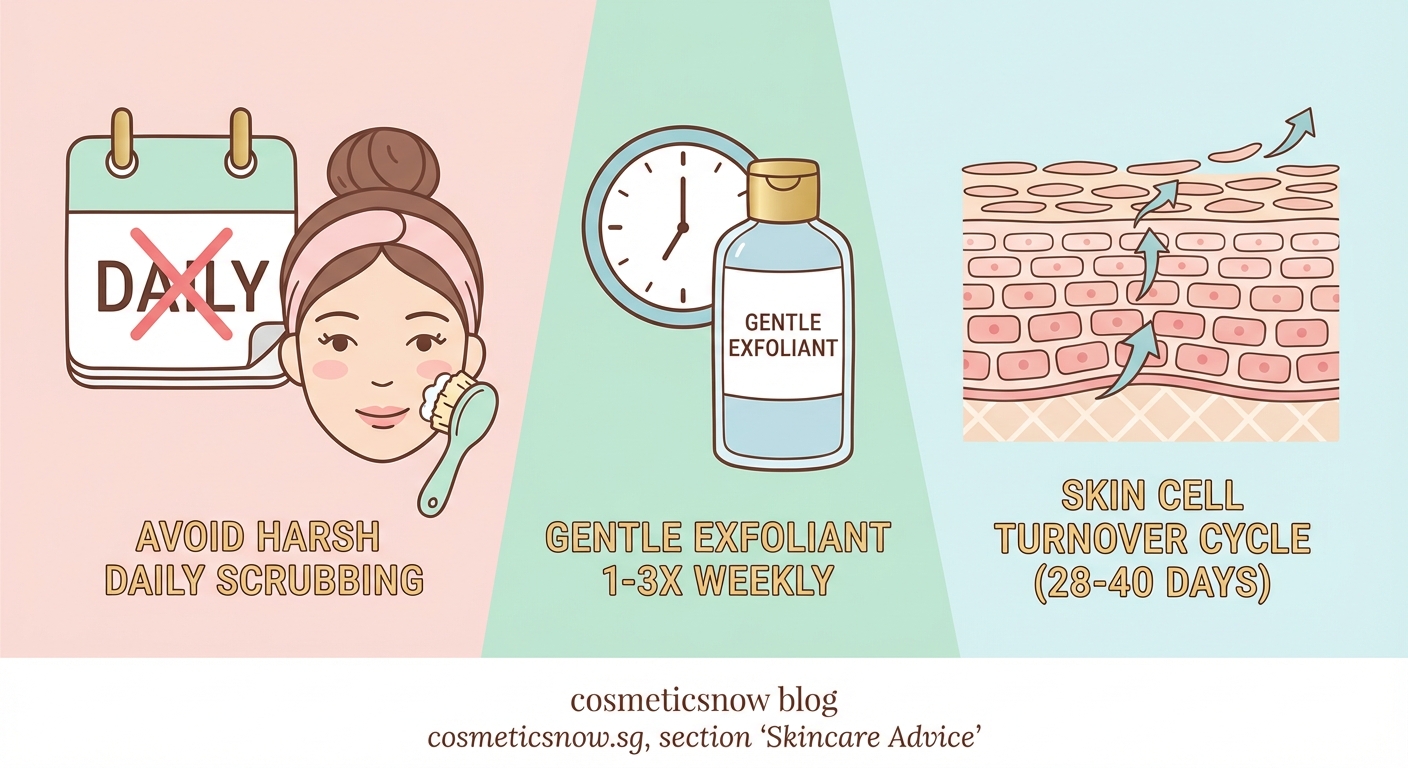
Most people should not exfoliate every day. Your skin type determines the ideal frequency: oily skin can handle 2-3 times weekly, normal skin 1-2 times, and sensitive or dry skin once weekly or less. Daily exfoliation strips your protective barrier, causing redness, irritation, and accelerated aging. Understanding your skin’s natural turnover cycle helps you choose the right exfoliation schedule for healthy, glowing results.
Understanding Your Skin’s Natural Cell Turnover
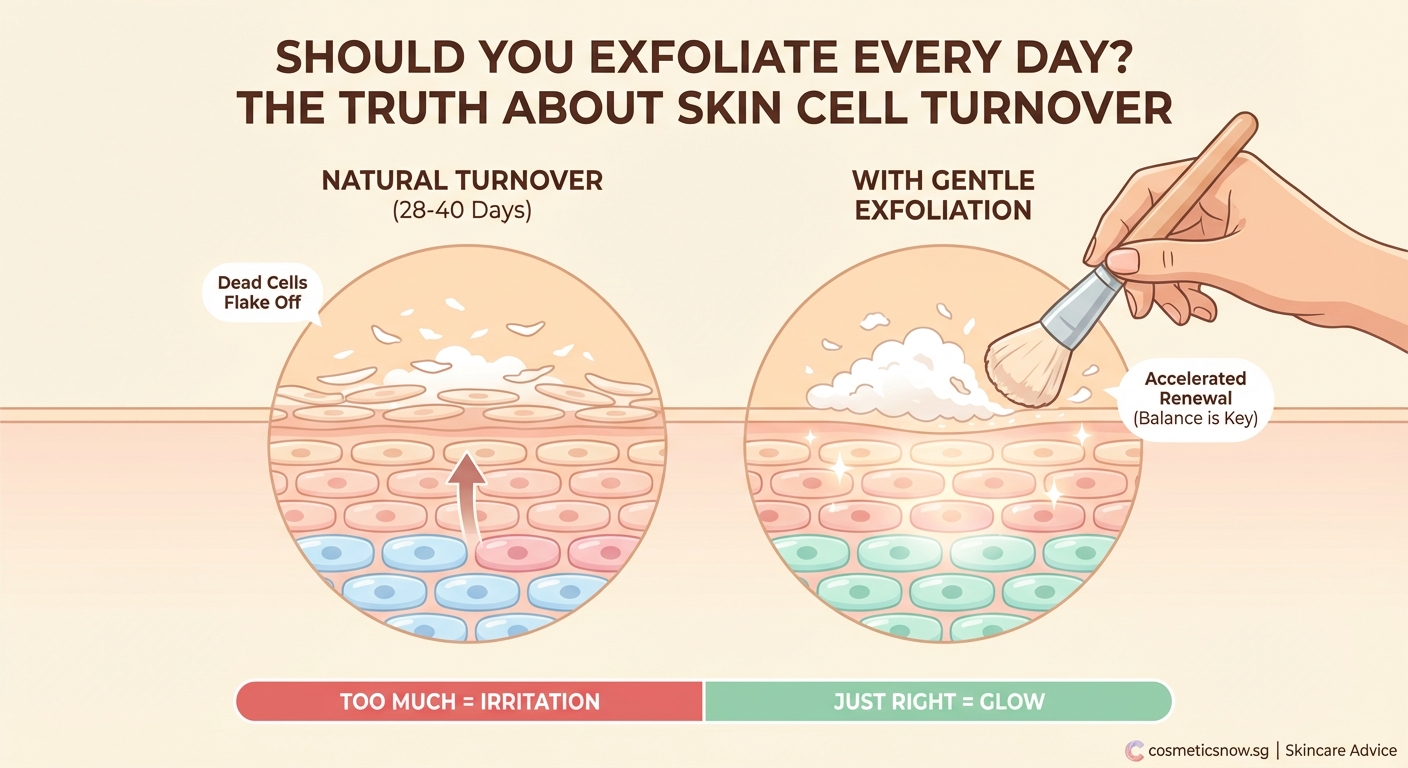
Your skin already knows how to shed dead cells without your help. This natural process, called desquamation, happens constantly throughout your life.
In your twenties, skin cells turnover roughly every 28 days. By your forties, that cycle slows to 40-50 days. This is why younger skin looks naturally radiant while mature skin can appear dull.
The outer layer of your skin, the stratum corneum, contains 15-20 layers of dead cells held together by lipids. These cells aren’t just sitting there doing nothing. They protect your living skin from environmental damage, lock in moisture, and prevent bacteria from entering.
When you exfoliate, you’re manually speeding up the shedding process. Done correctly, this reveals fresher skin and helps products penetrate better. Done too often, you strip away cells that weren’t ready to go yet.
Your skin barrier needs those “dead” cells. Remove them prematurely and you expose vulnerable new cells that can’t properly defend themselves.
The Two Types of Exfoliation and How They Work
Chemical and physical exfoliation work through completely different mechanisms.
Physical exfoliants use granules, brushes, or tools to manually scrub away dead cells. Think sugar scrubs, facial brushes, or washcloths. The friction physically lifts cells from the surface.
Chemical exfoliants dissolve the bonds between dead cells using acids or enzymes. AHAs (like glycolic and lactic acid) work on the surface. BHAs (like salicylic acid) penetrate into pores. Enzymes (like papain from papaya) break down keratin proteins.
Neither type is inherently better. Your skin type and concerns determine which works best for you.
Physical exfoliation gives immediate smoothness but can cause micro-tears if you scrub too hard. Chemical exfoliation takes longer to show results but penetrates deeper and works more evenly.
Many people make the mistake of using both types on the same day or combining multiple chemical exfoliants. This doubles your exfoliation without doubling your benefits.
Why Daily Exfoliation Damages Your Skin
Your skin barrier is remarkably resilient but not indestructible. Daily exfoliation asks more of your skin than it can deliver.
The protective barrier takes 2-4 weeks to fully repair after damage. If you exfoliate daily, you’re constantly creating new damage before the previous damage heals.
Signs of over-exfoliation include:
- Persistent redness that doesn’t fade
- Increased sensitivity to products that never bothered you before
- Tight, uncomfortable feeling after cleansing
- Shiny, almost plastic-looking texture
- Breakouts in areas where you don’t normally get acne
- Flaking and peeling despite using moisturizer
- Burning sensation when applying products
Over-exfoliated skin looks worse, not better. The temporary glow you get immediately after exfoliating doesn’t justify the long-term damage.
Your skin responds to constant exfoliation by either producing more oil (making you think you need to exfoliate more) or becoming chronically inflamed and reactive.
How Often You Should Actually Exfoliate
The right frequency depends entirely on your skin type and the exfoliant strength.
| Skin Type | Physical Exfoliation | Chemical Exfoliation | Special Notes |
|---|---|---|---|
| Oily | 2-3 times weekly | 3-4 times weekly | Can use BHAs more frequently |
| Normal | 1-2 times weekly | 2-3 times weekly | Adjust based on season |
| Dry | Once weekly | 1-2 times weekly | Focus on gentle AHAs |
| Sensitive | Once every 10 days | Once weekly | Use lowest concentrations |
| Combination | 2 times weekly | 2-3 times weekly | Adjust by zone if needed |
| Mature | 2 times weekly | 2-3 times weekly | Pair with hydrating products |
These are starting points, not rules. Your skin might need more or less based on climate, stress, hormones, and other products in your routine.
If you’re using prescription retinoids or other active treatments, reduce exfoliation frequency. These products already increase cell turnover.
Building up to your ideal frequency matters more than rushing in. Start with once weekly for four weeks, then gradually increase if your skin tolerates it well.
“The biggest mistake I see is people exfoliating daily because they want faster results. Your skin doesn’t work that way. More exfoliation doesn’t equal better skin. It equals damaged skin that ages faster and looks worse.” – Board-certified dermatologist Dr. Whitney Bowe
The Right Way to Build an Exfoliation Schedule
Creating a sustainable exfoliation routine requires planning, not guessing.
Step 1: Choose your exfoliation type
Pick either physical or chemical based on your comfort level and skin concerns. Don’t use both on the same day when starting out.
Step 2: Select your frequency
Use the table above as your guide. Mark specific days on your calendar rather than deciding randomly each week.
Step 3: Time it right
Exfoliate at night so your skin can recover while you sleep. Never exfoliate right before sun exposure without SPF.
Step 4: Monitor your skin
Check for the warning signs of over-exfoliation listed earlier. If you see any, immediately reduce frequency.
Step 5: Adjust seasonally
Your skin needs less exfoliation in winter when it’s already dry and more in humid summer months when oil production increases.
Step 6: Account for other actives
If you use retinol, vitamin C, or other potent ingredients, space them away from exfoliation days or reduce exfoliation frequency.
The goal isn’t perfect adherence to a schedule. The goal is listening to your skin and adjusting accordingly. Some weeks you’ll need more exfoliation, other weeks less.
When building the complete step-by-step guide to building your first skincare routine, think of exfoliation as an occasional boost, not a daily necessity.
Common Exfoliation Mistakes That Make Everything Worse
Even people who don’t exfoliate daily make critical errors that compromise their results.
Scrubbing too hard with physical exfoliants
Gentle pressure is all you need. If you’re pressing hard enough to move the skin on your face, you’re damaging it. Let the product do the work.
Mixing multiple acids in one routine
Using a glycolic acid toner followed by a lactic acid serum followed by a salicylic acid spot treatment is exfoliation overkill. Pick one per session.
Exfoliating active breakouts
Scrubbing pimples spreads bacteria and makes inflammation worse. Spot treat acne instead of exfoliating over it.
Forgetting SPF after chemical exfoliation
AHAs especially make your skin more sun-sensitive for up to a week. Skipping sunscreen invites hyperpigmentation and sun damage.
Using expired or improperly stored products
Chemical exfoliants lose effectiveness when exposed to light and air. Physical scrubs can harbor bacteria if stored in humid bathrooms.
Exfoliating after other aggressive treatments
Don’t exfoliate the same day as waxing, threading, dermaplaning, or professional facials. Your skin needs recovery time.
The right approach to the right way to remove makeup without damaging your skin includes gentle cleansing, not aggressive scrubbing.
What to Do If You’ve Over-Exfoliated
Recognizing over-exfoliation is the first step. Fixing it requires patience and simplification.
Stop all exfoliation immediately. This includes any product with acids, retinol, or physical scrubs. Your skin needs a break to heal.
Simplify your routine to these basics only:
- Gentle, creamy cleanser (no foaming formulas)
- Hydrating toner or essence (optional)
- Rich moisturizer with ceramides
- SPF 30 or higher during the day
Use this minimal routine for at least two weeks. Resist the urge to add products back too soon.
Your skin might purge or break out during recovery. This is normal. The breakouts will clear once your barrier repairs itself.
Add moisture back aggressively. Use a humidifier at night. Apply moisturizer on damp skin to seal in hydration. Consider adding a facial oil over your moisturizer.
When your skin feels normal again (no tightness, redness has faded, products don’t sting), you can slowly reintroduce exfoliation at a much lower frequency than before.
Many people find that why your skin barrier matters and how to repair it fast becomes their most important skincare focus after experiencing over-exfoliation damage.
Choosing the Right Exfoliant for Your Skin Goals
Not all exfoliants address the same concerns. Match your product to your primary goal.
For anti-aging and sun damage: Glycolic acid penetrates deeply and stimulates collagen. Start with 5-8% concentration and work up to 10-12% if tolerated.
For acne and clogged pores: Salicylic acid gets inside pores to clear oil and bacteria. Use 0.5-2% concentration depending on sensitivity.
For sensitive skin: Lactic acid or enzyme exfoliants (papaya, pumpkin) work gently without irritation. PHAs (polyhydroxy acids) are even gentler than AHAs.
For uneven texture: Physical exfoliants with fine, round particles smooth roughness without scratching. Avoid anything with jagged edges like crushed shells or pits.
For dullness: Mandelic acid brightens while exfoliating gently. It has larger molecules that don’t penetrate as deeply as glycolic acid.
For hyperpigmentation: Combine gentle exfoliation with brightening ingredients like niacinamide or vitamin C. Exfoliation alone won’t fade dark spots.
You might need different exfoliants for different concerns. Just don’t use them all in the same week.
How Professional Treatments Change Your Home Routine
If you get professional exfoliating treatments, your at-home frequency needs adjustment.
Chemical peels, microdermabrasion, and laser treatments all count as exfoliation. They’re just much stronger than what you can buy over the counter.
After a professional treatment, skip home exfoliation completely for:
- Light chemical peels: 7-10 days
- Medium chemical peels: 2-3 weeks
- Microdermabrasion: 5-7 days
- Laser resurfacing: 3-4 weeks minimum
- Dermaplaning: 3-5 days
Your esthetician or dermatologist should give you specific aftercare instructions. Follow them exactly.
Even between professional treatments, reduce your home exfoliation frequency. If you get monthly facials with exfoliation, limit home exfoliation to once weekly or less.
Professional treatments work because they’re strong and infrequent. Home exfoliation works because it’s gentle and consistent. Combining both requires careful planning to avoid damaging your skin.
Exfoliation Myths You Need to Stop Believing
The skincare industry profits from confusion. These myths keep people buying products they don’t need.
Myth: You need to exfoliate until you see dead skin pilling up
Those pills aren’t always dead skin. Many exfoliants contain ingredients that deliberately clump together to create that effect. You’re often just rubbing off the product itself.
Myth: Natural exfoliants are always gentler
Crushed walnut shells, apricot kernels, and similar natural scrubs have jagged edges that create micro-tears. Synthetic beads with perfectly round edges are actually gentler.
Myth: Your skin gets “used to” exfoliants so you need stronger ones
If your exfoliant stops working, you’ve likely repaired your skin barrier to the point where you don’t need as much exfoliation. This is good, not bad.
Myth: Exfoliation shrinks pores
Nothing shrinks pores permanently. Exfoliation can make them appear smaller by keeping them clear, but the size doesn’t actually change.
Myth: You should exfoliate before every special event
Exfoliating the day before a wedding or important event risks redness and irritation. Exfoliate 3-4 days before instead.
Myth: More expensive exfoliants work better
Price doesn’t determine effectiveness. A $10 salicylic acid product with the right concentration works identically to a $100 version with the same active ingredient.
Understanding what works helps you make better choices when how to properly layer your serums for maximum skin benefits becomes part of your routine.
Building a Routine That Works With Your Lifestyle
Theory means nothing if you can’t stick to it. Your exfoliation schedule needs to fit your real life.
For busy schedules: Choose chemical exfoliants you can leave on rather than physical scrubs that require extra time. Apply your acid toner and move on.
For travelers: Pack pre-soaked exfoliating pads instead of bottles. They’re TSA-friendly and eliminate measuring or application mess.
For gym-goers: Never exfoliate right before working out. Sweat on freshly exfoliated skin increases irritation risk. Exfoliate on rest days instead.
For makeup wearers: Exfoliate at night after removing all makeup. Morning exfoliation before makeup can cause pilling and uneven application.
For parents: Keep exfoliants in a locked cabinet away from children. Many chemical exfoliants look like regular skincare but can burn if used incorrectly.
For shift workers: Base your routine on sleep cycles, not clock time. Exfoliate before your long sleep period, regardless of whether that’s day or night.
Your routine should support your life, not complicate it. If exfoliation feels like a chore you dread, you’re doing too much.
Reading Your Skin’s Signals
Your skin communicates constantly. Learning its language helps you adjust your routine before problems develop.
Healthy exfoliation results:
- Smooth texture without tight feeling
- Even tone with natural radiance
- Products absorb easily without pilling
- Makeup applies smoothly
- No sensitivity to regular products
Warning signs to reduce frequency:
- Stinging when applying moisturizer
- Redness that lasts more than an hour
- Increased oil production
- New breakouts in unusual areas
- Rough patches that won’t smooth out
Signs you might need more exfoliation:
- Dull appearance despite good sleep and hydration
- Products sitting on skin surface instead of absorbing
- Makeup looking cakey or patchy
- Rough texture when touching your face
- Clogged pores and small bumps
Trust your skin over any schedule. If something feels wrong, it probably is.
The same attention to detail that helps with how to build a nighttime skincare routine for every skin type applies to finding your perfect exfoliation frequency.
When to See a Professional Instead
Some skin concerns require professional help, not more aggressive home exfoliation.
See a dermatologist if you experience:
- Persistent rough patches that don’t respond to regular exfoliation
- Deep acne cysts or nodules
- Severe hyperpigmentation or melasma
- Keratosis pilaris that covers large areas
- Any skin condition that worsens with home treatment
- Confusion about what products to use for your specific concerns
A professional can prescribe stronger treatments like tretinoin or perform procedures that work faster than home care alone.
They can also help you understand whether your skin issues stem from inadequate exfoliation or something else entirely like rosacea, eczema, or fungal infections.
Don’t waste months trying to fix a problem that needs medical intervention. Get an expert opinion when home care isn’t working.
Your Skin Deserves Better Than Daily Scrubbing
The answer to whether you should exfoliate every day is clear: no, you shouldn’t. Your skin functions best with periodic exfoliation that supports its natural renewal process rather than forcing it.
Start with once weekly exfoliation and pay attention to how your skin responds. Increase frequency only if your skin clearly tolerates and benefits from it. Most people find their sweet spot at 2-3 times weekly maximum.
Remember that glowing skin comes from a healthy barrier, adequate hydration, sun protection, and patience. Exfoliation is one tool in your skincare routine, not the foundation of it. Treat it as the occasional boost it’s meant to be, and your skin will thank you with the radiant, healthy appearance you’re working toward.