Your flat iron sits on the counter, barely used anymore. Your curling wand collects dust in the drawer. You’ve seen the breakage, felt the dryness, and decided there has to be a better way to style your hair without sacrificing its health. The good news? You can achieve gorgeous, salon-quality styles without ever plugging in a heat tool.
Heat-free styling methods preserve hair health while delivering professional results through strategic techniques like overnight sets, braiding patterns, and product layering. These approaches work with your hair’s natural texture rather than against it, reducing damage while saving time and money. Success depends on proper prep, the right products, and patience as your hair adjusts to gentler styling practices.
Why Your Hair Deserves a Break from Heat
Heat styling damages the protein structure of your hair shaft. Every pass of a flat iron can reach temperatures of 450°F. That’s hot enough to literally cook an egg.
The cuticle layer lifts when exposed to high heat. Moisture escapes. Proteins break down. Over time, your hair becomes brittle, loses elasticity, and develops split ends that travel up the shaft.
But here’s what most people don’t realize: heat damage is cumulative. One styling session might not show visible harm, but daily use over months creates permanent changes to your hair’s structure.
The solution isn’t giving up styled hair. It’s learning techniques that work with your hair instead of against it.
Overnight Setting Techniques That Actually Work
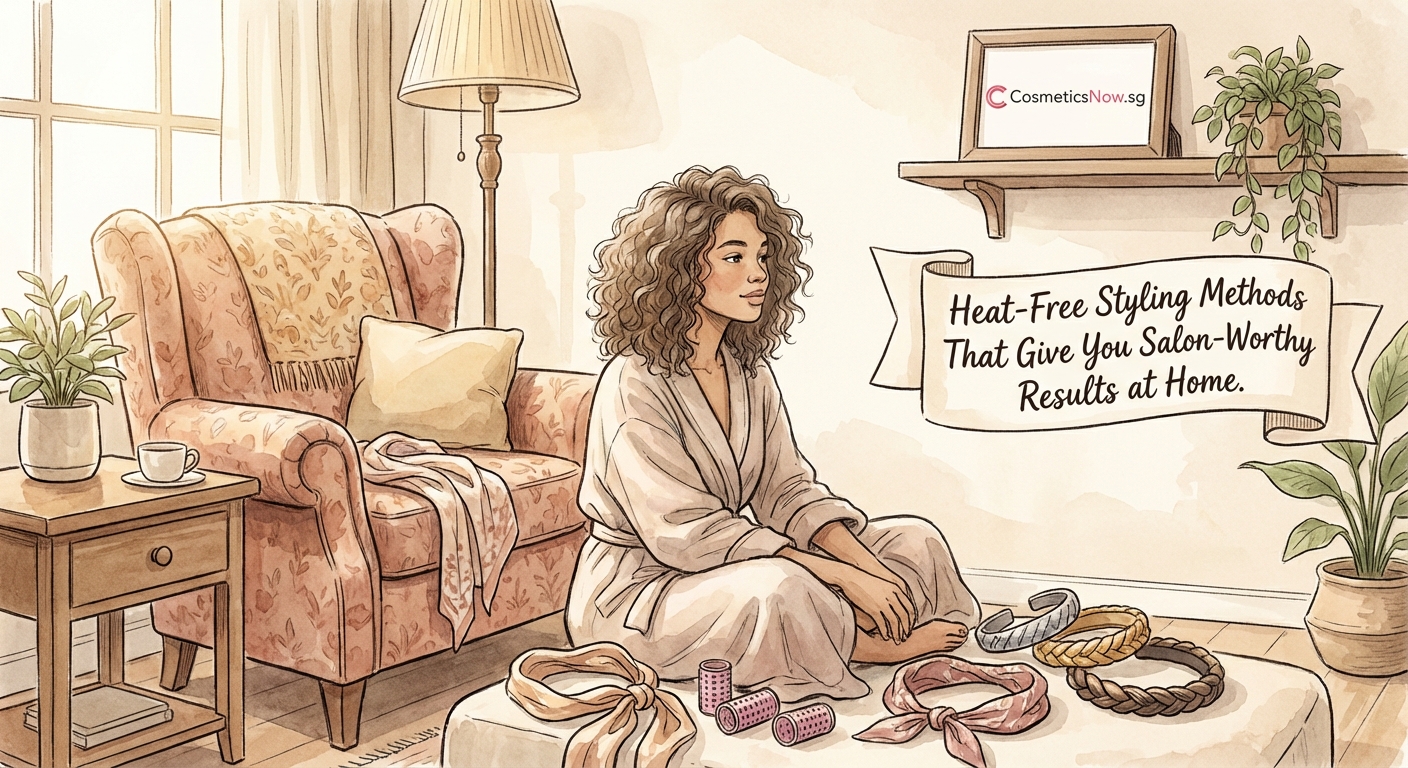
Your pillow time can double as styling time. These methods require minimal effort and deliver impressive results by morning.
Flexi Rod Sets for Bouncy Curls
Flexi rods create uniform curls without any heat. They’re foam rods that bend to secure hair in place.
- Start with damp (not soaking) hair after washing.
- Apply a curl-defining cream or mousse from roots to ends.
- Section hair into 1-2 inch pieces depending on desired curl size.
- Wrap each section around a flexi rod, starting at the ends and rolling toward your scalp.
- Bend the rod ends to secure without clips or pins.
- Sleep on them (they’re surprisingly comfortable) or let air dry for 6-8 hours.
- Gently unwind each rod and separate curls with your fingers.
The key is using enough product to hold the curl but not so much that hair feels crunchy or takes forever to dry.
Pin Curls for Vintage Waves
Pin curls have been creating glamorous waves since the 1920s. They work on nearly every hair length and texture.
Wrap small sections of damp hair around your finger to form a flat spiral. Secure each curl against your scalp with a bobby pin. The tighter you wrap, the more defined your waves will be.
Sleep with a silk scarf over your pins. In the morning, remove pins carefully and shake out the curls. Run your fingers through to blend the waves together.
For extra hold, spray each section lightly with setting spray before pinning.
Braid Variations for Different Wave Patterns
Different braiding techniques create distinctly different wave patterns.
| Braid Type | Result | Best For |
|---|---|---|
| Single braid | Gentle, loose waves | Long, thick hair |
| Two braids | Medium waves with volume | Most hair types |
| Multiple small braids | Tight, crimped texture | Fine or thin hair |
| French braid | Waves starting at roots | Adding root volume |
| Rope braid | Spiral waves | Creating texture |
Braid damp hair before bed. The damper your hair, the more defined the waves. Just make sure it’s not dripping wet, or it won’t fully dry overnight.
Secure ends with soft hair ties (never rubber bands). Sleep on a silk pillowcase to reduce frizz.
Product Selection Makes or Breaks Your Results
The right products transform heat-free styling from frustrating to effortless.
Mousses and Setting Lotions
These products provide hold without the stiffness of hairspray. Look for formulas with:
- Hydrolyzed proteins for strength
- Panthenol for moisture retention
- Light hold polymers that don’t flake
Apply mousse to damp hair, working it through evenly. Use more product than you think you need. Your hair will absorb it as it dries.
Setting lotions work similarly but typically provide stronger hold. They’re ideal for fine hair that struggles to maintain styles.
Leave-In Conditioners and Creams
Never skip this step. Leave-in products keep hair hydrated during the styling process.
Creams work better for thick or coarse hair. They provide weight and control frizz. Lightweight leave-in sprays suit fine hair that gets weighed down easily.
Apply these products first, before any styling products. They create a protective barrier and help your style last longer.
Oils and Serums for Finishing
Save these for after you’ve styled. A tiny amount of hair oil adds shine and tames flyaways without making hair greasy.
Focus on mid-lengths to ends. Avoid roots unless your hair is extremely dry. Argan oil, jojoba oil, and lightweight silicone serums all work well.
One pump is usually enough for shoulder-length hair. You can always add more, but you can’t remove excess without washing.
Foam Rollers and Velcro Rollers for Volume
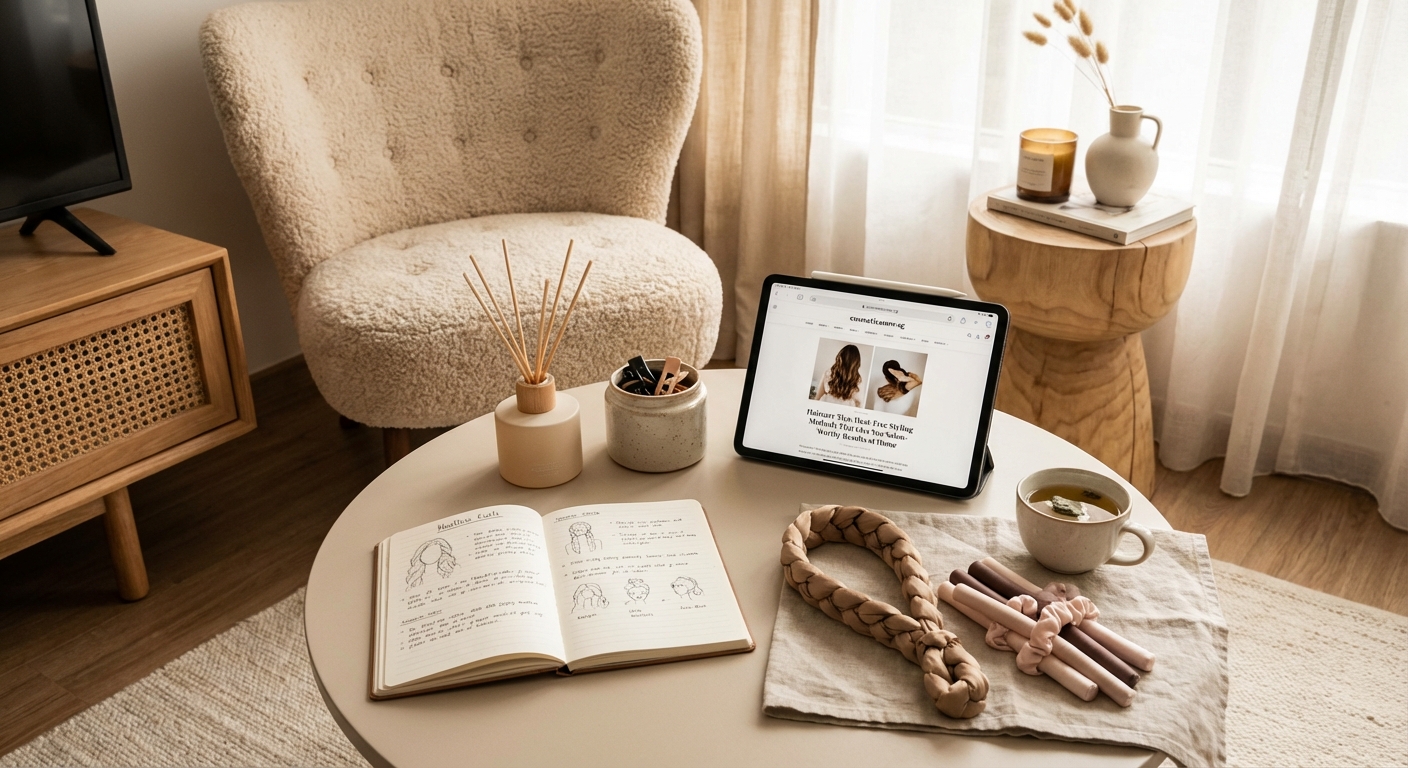
These tools create lift at the roots and smooth, bouncy ends without any heat damage.
Foam rollers are soft and comfortable enough to sleep in. They come in various sizes. Larger rollers create volume and gentle bends. Smaller rollers produce tighter curls.
Roll damp hair away from your face for the most flattering result. Secure each roller and leave in until hair is completely dry. This might take several hours or overnight.
Velcro rollers work faster on dry hair. They’re perfect for adding volume to your 5-minute morning beauty routine when you’re short on time.
Apply a volumizing spray at roots before rolling. Leave rollers in for 30-45 minutes while you do makeup or have breakfast. Remove gently and finger-comb for natural-looking volume.
The Twist and Pin Method for Elegant Updos
This technique creates sophisticated styles without any tools beyond bobby pins.
Section damp hair into 4-6 pieces. Twist each section tightly from roots to ends. Wrap the twisted section into a small bun against your head. Secure with pins.
Sleep on these buns or let them air dry completely. When you take them down, you’ll have defined waves with natural volume.
For a polished updo, don’t separate the twists. Instead, arrange them into a low bun or chignon while they’re still twisted. Secure with pins and finish with hairspray.
This method works beautifully for second or third-day hair. The natural oils help hold the style.
Silk and Satin Accessories That Style While You Sleep
The fabric your hair touches at night affects your morning style.
Silk or satin pillowcases reduce friction. Less friction means less frizz and better curl retention. Cotton pillowcases absorb moisture and create tangles.
Silk scrunchies hold hair without creating creases. Use them to secure overnight buns or ponytails. Regular elastic bands leave dents that are hard to style out.
Satin bonnets protect entire hairstyles overnight. They’re especially useful for maintaining curls or preventing braids from frizzing.
These accessories cost more upfront but last for years. They’re an investment in healthier hair.
Plopping for Natural Curl Enhancement
Plopping is a game-changing technique for anyone with wavy or curly hair.
After washing, apply your styling products to soaking wet hair. Lay a cotton t-shirt or microfiber towel flat on a surface. Flip your head forward and lower your hair onto the center of the fabric.
Wrap the fabric around your head, securing it at the nape of your neck. The fabric absorbs excess water while your curls dry in their natural pattern without gravity pulling them straight.
Leave the plop in place for 20-45 minutes. Some people sleep with it overnight.
When you remove the fabric, your curls will be defined and frizz-free. Don’t touch them as they finish air drying. Touching creates frizz.
“The best hairstyle is the one that doesn’t damage your hair in the process. Heat-free methods might take longer initially, but they save you time and money in the long run by keeping your hair healthy enough to style easily.”
Common Mistakes That Sabotage Heat-Free Styling
Even with the right techniques, certain errors prevent good results.
Starting with Hair That’s Too Wet or Too Dry
Damp hair holds styles better than soaking or dry hair. Squeeze out excess water with a microfiber towel. Your hair should feel cool and slightly wet, not dripping.
If you’re working with dry hair, mist it with water until evenly damp. Dry patches won’t hold the style.
Using Too Little Product
Heat-free styling requires more product than heat styling. The product provides the hold that heat would normally set.
Don’t be afraid to use generous amounts of mousse or setting lotion. Your hair needs enough product to maintain the style as it dries.
Removing Sets Before Hair Is Completely Dry
This mistake ruins everything. If your hair feels even slightly cool or damp, it’s not ready.
Wait until hair feels completely dry and room temperature. This might take 8-10 hours for thick hair. Patience here makes the difference between a style that lasts all day and one that falls flat in an hour.
Brushing Out Styles Too Aggressively
Brushes destroy curl patterns and create frizz. Use your fingers to separate and arrange curls or waves.
If you must use a tool, choose a wide-tooth comb or a brush specifically designed for curly hair. Work from ends to roots, never the reverse.
Adapting Techniques for Different Hair Types
Your hair texture determines which methods work best.
Fine Hair Strategies
Fine hair needs volume without weight. Use:
- Lightweight mousses instead of heavy creams
- Smaller rollers or braids for more texture
- Root-lifting techniques like pin curls at the crown
- Dry shampoo at roots after styling for extra lift
Avoid oils and heavy serums that make fine hair look greasy.
Thick Hair Approaches
Thick hair can handle richer products and needs more sections for even results.
Divide hair into at least 8-10 sections when setting. Use larger amounts of product. Consider sectioning hair in layers, styling the bottom layer first.
Thick hair takes longer to dry completely. Plan for overnight sets rather than trying to rush the process.
Curly and Coily Hair Needs
Naturally curly hair already has texture. The goal is enhancing and defining existing curls while preventing frizz.
Apply products to soaking wet hair. Use generous amounts of leave-in conditioner. Try the plopping method or twist-outs for defined curls.
Never let curly hair air dry without product. It will frizz. Always use a curl cream or gel for definition.
Protective styles like braids or twists maintain curl health between wash days, similar to the deep treatments in a weekend reset routine.
Building Your Heat-Free Hair Care Routine
Transitioning away from heat tools requires a strategy.
Week 1-2: Start with one heat-free day per week. Choose a low-pressure day when your appearance matters less. Experiment with different techniques to find what works.
Week 3-4: Increase to two or three heat-free days. Your hair will start feeling softer. You’ll notice less breakage.
Week 5-8: Aim for mostly heat-free styling, using heat tools only for special occasions. Your hair’s natural texture will become easier to work with as it recovers from damage.
Month 3+: Most people find they rarely want to use heat tools anymore. Their hair is healthier, shinier, and easier to manage.
Track which techniques work best for different occasions. Keep notes on product combinations that deliver great results. This knowledge builds over time.
Time-Saving Combinations for Busy Schedules
Heat-free doesn’t mean time-consuming once you establish a routine.
Sunday night prep sets you up for the week. Deep condition your hair. Set it in braids or rollers. By Monday morning, you have a styled look that lasts 2-3 days with minimal touch-ups.
Mid-week refresh involves misting hair with water, applying a bit of product, and re-twisting or re-braiding sections that have fallen flat. This takes 10 minutes before bed.
Weekend variety lets you try more elaborate techniques when you have extra time. Experiment with new methods when mistakes won’t affect your work week.
This rotation keeps your hair healthy while preventing boredom with your look.
Protecting Your Style Throughout the Day
Making styles last requires strategic maintenance.
Keep a small bottle of setting spray in your bag. A light mist refreshes curls that start to droop.
Avoid touching your hair constantly. Every time you run your fingers through styled hair, you disrupt the pattern and add oils from your hands.
Use silk or satin scrunchies if you need to tie hair back. Regular elastics create dents and breakage.
For overnight protection between washes, pineapple curly hair (gather it loosely at the top of your head) or re-braid straight hair before bed.
When to Reintroduce Heat Styling Safely
Occasional heat use won’t undo all your progress if done correctly.
Limit heat styling to once per week or less. Always use a heat protectant spray on every section before applying heat. Choose the lowest temperature that achieves your desired result.
Flat irons don’t need to exceed 350°F for most hair types. Higher temperatures cause unnecessary damage.
Never use heat tools on damp hair. Make sure hair is completely dry first. Wet hair is more vulnerable to heat damage.
After heat styling, give your hair several heat-free days to recover. Use deep conditioning treatments to restore moisture.
Your Hair Will Thank You
The first few weeks of heat-free styling might feel awkward. Your hands reach for tools that aren’t there. Styles take longer than you’re used to. Results might not match your expectations immediately.
But stick with it. Your hair is adapting, recovering, and remembering how to hold styles naturally. The breakage slows. The texture improves. Styling actually becomes easier as your hair gets healthier.
These techniques aren’t just about avoiding damage. They’re about working with your hair’s natural tendencies instead of fighting them. That shift in approach changes everything. You’ll spend less time styling, less money on repair treatments, and less energy worrying about heat damage. Your hair becomes stronger, shinier, and more versatile than it’s been in years.
Start tonight with one simple technique. Braid your hair before bed. See what happens. That’s all it takes to begin.