Your TikTok feed is flooded with glowing skin transformations. Influencers are raving about something called skin cycling, and for once, dermatologists are actually backing up the hype. This isn’t another trend that promises miracles and delivers disappointment. It’s a structured approach to using active ingredients that gives your skin exactly what it needs, when it needs it.
Skin cycling is a four-night routine that rotates exfoliation, retinoids, and recovery nights to prevent irritation while maximizing active ingredient benefits. Created by board-certified dermatologist Dr. Whitney Bowe, this method has gained millions of views because it actually works. The structured approach reduces redness, peeling, and sensitivity while delivering visible improvements in texture, tone, and clarity.
What makes skin cycling different from regular routines
Traditional skincare advice tells you to use your active ingredients every single night. Retinol? Nightly. Chemical exfoliants? Daily. Vitamin C? Morning and evening. The problem is that your skin barrier can’t always handle that level of intensity.
Skin cycling breaks this pattern. Instead of bombarding your face with actives seven nights a week, you follow a predictable four-night schedule. Two nights focus on treatment. Two nights focus on recovery. Then you repeat.
Dr. Whitney Bowe developed this method after seeing countless patients with damaged skin barriers from overusing active ingredients. She noticed that people were layering multiple exfoliants, combining retinoids with acids, and never giving their skin time to repair itself.
The brilliance lies in the simplicity. You’re not eliminating powerful ingredients. You’re using them strategically. Your skin gets the benefits of exfoliation and retinoids without the inflammation that comes from constant chemical assault.
The complete four-night breakdown
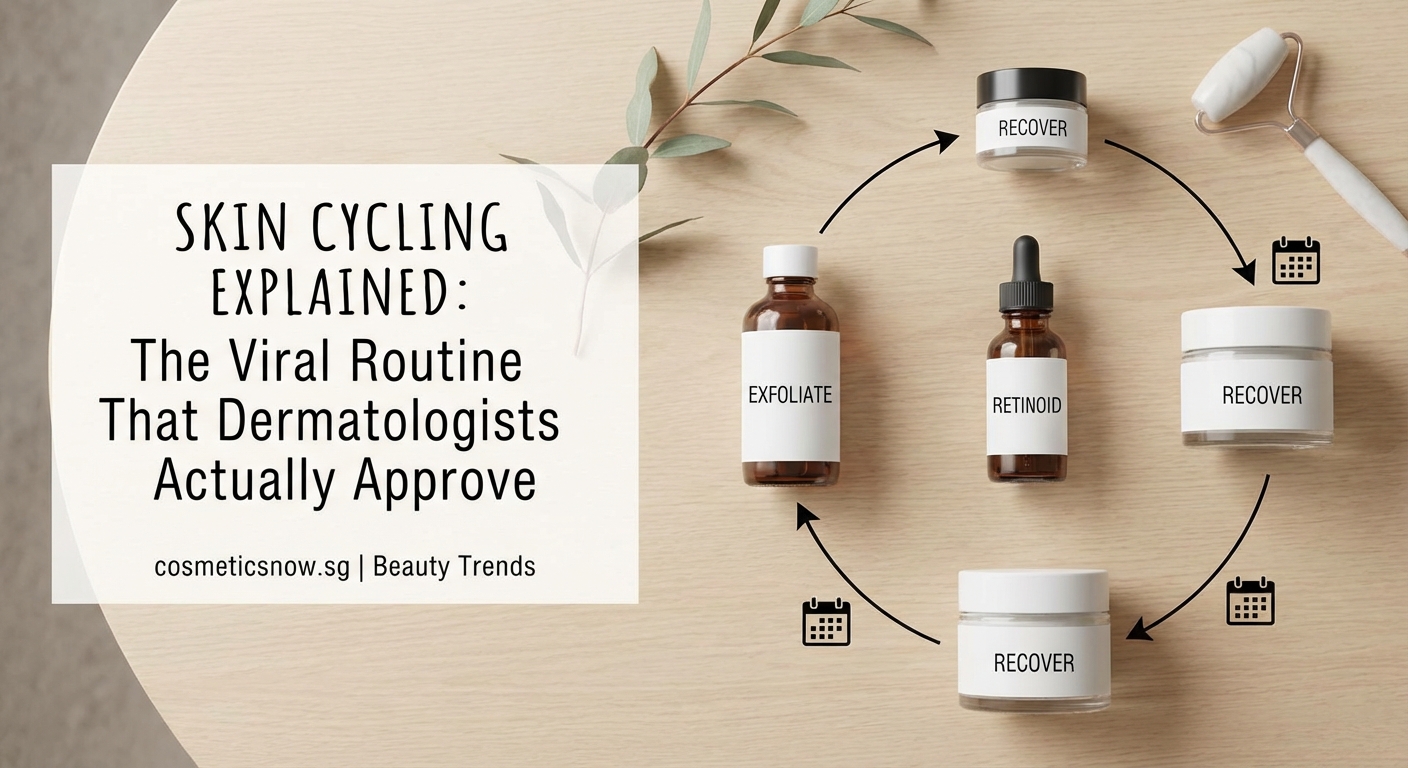
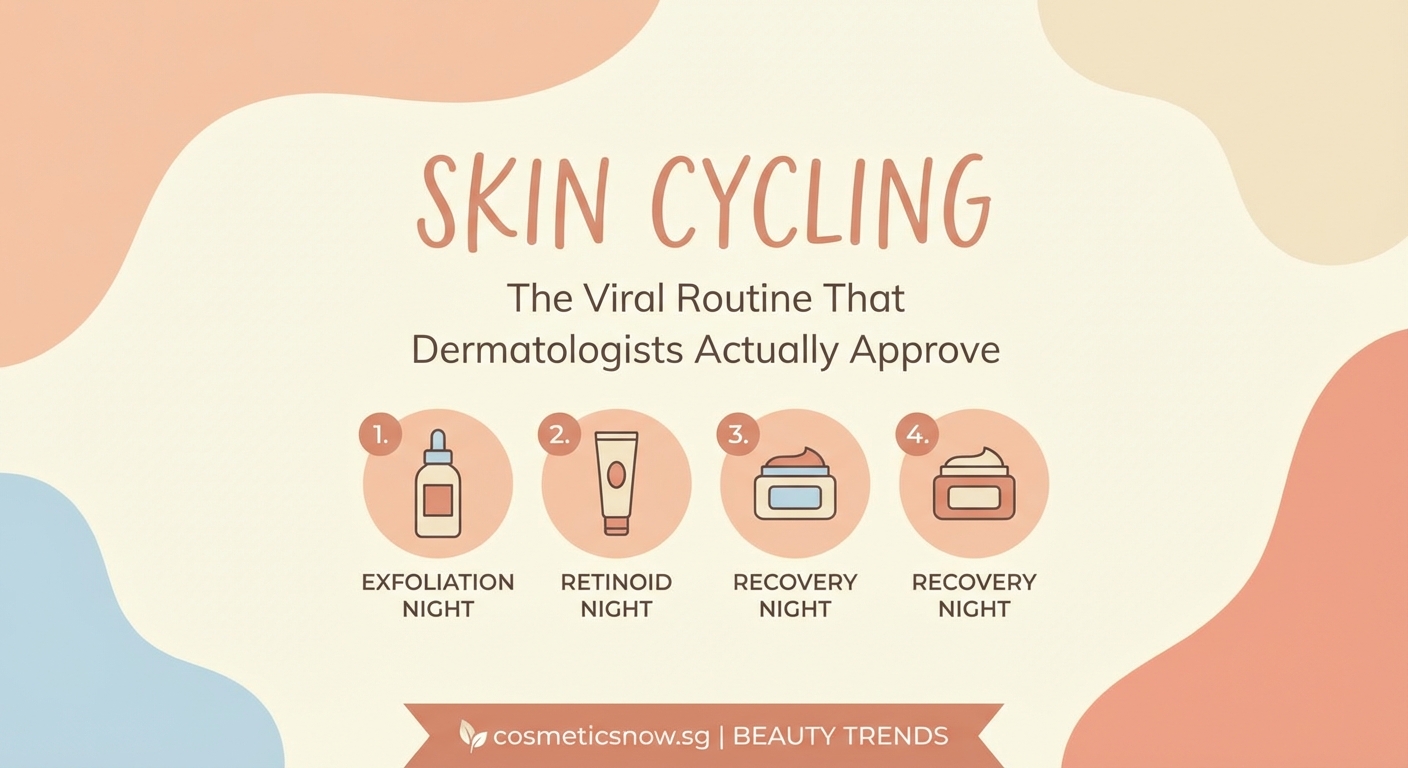
Here’s exactly what happens during each phase of the cycle:
-
Night one focuses on exfoliation. After cleansing, apply a chemical exfoliant containing AHAs or BHAs. Glycolic acid, lactic acid, or salicylic acid all work. This removes dead skin cells and preps your skin for better absorption on night two. Follow with moisturizer and skip all other actives.
-
Night two introduces retinoids. Cleanse, then apply your retinol or prescription retinoid directly to dry skin. Wait 15 minutes for full absorption, then layer your moisturizer on top. This night targets fine lines, texture, and cellular turnover.
-
Night three is recovery. Use only gentle, nourishing products. Cleanse, apply a hydrating serum with ingredients like hyaluronic acid or ceramides, then seal everything with a rich moisturizer. Your skin barrier repairs itself during this phase.
-
Night four continues recovery. Repeat night three’s gentle routine. Two consecutive recovery nights give compromised skin barriers enough time to rebuild lipid layers and reduce inflammation.
After night four, you start the cycle again with exfoliation. The pattern becomes second nature within two weeks. If you’re just starting with building your first skincare routine, this structure provides clear guidance without overwhelming choices.
Why dermatologists actually recommend this method
Board-certified dermatologists have embraced skin cycling because it addresses the most common mistake they see in their practices: overuse of active ingredients.
Dr. Bowe explains that constant exfoliation strips the skin barrier. When you damage this protective layer, you get increased sensitivity, redness, and paradoxically, worse skin texture. The recovery nights allow your skin to rebuild its natural defenses.
Research supports cycling active ingredients. A 2019 study in the Journal of Clinical and Aesthetic Dermatology found that alternating retinoid use reduced irritation by 40% while maintaining efficacy. Participants saw the same improvements in fine lines and pigmentation as daily users, but with significantly less peeling and discomfort.
“The skin barrier needs time to repair between active treatments. Skin cycling provides that recovery window while still delivering clinical results. It’s not about doing less, it’s about doing smarter.” – Dr. Whitney Bowe
Dermatologists also appreciate how skin cycling prevents the temptation to layer multiple actives. When you designate specific nights for specific treatments, you’re less likely to combine a retinoid with an AHA serum and a vitamin C treatment all at once.
The structured approach works especially well for people who struggle with maintaining consistent nighttime habits. You always know what comes next.
Products that work best for each night
Choosing the right formulations makes or breaks your results. Here’s what to look for:
For exfoliation night:
– AHAs like glycolic acid (8-10%) for dry or sun-damaged skin
– BHAs like salicylic acid (2%) for oily or acne-prone skin
– Lactic acid (5-10%) for sensitive skin that still needs exfoliation
– PHAs like gluconolactone for extremely reactive skin
For retinoid night:
– Over-the-counter retinol (0.25-1%) for beginners
– Adapalene gel (0.1-0.3%) for acne and texture
– Prescription tretinoin (0.025-0.1%) for advanced users
– Retinaldehyde for those who can’t tolerate retinol
For recovery nights:
– Ceramide-rich moisturizers to rebuild barrier function
– Niacinamide serums to calm inflammation
– Centella asiatica for healing and soothing
– Squalane or marula oil for extra nourishment
The table below shows how to match products to your primary skin concern:
| Skin Concern | Exfoliant Choice | Retinoid Choice | Recovery Focus |
|---|---|---|---|
| Acne | Salicylic acid 2% | Adapalene 0.1% | Niacinamide + lightweight gel |
| Aging | Glycolic acid 10% | Tretinoin 0.05% | Peptides + rich cream |
| Sensitivity | Lactic acid 5% | Retinaldehyde 0.05% | Ceramides + centella |
| Hyperpigmentation | Mandelic acid 10% | Retinol 0.5% | Tranexamic acid + vitamin C |
You don’t need expensive products for skin cycling to work. Drugstore options deliver the same active ingredients as luxury brands. What matters is the concentration and formulation stability, not the price tag.
Common mistakes that sabotage your results
People mess up skin cycling in predictable ways. Avoid these errors:
Skipping recovery nights because your skin looks fine. The damage accumulates invisibly. By the time you see redness and peeling, you’ve already compromised your barrier. Recovery nights are preventative, not reactive.
Adding extra actives on treatment nights. One exfoliant on night one. One retinoid on night two. That’s it. No vitamin C serums, no additional acids, no spot treatments with benzoyl peroxide. You’ll undo all the benefits of the structured approach.
Using harsh cleansers. Your cleanser shouldn’t strip or tingle. A gentle, pH-balanced formula preserves your skin barrier between treatment nights. Save the deep cleansing for exfoliation night only.
Expecting results in one week. Skin cycling shows visible improvements around week four. Cell turnover takes 28 days. You need to complete at least seven full cycles before judging effectiveness.
Not adjusting for seasons. Winter air is drier and more damaging to skin barriers. You might need three recovery nights instead of two during cold months. Summer humidity might allow you to handle treatment nights more easily.
The biggest mistake? Comparing your progress to filtered TikTok videos. Real results look like gradual improvement, not overnight transformation. Your skin will feel smoother after two weeks and look noticeably clearer after six weeks.
How to adapt the cycle for different skin types
Skin cycling isn’t one-size-fits-all. Here’s how to modify the basic structure:
For oily, resilient skin:
– Use stronger concentrations of actives
– Consider shortening recovery to one night if your barrier stays healthy
– Focus on BHA exfoliants that penetrate oil
– Choose lightweight, gel-based recovery products
For dry, sensitive skin:
– Start with gentler acids like lactic or mandelic
– Use lower retinoid concentrations (0.25% retinol)
– Extend recovery to three nights if needed
– Layer multiple hydrating products during recovery
For combination skin:
– Use different products on different face zones
– Apply BHA to oily T-zone, AHA to dry cheeks on exfoliation night
– Keep retinoid application consistent across entire face
– Adjust moisturizer thickness by area during recovery
For mature skin:
– Prioritize retinoids over exfoliants
– Consider using prescription-strength tretinoin
– Add peptide serums during recovery nights
– Never skip recovery, as aging skin has a more fragile barrier
If you’re dealing with specific issues like stubborn acne scars, you can work targeted treatments into your recovery nights without disrupting the cycle.
What to expect during your first month
Week one feels easy. Your skin looks brighter after the first exfoliation night. The retinoid might cause slight tingling but nothing alarming. Recovery nights feel luxurious and simple.
Week two brings adjustment. You might notice some dryness or flaking, especially around your nose and chin. This is normal. Your skin is purging dead cells and adjusting to increased cell turnover. Don’t panic and add more products.
Week three tests your commitment. Some people experience a purging phase where congestion comes to the surface. Breakouts that were forming underneath become visible. This is temporary. The exfoliation and retinoid are clearing your pores from the inside out.
Week four shows results. Your skin texture feels noticeably smoother. Fine lines look softer. Your complexion appears more even. The initial adjustment symptoms fade as your skin adapts to the cycle.
By week six, most people are convinced. The routine feels automatic. Your skin barrier is stronger. You’re seeing the benefits of consistent active ingredient use without the irritation that made you quit retinol in the past.
- Increased smoothness in texture
- Reduced appearance of pores
- More even skin tone
- Fewer breakouts
- Better product absorption
- Less sensitivity to environmental stressors
The transformation isn’t dramatic in photos, but it’s obvious when you touch your face. Your skin feels healthier, not just treated.
Integrating morning skincare with your night cycle
Your morning routine stays consistent regardless of what happened the night before. This stability helps your skin maintain balance.
Every morning should include:
– Gentle cleanser
– Antioxidant serum (vitamin C works well)
– Moisturizer appropriate for your skin type
– Broad-spectrum SPF 30 or higher
The morning routine doesn’t cycle. You’re protecting and nourishing your skin after the previous night’s treatment. Consistency here allows you to be strategic at night.
Some people worry about using vitamin C in the morning after using retinoids at night. This combination is actually beneficial. They work through different mechanisms and enhance each other’s effects. Just make sure you’re using a stable L-ascorbic acid formula.
Sunscreen becomes even more critical when you’re using exfoliants and retinoids. These ingredients increase photosensitivity. Missing SPF can lead to hyperpigmentation and undo all your cycling progress. If you need help with applying foundation over sunscreen, look for mattifying primers that prevent pilling.
When to modify or pause the cycle
Life doesn’t always cooperate with perfect four-night patterns. Here’s when to adjust:
During active breakouts: Continue the cycle but spot-treat with benzoyl peroxide only on recovery nights. Don’t add it to treatment nights or you’ll over-irritate.
After professional treatments: Pause cycling for one week after chemical peels, microneedling, or laser treatments. Resume with recovery nights only for the first cycle back.
During travel: Airplane cabins are extremely dehydrating. Consider doing recovery-only nights during trips, then restart your cycle when you’re home.
With new prescriptions: If your dermatologist prescribes a new medication, ask how it fits into your cycle. Some antibiotics or oral medications require modified routines.
During hormonal changes: Pregnancy, breastfeeding, and menopause all affect skin sensitivity. You might need gentler products or extended recovery periods during these times. Understanding how your cycle affects your skin helps you anticipate these changes.
Listen to your skin, not your schedule. If you wake up with significant irritation, do an extra recovery night. The four-night pattern is a framework, not a rigid rule.
Building on your foundation once skin adapts
After three months of consistent cycling, your skin barrier is stronger. You might be ready to level up your routine.
Advanced modifications include:
– Increasing retinoid strength gradually
– Adding targeted serums during recovery nights
– Incorporating properly layered serums for specific concerns
– Using multiple exfoliant types on alternating cycles
Some experienced cyclers add a vitamin C serum on recovery nights once their skin fully adapts. Others incorporate peptide treatments or growth factors. The key is adding one new element at a time and waiting four weeks to assess results.
You might also experiment with modified cycles. Some people do a five-night cycle with three recovery nights during winter. Others do a three-night cycle (exfoliate, retinoid, recover) during summer when their skin is more resilient.
The foundational principle remains the same: strategic treatment followed by intentional recovery. As long as you maintain that balance, you can customize the details to match your skin’s evolving needs.
Why this trend has staying power
Most viral skincare trends fade within months. Skin cycling has lasted because it’s based on dermatological science, not marketing hype.
The method works with your skin’s natural biology. Your skin barrier needs time to repair between chemical interventions. Cell turnover happens on a predictable schedule. Inflammation from overuse of actives causes more damage than skipping a few treatment nights.
Dermatologists recommend skin cycling because they’ve seen the alternative. Patients who use actives every single night often end up with compromised barriers, chronic redness, and worse texture than when they started. The aggressive approach backfires.
The routine also succeeds because it’s sustainable. You’re not spending an hour on skincare every night. You’re not buying 15 different products. The simplicity makes it easy to maintain for years, not just weeks.
Social media amplified skin cycling, but science validates it. That combination of accessibility and effectiveness is rare in the beauty world. When dermatologists and influencers actually agree on something, it’s worth paying attention.
Making skin cycling work for your real life
You’ve got the framework. Now make it practical.
Start tonight with whatever products you already own. You don’t need to buy a complete new routine before beginning. Use the exfoliant sitting in your cabinet. Try the retinol sample you’ve been hoarding. Apply your regular moisturizer on recovery nights.
Track your cycle on your phone calendar. Set reminders for the first month until the pattern becomes automatic. Take photos in consistent lighting every two weeks to document changes that are hard to notice day-to-day.
Give yourself permission to adjust. If your skin needs an extra recovery night, take it. If you forget which night you’re on, default to recovery. It’s better to under-treat than over-treat.
The routine works because it respects your skin’s limitations while still delivering active ingredient benefits. You’re not doing less skincare. You’re doing smarter skincare. That’s the difference between another failed trend and a method that actually transforms your skin for the long term.