You know that feeling when you spend 20 minutes blending the perfect eyeshadow, only to open your eyes and see… nothing? The color vanishes. The definition disappears. That’s the hooded eye struggle, and it’s time to fix it with techniques designed specifically for your eye shape.
Hooded eyes need strategic placement above the natural crease, matte transition shades for depth, and eyeliner techniques that lift rather than close off the eye. These seven tricks focus on working with your eye shape instead of against it, using extended shadow placement, tightlining, and strategic highlighting to create visible, lasting results that don’t disappear when your eyes are open.
Understanding Your Hooded Eye Shape
Hooded eyes have extra skin that folds down from the brow bone, covering part or all of your eyelid when your eyes are open. This isn’t a flaw. It’s just a different canvas that needs different techniques.
The biggest mistake? Applying makeup where tutorials tell you to place it. Those instructions assume visible lid space. You need to adjust upward and outward.
Start by looking straight into a mirror with your eyes open. That’s your working space. Everything you want people to see needs to go in that visible area.
Raise Your Crease Higher Than Nature Intended
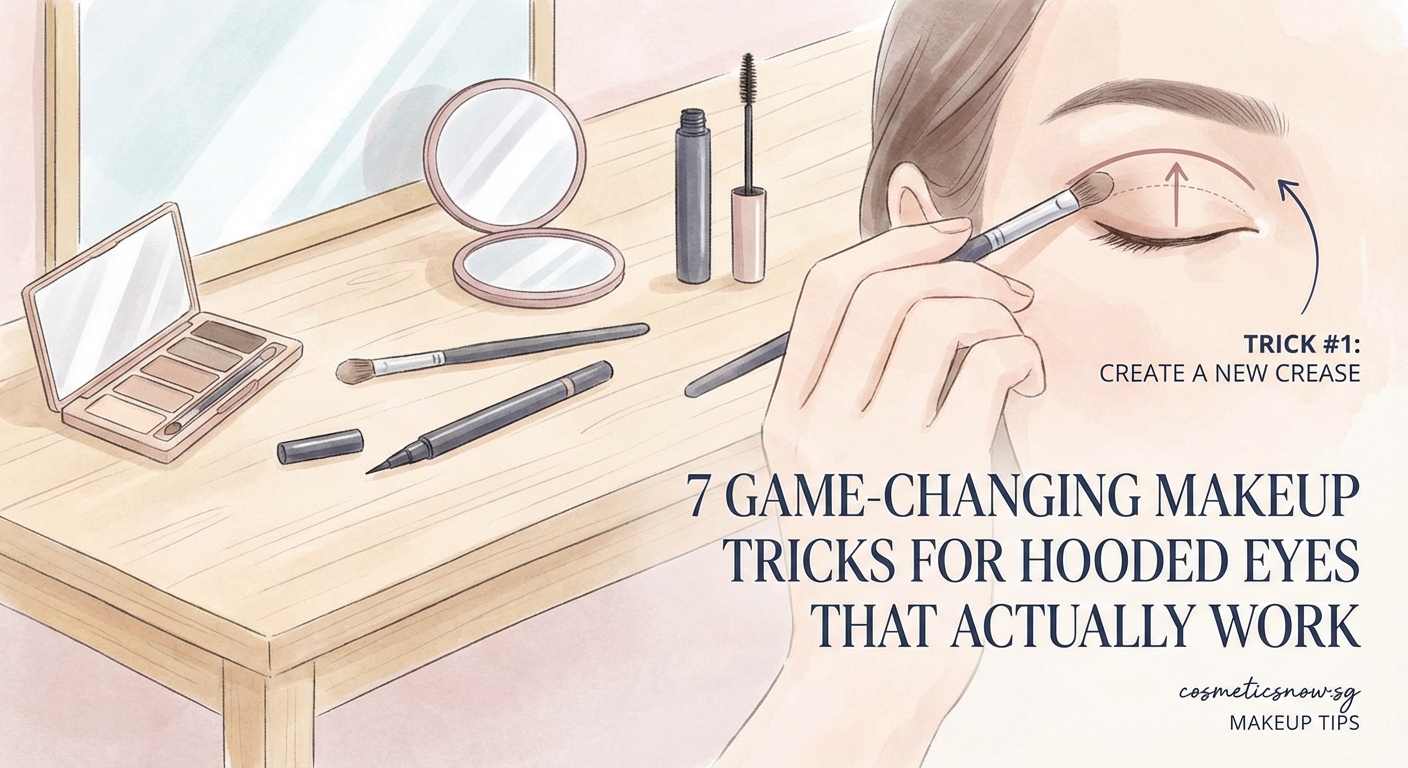
Your natural crease isn’t your makeup crease. Let that sink in.
Take a matte transition shade and place it above where your lid folds. Keep your eyes open while you do this. Blend upward toward your brow bone, creating a new, higher crease line.
This technique gives you the depth that gets hidden on hooded eyes. The color stays visible because it sits above the fold.
How to find your new crease:
- Look straight ahead into your mirror
- Place your brush where you can still see color when your eye is open
- That spot becomes your new crease line
- Build your entire eye look from this point upward
The transition shade should be one or two shades darker than your skin tone. Nothing too dramatic here. You’re creating structure, not making a statement yet.
Master the Art of Visible Eyeshadow Placement
Regular eyeshadow tutorials place darker colors in the outer corner and crease. For hooded eyes, you need to extend everything higher and wider.
Apply your medium shades in a windshield wiper motion, sweeping from your lash line up past your natural crease. Keep blending until the color is visible when your eyes are open.
Your darkest shade goes in the outer V, but extend it up toward the tail of your eyebrow. This creates lift and prevents the droopy effect that happens when dark colors sit too low.
“The key to hooded eye makeup is building color where you can actually see it. Placement matters more than the products you use. Work with your eyes open, check constantly, and adjust as you go.”
When applying shimmer or metallic shades, place them on the center of your mobile lid and inner corner only. Shimmer on the hood emphasizes the fold and makes eyes look smaller.
Tightline Instead of Traditional Eyeliner
Standard eyeliner on hooded eyes often transfers to your upper lid or disappears entirely. Tightlining solves both problems.
Tightlining means applying liner to your upper waterline, right at the base of your lashes. This defines your eyes without taking up precious lid space.
Lift your eyelid gently and wiggle a waterproof gel or pencil liner between your lashes. Start from the outer corner and work inward. The line should be invisible as a line but makes your lashes look fuller and your eyes more defined.
If you want visible liner, draw it only on the outer third of your lid and extend it slightly upward. Keep the line thin. Thick liner on hooded eyes eats up your entire visible lid space.
For winged eyeliner for beginners, create the wing with your eyes open, angling it to follow your lower lash line upward rather than following your crease.
Use Matte Formulas on Your Hood
Shimmer and glitter are gorgeous, but they highlight texture and emphasize folds. Save them for strategic placement only.
Your hood, outer corner, and crease area should always use matte formulas. Matte shadows create depth through color, not light reflection. This makes your eye shape look more defined rather than puffy.
Apply matte shades with a fluffy brush and build slowly. Hooded eyes need more blending time because you’re working with less visible space. Rush this step and your eye look will appear muddy instead of dimensional.
Texture placement guide:
| Formula Type | Best Placement | Effect |
|---|---|---|
| Matte | Hood, crease, outer corner | Creates depth and definition |
| Satin | Mobile lid | Adds dimension without emphasizing texture |
| Shimmer | Inner corner, center lid | Brightens and opens eyes |
| Glitter | Minimal, center lid only | Accent, not main focus |
Create a Cut Crease That Actually Shows
Traditional cut creases don’t work on hooded eyes because the “cut” sits on skin that folds away. Your version needs modification.
After creating your elevated crease with matte shadow, use concealer to carve out a space above your lash line. This space should be higher than your natural lid and visible when your eyes are open.
Pack shimmer or a lighter shade onto the concealer. The contrast between the dark crease and light lid creates dimension that stays visible.
Keep the light section narrow. A thick band of light color on hooded eyes makes the hood look heavier. A thin, strategic placement creates the illusion of more lid space.
Highlight Strategically to Open Your Eyes
Highlighter placement makes or breaks hooded eye makeup. Wrong placement emphasizes the hood. Right placement lifts everything.
Skip highlighter on your brow bone directly above your pupil. This area already protrudes on hooded eyes. Adding shimmer there makes the hood look heavier.
Instead, highlight the outer third of your brow bone, right under the tail of your eyebrow. This lifts the entire eye area and creates balance.
Add a small amount of matte highlight (not shimmer) to your inner corner, extending slightly onto your nose bridge. This opens your eyes without drawing attention to the fold.
Your lower lash line needs attention too. Run a thin line of light matte shadow or nude liner along your lower waterline. This makes your eyes look bigger without adding bulk to your upper lid.
Prime Everything to Prevent Creasing and Transfer
Hooded eyes have skin-on-skin contact all day. Without proper prep, your eyeshadow will crease, transfer, and fade within hours.
Start with an eyeshadow primer on your entire lid, up to your brow bone. Let it dry completely before applying color. This step is not optional.
After applying your eyeshadow, set everything with a translucent powder. Focus on the areas where your skin folds. This creates a barrier that prevents transfer.
If you struggle with liner or mascara transferring to your upper lid, try this: After finishing your eye makeup, dust translucent powder over your entire hood area. The powder absorbs oils and creates a surface that makeup can’t stick to.
For foundation application that won’t interfere with your eye makeup, check out how to apply foundation like a professional makeup artist to ensure your base doesn’t crease in your eye folds.
Common Mistakes That Make Hooded Eyes Look Smaller
Let’s talk about what not to do. These mistakes are everywhere in generic tutorials, and they make hooded eyes look more closed off.
Mistakes to avoid:
- Applying dark shadow all over your lid (makes eyes look sunken)
- Stopping your eyeshadow at your natural crease (creates no visible dimension)
- Using thick eyeliner on your entire lid (eats up space)
- Applying shimmer to your hood (emphasizes the fold)
- Curling lashes without mascara primer (they droop and touch your hood)
- Following brow trends that sit too low (makes hoods look heavier)
The goal isn’t to change your eye shape. It’s to enhance what you have by working with the structure instead of fighting it.
Building Your Hooded Eye Makeup Routine
Now that you know the individual tricks, here’s how to put them together for an everyday look.
Step-by-step application:
- Apply eyeshadow primer to your entire eyelid and brow bone
- Set primer with a skin-tone matte shadow
- Apply your transition shade above your natural crease with eyes open
- Add medium shade to outer corner, extending upward
- Tightline your upper waterline with waterproof liner
- Apply mascara to upper lashes only (or use waterproof on lower lashes)
- Highlight the outer third of your brow bone
- Check your work with eyes open in natural light
This routine takes the same amount of time as any eye look. You’re just placing products differently.
For days when you want a complete face, pair these eye techniques with contouring based on your face shape to create balanced, harmonious features.
Adjusting Techniques for Different Hooded Eye Variations
Not all hooded eyes are identical. Some have more hood coverage than others. Some have downturned outer corners. Some have very little visible lid space.
If your entire lid is covered, focus all your color work above the fold. You’re essentially creating the illusion of a lid where there isn’t visible space.
For slightly hooded eyes with some lid showing, you can apply a light shade to the visible portion and save darker colors for above the crease.
Downturned hooded eyes benefit from extending all shadow and liner upward at the outer corner. This counteracts the downward pull and creates lift.
Deep-set hooded eyes need lighter colors overall. Too much dark shadow makes the eyes recede further. Stick to medium tones and use matte formulas to create depth through placement rather than intensity.
Product Recommendations for Hooded Eye Success
You don’t need special products, but certain formulas work better than others.
What to look for:
- Waterproof eyeliner pencils for tightlining
- Long-wearing cream eyeshadow primers
- Matte eyeshadow palettes with buildable pigment
- Thin eyeliner brushes for precise application
- Waterproof mascara that holds a curl
Avoid cream eyeshadows unless they’re specifically long-wearing. Regular cream formulas crease quickly on hooded eyes because of the skin contact.
Powder shadows with good pigment payoff work best. You can build them slowly and blend them seamlessly without worrying about creasing.
Your mascara needs to be waterproof or tubing formula. Regular mascara will transfer to your hood throughout the day. This is especially true if you have oily skin or live in humid climates.
Making Your Eye Makeup Last All Day
Even with perfect application, hooded eye makeup faces unique challenges. The constant skin contact means you need extra staying power.
After priming, apply a thin layer of cream eyeshadow in a neutral tone that matches your skin. Let it dry. Then apply powder shadows on top. This two-step base creates serious staying power.
Avoid touching your eyes throughout the day. Every time you rub or adjust, you risk transferring product or creating creases.
Blotting papers are your friend. If your lids get oily, gently press a blotting paper to your hood without rubbing. This removes oil without disturbing your makeup.
At the end of the day, remove your eye makeup thoroughly with the right makeup removal technique to prevent irritation and keep your eye area healthy.
Adapting Evening Looks for Hooded Eyes
Dramatic eye makeup on hooded eyes requires the same principles with more intensity.
For smoky eyes, create your smoke above the crease line. The gradient should be visible when your eyes are open, which means starting the dark color higher than you think you need to.
Skip the lower lash line smoke. Heavy shadow below makes hooded eyes look tired. Instead, use a thin line of dark shadow or liner on the outer third of your lower lash line only.
Glitter and metallic shades work for evening, but place them strategically. A wash of shimmer over your entire hood will emphasize texture under evening lighting. Better to place shimmer on the center of your mobile lid and inner corner, keeping the hood and outer corner matte.
False lashes can work beautifully on hooded eyes if you choose the right style. Avoid thick bands that take up lid space. Individual lashes or thin-band styles that focus length on the outer corner create lift without bulk.
Your Hooded Eyes Are an Asset
These techniques transform how your eye makeup looks and lasts. The difference isn’t in buying new products. It’s in placing them where they actually show.
Practice these methods with your eyes open. Check your work constantly. Adjust upward when in doubt. Your hooded eyes aren’t a limitation. They’re just a different canvas that responds beautifully to the right approach. Start with one technique today, master it, then add another. Before long, these adjustments will feel as natural as your current routine, except your makeup will finally do what you want it to do.