Starting a skincare routine feels overwhelming when you’re staring at rows of serums, toners, and moisturizers with no idea where to begin. You see influencers with 12-step routines and wonder if you need all that, or if a simple wash-and-go approach is enough. The truth is, building your first skincare routine doesn’t require a bathroom counter full of products or a degree in chemistry. It just needs a clear plan and the right foundational steps.
A solid skincare routine starts with three core steps: cleanse, moisturize, and protect. Choose products based on your skin type, introduce new items one at a time, and give each product at least two weeks before judging results. Morning routines focus on protection, while evening routines prioritize repair. Consistency matters more than the number of products you use, and simpler routines often deliver better results than complicated multi-step regimens.
Understanding Your Skin Type First
Before buying a single product, figure out what your skin actually needs.
Your skin type determines which ingredients will help and which might cause problems. Oily skin produces excess sebum and looks shiny by midday. Dry skin feels tight after washing and shows flaky patches. Combination skin means your T-zone gets oily while your cheeks stay dry. Sensitive skin reacts to new products with redness or irritation.
Test your skin type by washing your face with a gentle cleanser, patting it dry, and waiting an hour without applying anything. Check a mirror under good lighting. Shine across your forehead, nose, and chin suggests oily or combination skin. Tightness or visible dry patches point to dry skin. Redness or stinging during the test indicates sensitivity.
Most people have combination skin, which is completely normal. Your routine can address different areas with targeted products rather than treating your entire face the same way.
The Three Non-Negotiable Steps
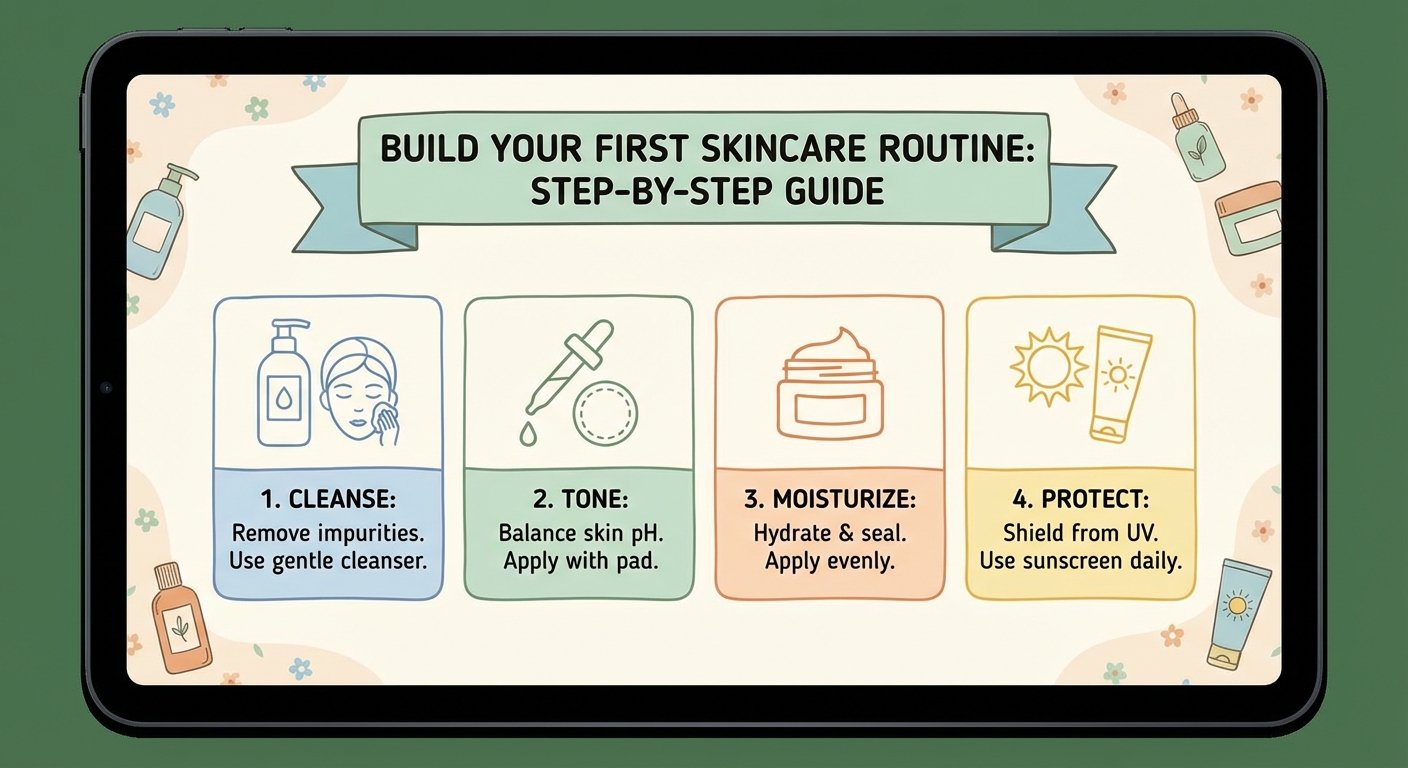
Every skincare routine needs these three foundations, no matter your age or skin type.
Cleansing removes the day
Cleanser washes away dirt, oil, makeup, and pollution that accumulates on your skin throughout the day. Skip this step and you’re trapping all that gunk against your pores overnight.
Choose a gentle, pH-balanced cleanser that doesn’t leave your skin feeling squeaky clean. That tight, stripped feeling means you’ve removed too much of your natural protective barrier. Cream cleansers work well for dry skin, while gel or foaming formulas suit oily types better.
Wash your face twice daily, morning and evening. Morning cleansing removes the oils your skin produced overnight. The right way to remove makeup without damaging your skin becomes crucial in your evening routine, especially if you wear foundation or sunscreen.
Moisturizing keeps skin balanced
Every skin type needs moisture, even oily skin. When you skip moisturizer, your skin compensates by producing more oil, creating a cycle that makes oiliness worse.
Moisturizers create a protective layer that prevents water loss from your skin. Lightweight gel moisturizers work for oily skin, while richer creams benefit dry skin types. Look for ingredients like hyaluronic acid for hydration, ceramides for barrier repair, or niacinamide for oil control.
Apply moisturizer to damp skin right after cleansing. Your skin absorbs products better when it’s slightly wet, and you’ll lock in that extra hydration.
Sun protection prevents damage
Sunscreen is the single most important anti-aging product you can use. UV rays cause wrinkles, dark spots, and skin cancer, even on cloudy days and through windows.
Use a broad-spectrum SPF 30 or higher every morning, regardless of the weather or your plans. Mineral sunscreens with zinc oxide or titanium dioxide sit on top of skin, while chemical sunscreens absorb into it. Both work well if you apply enough.
Reapply every two hours if you’re outdoors. For indoor days, one morning application usually suffices unless you’re sitting by a window.
Building Your Morning Routine
Morning skincare prepares and protects your skin for the day ahead.
- Cleanse with a gentle face wash to remove overnight oil buildup
- Apply any treatment products like vitamin C serum while skin is damp
- Pat on moisturizer appropriate for your skin type
- Finish with sunscreen as your final step before makeup
Keep morning routines simple and focused on protection. You’re getting ready for work or school, not performing a spa treatment. Five to ten minutes is plenty of time for an effective morning routine.
Treatment serums go between cleansing and moisturizing because they contain active ingredients that work best on clean, damp skin. How to properly layer your serums for maximum skin benefits explains the science behind proper product order.
Wait a minute between each step so products can absorb properly. Piling everything on at once creates a pilling mess that sits on top of your skin instead of sinking in.
Creating Your Evening Routine
Nighttime skincare focuses on repair and treatment while you sleep.
Your evening routine can be slightly more elaborate because you have more time and your skin repairs itself overnight. Start with how to build a nighttime skincare routine for every skin type for detailed guidance.
- Remove makeup and sunscreen with a cleansing balm or micellar water
- Follow with your regular cleanser for a thorough clean
- Apply treatment products like retinol or exfoliating acids
- Layer on a richer moisturizer or night cream
- Add targeted treatments for specific concerns like eye cream or spot treatments
Double cleansing at night ensures you’ve removed everything from your skin. The first cleanse tackles makeup and sunscreen, while the second cleanse actually cleans your skin.
Nighttime is when you introduce active ingredients like retinoids, AHAs, or BHAs. These powerful treatments work better at night when your skin isn’t exposed to UV rays and environmental stress.
Adding Products One at a Time
Introducing too many products at once makes it impossible to know what’s helping or hurting your skin.
Start with the three basics: cleanser, moisturizer, and sunscreen. Use them consistently for two weeks before adding anything else. This gives your skin time to adjust and lets you establish a baseline.
When you’re ready to add a new product, introduce just one at a time. Use it for at least two weeks, ideally four, before judging results or adding another product. This patience pays off because you’ll know exactly which product caused a breakout or improvement.
“The biggest mistake I see with new skincare users is trying to fix everything at once. Your skin needs time to adjust to new ingredients, and introducing multiple products simultaneously makes it impossible to identify what’s working.” – Board-certified dermatologist
Track your progress with weekly photos taken in the same lighting. Your mirror memory is unreliable, but photos show real changes over time.
Common Mistakes to Avoid
| Mistake | Why It’s a Problem | Better Approach |
|---|---|---|
| Using hot water | Strips natural oils and damages skin barrier | Wash with lukewarm water instead |
| Skipping sunscreen on cloudy days | UV rays penetrate clouds | Apply SPF every morning regardless of weather |
| Over-exfoliating | Causes irritation and weakens skin barrier | Exfoliate 1-2 times per week maximum |
| Changing products too frequently | Doesn’t give products time to work | Wait 4-6 weeks before switching products |
| Applying products to dry skin | Reduces absorption and effectiveness | Apply to damp skin after cleansing |
| Using too much product | Wastes money and can cause breakouts | Use pea-sized amounts for most products |
Should you exfoliate every day? The truth about skin cell turnover addresses one of the most common beginner mistakes that damages healthy skin.
Choosing Products for Your Specific Concerns
Once you’ve established your basic routine, you can add targeted treatments.
For acne-prone skin, look for products with salicylic acid, benzoyl peroxide, or niacinamide. These ingredients unclog pores and reduce inflammation without over-drying your skin.
Dry or dehydrated skin benefits from hyaluronic acid, glycerin, and ceramides. Layer a hydrating serum under your moisturizer for extra moisture.
If dark spots or uneven tone concern you, vitamin C serums brighten skin during the day while niacinamide or alpha arbutin work well morning or night. The ultimate guide to choosing serums for your specific skin concerns helps you navigate the serum aisle with confidence.
Fine lines and early signs of aging respond to retinol or retinoids started in your mid-twenties. Begin with a low concentration once or twice weekly, gradually increasing frequency as your skin adjusts.
Sensitive skin requires fragrance-free, minimal-ingredient formulas. Patch test new products on your inner arm for 24 hours before applying to your face.
How Long Before You See Results
Patience is essential because skin cell turnover takes time.
Your skin completely regenerates approximately every 28 days, which means you need at least a month to see meaningful changes from any product. Most dermatologists recommend waiting six to eight weeks before deciding if something works.
Some changes happen faster than others. Hydration improvements show within days, while acne treatments need four to six weeks. Anti-aging products require three months minimum, and some benefits continue building for six months to a year.
Keep realistic expectations about what skincare can achieve. Products improve your skin’s health and appearance, but they can’t completely erase deep wrinkles or dramatically change your face structure. Why your skin barrier matters and how to repair it fast explains the foundation of healthy skin that makes all other products work better.
Adjusting Your Routine with the Seasons
Your skin’s needs change throughout the year based on weather and humidity.
Winter air is dry and cold, stripping moisture from your skin. Switch to richer moisturizers and add a hydrating serum. You might need to cleanse only once daily in the morning, using just micellar water at night to avoid over-drying.
Summer heat increases oil production and sweat. Lighter gel moisturizers feel more comfortable, and you’ll need to reapply sunscreen more frequently. Mattifying products help control shine without clogging pores.
Spring and fall transitions can confuse your skin. Keep both your lightweight and rich moisturizers on hand, using whichever your skin needs that day. Some people alternate based on how their skin feels each morning.
Budget-Friendly Routine Building
Effective skincare doesn’t require expensive products.
Drugstore brands often contain the same active ingredients as luxury products at a fraction of the cost. The fancy packaging and marketing drive up prices, not necessarily the formula quality.
Prioritize spending on sunscreen and treatment products like retinol or vitamin C, where quality matters more. Save money on basic cleansers and moisturizers by choosing affordable, well-reviewed options.
Buy travel sizes or samples when testing new products. This prevents wasting money on full-size products that might not work for your skin.
Transform dull skin into radiant glow with these nighttime habits shows how consistency with basic products beats expensive products used sporadically.
When to See a Professional
Some skin concerns need expert help beyond a basic routine.
Persistent acne that doesn’t improve after three months of consistent treatment deserves a dermatologist visit. Prescription treatments like tretinoin or oral medications might be necessary.
Sudden changes in your skin, especially new moles, rapid darkening of spots, or persistent redness, warrant professional evaluation. These could signal underlying health issues.
If you’ve tried multiple products without improvement or you’re experiencing severe reactions to everything you try, a dermatologist can identify underlying conditions like rosacea or eczema that need specific treatment.
Making Your Routine Stick
Consistency matters more than perfection.
Place your products where you’ll see them. Keep morning products by your bathroom sink and evening products on your nightstand. Visual reminders help build habits.
Set phone reminders for the first month until the routine becomes automatic. Morning skincare happens after brushing your teeth, evening skincare before bed. Link new habits to existing ones.
Accept that some nights you’ll be too tired for your full routine. Keep cleansing wipes by your bed for those nights when you can barely keep your eyes open. Removing makeup and sunscreen matters more than the perfect five-step routine.
The 5-minute morning beauty routine that actually works proves that simple, consistent routines beat elaborate ones you’ll abandon after a week.
Track your routine in a habit app or journal. Checking off each day provides motivation and helps you notice patterns between your skincare consistency and how your skin looks.
Your Skin Journey Starts Now
Building your first skincare routine doesn’t need to feel complicated or expensive.
Start with the three basics, give them time to work, and add targeted treatments only after you’ve established consistent habits. Your skin will thank you for the simple, steady approach far more than it would for a bathroom full of products you use sporadically.
Remember that everyone’s skin is different. What works for your best friend might not work for you, and that’s completely normal. Pay attention to how your skin responds, adjust as needed, and give yourself grace during the learning process. Your perfect routine is the one you’ll actually do every day, not the one that looks impressive on social media.