Your hair products sit lined up on your bathroom shelf, promising shine, volume, and strength. But if your scalp feels tight, itchy, or oily by midday, those products can only do so much. The foundation of healthy hair starts where it grows, and most of us skip that step entirely.
A scalp care routine addresses the root causes of hair concerns by treating your scalp like facial skin. Regular cleansing, exfoliation, and targeted treatments remove buildup, balance oil production, and create optimal conditions for hair growth. This dedicated approach reduces thinning, dryness, and irritation while improving overall hair health from the foundation up.
Why your scalp deserves the same attention as your face
Think about how much time you spend on your facial skincare. Cleanser, toner, serum, moisturizer. You probably follow the complete step-by-step guide to building your first skincare routine without question.
Your scalp has the same needs.
It produces oil, sheds dead skin cells, and faces environmental stress daily. Product buildup from dry shampoo, styling products, and even conditioner creates a barrier that suffocates hair follicles. This buildup blocks nutrients, traps bacteria, and creates inflammation that weakens hair at the root.
Women experiencing thinning hair often blame genetics or hormones. But scalp health plays a massive role. A congested, inflamed scalp cannot support strong hair growth. The follicles struggle to push out new strands, and existing hair becomes brittle and prone to breakage.
The solution starts with treating your scalp as an extension of your skincare routine, not an afterthought in your haircare.
The essential steps in a scalp care routine
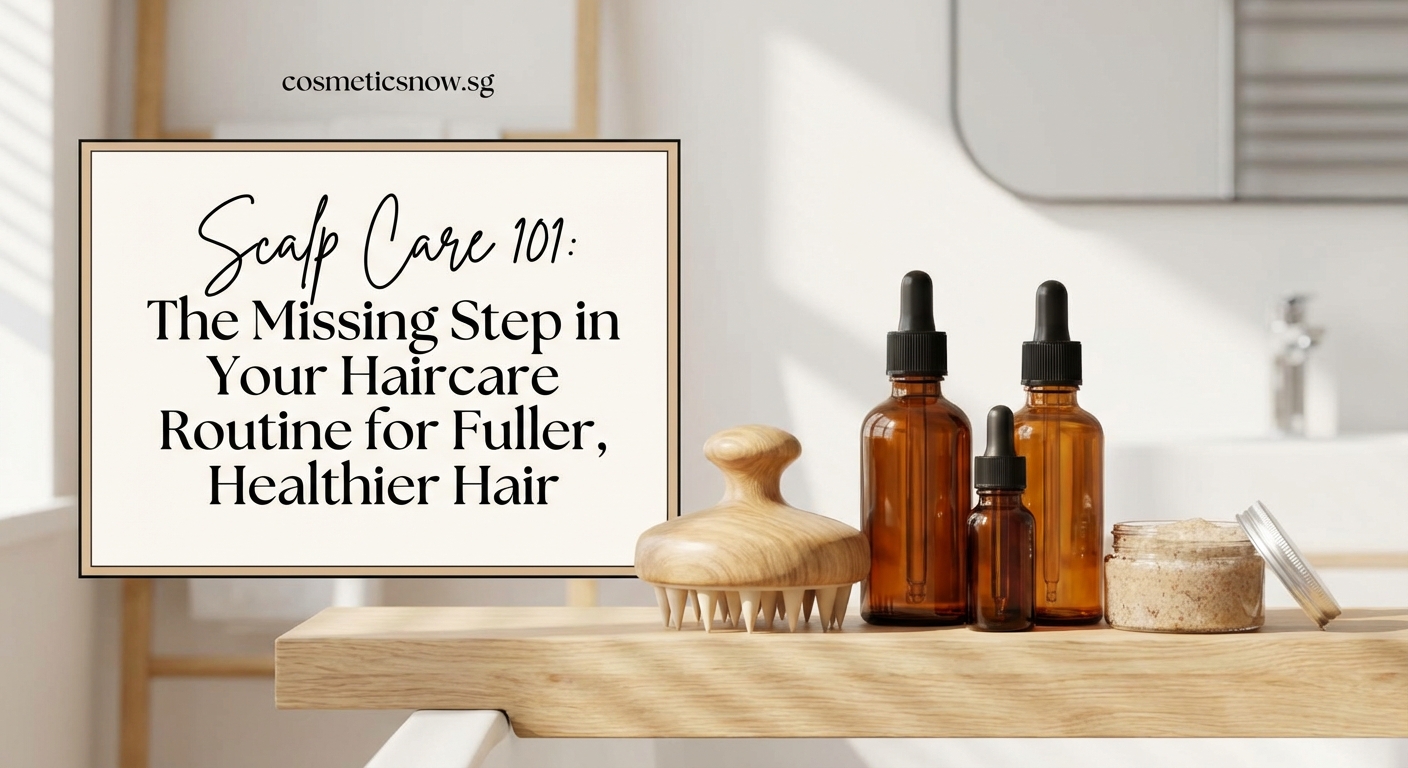
Building an effective routine doesn’t require dozens of products. It needs consistency and the right approach for your specific concerns.
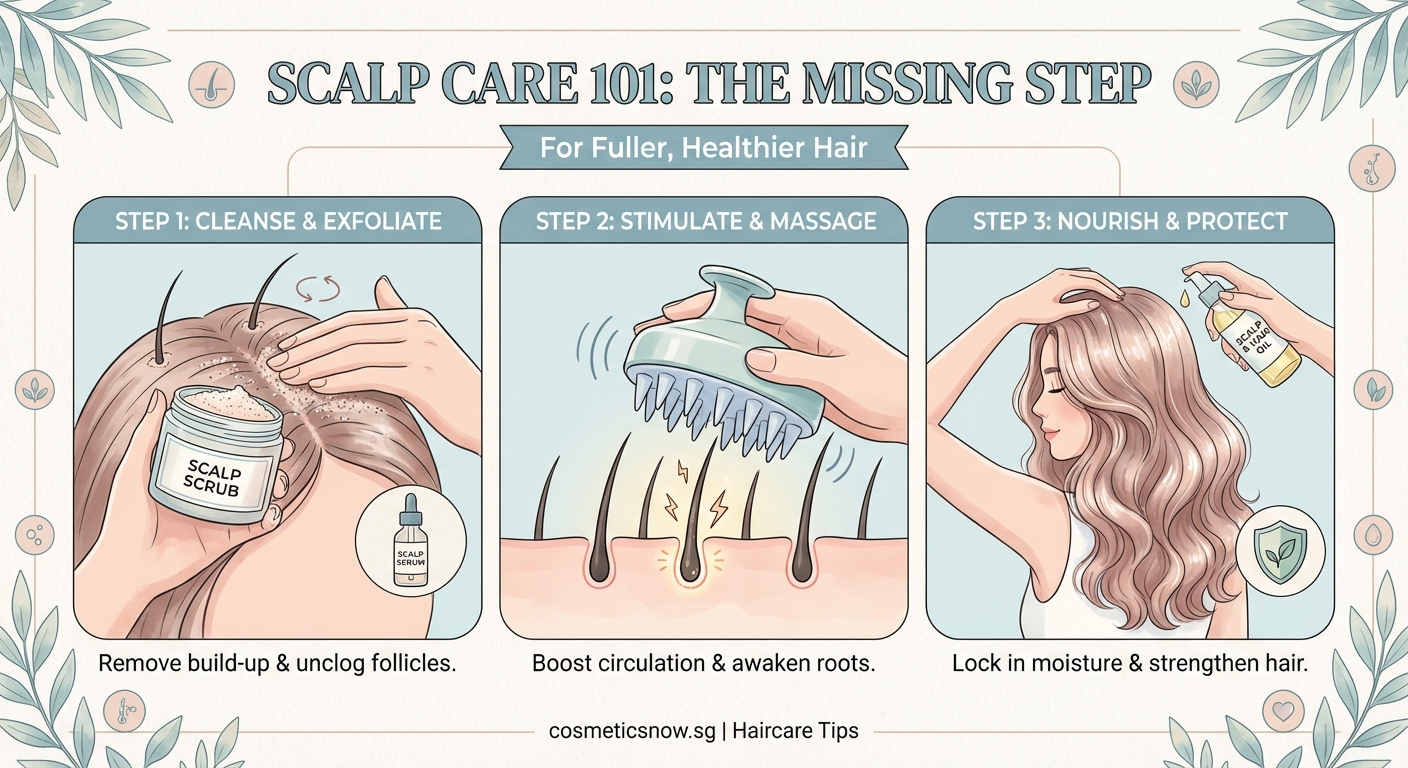
1. Pre-wash scalp massage
Start with dry hair before you shower. Use your fingertips to massage your scalp in circular motions for three to five minutes. This stimulates blood flow to hair follicles, loosens product buildup, and helps distribute natural oils.
You can use a scalp massager tool if you prefer, but your fingers work perfectly. Focus on areas where you feel tension or notice thinning. The increased circulation brings nutrients to follicles and encourages healthier growth.
2. Clarifying cleanse
Regular shampoo removes surface dirt, but it doesn’t address the deeper buildup that accumulates over time. Once or twice weekly, use a clarifying treatment specifically designed for scalp health.
Look for ingredients like salicylic acid, tea tree oil, or charcoal. These break down sebum, remove dead skin cells, and clear clogged follicles. Apply the product directly to your scalp, not your hair length. Massage thoroughly, let it sit for two to three minutes, then rinse completely.
Between clarifying sessions, use a gentle sulfate-free shampoo that won’t strip your scalp’s natural moisture barrier.
3. Exfoliation treatment
Just like how to properly layer your serums for maximum skin benefits matters for your face, the order of scalp treatments affects results.
Physical or chemical exfoliation removes the buildup that regular washing misses. Physical scrubs contain small granules that manually lift away dead skin. Chemical exfoliants use acids like glycolic or lactic acid to dissolve buildup without scrubbing.
Use scalp exfoliation once weekly if you have normal to oily scalp, every two weeks if your scalp runs dry. Apply to damp scalp, massage gently, and rinse thoroughly. Never scrub aggressively. Your scalp skin is delicate and responds better to gentle, consistent treatment.
4. Targeted treatment application
After cleansing and exfoliating, your scalp can actually absorb active ingredients. This is when you apply treatments for specific concerns.
For thinning hair, look for peptides, biotin, or caffeine serums. These stimulate follicles and support the growth phase of your hair cycle. For dryness or flaking, use hydrating treatments with hyaluronic acid or aloe. For excess oil, try niacinamide or witch hazel to balance sebum production.
Apply treatments directly to your scalp using a dropper or nozzle applicator. Part your hair in sections to ensure even coverage. Massage the product in with your fingertips. Most treatments work best when left in, so don’t rinse unless the product instructions specify otherwise.
5. Conditioning the right way
Here’s where most people make a critical mistake. Conditioner should never touch your scalp. It’s formulated for hair strands, not skin, and causes buildup that undoes all your scalp care work.
Apply conditioner from mid-length to ends only. Focus on areas that need moisture and detangling. Let it sit for two to three minutes, then rinse thoroughly with cool water to seal the hair cuticle.
Creating your personalized scalp care schedule
Your routine frequency depends on your scalp type and concerns. Here’s a practical weekly framework.
| Scalp Type | Clarifying Cleanse | Exfoliation | Treatment Application | Regular Shampoo |
|---|---|---|---|---|
| Oily | 2x per week | 1x per week | Daily or every other day | 3-4x per week |
| Dry | 1x per week | Every 2 weeks | Daily | 2-3x per week |
| Normal | 1x per week | 1x per week | 3-4x per week | 3-4x per week |
| Sensitive | Every 2 weeks | Every 2-3 weeks | Daily (gentle formula) | 2-3x per week |
| Combination | 1-2x per week | 1x per week | Daily on problem areas | 3-4x per week |
Adjust based on how your scalp responds. If you notice increased flaking after exfoliation, reduce frequency. If oil returns quickly, increase clarifying sessions.
The key is consistency over intensity. A gentle routine performed regularly beats aggressive treatment done sporadically.
Common scalp care mistakes that sabotage results
Even with good intentions, these habits undermine your efforts.
Using hot water: Scalding water strips natural oils and triggers rebound oil production. It also damages hair cuticles and causes frizz. Wash with warm water and rinse with cool.
Skipping the scalp during washing: Most people focus shampoo on their hair length. The scalp needs the cleansing action. Your hair length only needs the runoff as you rinse.
Piling on dry shampoo: Dry shampoo absorbs oil temporarily but creates significant buildup. If you use it more than two days in a row, you need a clarifying cleanse before continuing.
Ignoring your hairbrush: Brushes collect oil, dead skin, and product residue. This transfers back to your clean scalp every time you brush. Clean your brush weekly with shampoo and warm water.
Over-treating problem areas: When you notice flaking or itching, the instinct is to treat it daily with strong products. This often makes things worse by disrupting your scalp’s natural balance. Start with the recommended frequency and adjust slowly.
Ingredients that actually work for scalp health
Not all scalp products deliver on their promises. These ingredients have research backing their effectiveness.
- Salicylic acid: Breaks down sebum and dead skin cells, preventing clogged follicles
- Tea tree oil: Natural antimicrobial that reduces bacteria and fungus causing irritation
- Niacinamide: Balances oil production and reduces inflammation
- Caffeine: Stimulates blood flow and may extend the hair growth phase
- Peptides: Support collagen production and strengthen follicles
- Zinc pyrithione: Treats dandruff and seborrheic dermatitis effectively
- Biotin: Supports keratin production for stronger hair growth
- Hyaluronic acid: Hydrates dry scalp without adding oil
Read ingredient lists carefully. The beneficial ingredients should appear in the first five to seven items. If they’re listed near the end, the concentration is probably too low to make a difference.
“Scalp health is hair health. You cannot have strong, vibrant hair growing from an inflamed, congested scalp. Treating the scalp first changes everything about your hair’s appearance and growth pattern.” – Dr. Michelle Lee, Board-Certified Dermatologist
How to tell if your scalp care routine is working
Results take time. Hair grows slowly, and follicles need consistent support to show improvement. Track these signs of progress.
Within two weeks: Reduced itching, less visible flaking, hair feels cleaner longer between washes
Within four to six weeks: Less oil production, reduced scalp sensitivity, fewer breakouts along the hairline
Within eight to twelve weeks: New baby hairs appearing along the hairline, existing hair feels thicker and stronger, reduced hair fall during washing and brushing
Within six months: Visible increase in hair density, improved overall hair texture, sustained scalp comfort
If you don’t see any improvement after eight weeks of consistent routine, reassess your products. You might need different active ingredients for your specific concerns. Consider consulting a dermatologist who specializes in hair and scalp health.
Adapting your routine through seasons and life changes
Your scalp needs shift throughout the year and during major life events. Just like adapting your beauty routine through your monthly cycle helps your skin, adjusting scalp care maintains balance.
Winter: Cold air and indoor heating create dryness. Reduce exfoliation frequency and add hydrating treatments. Consider using a humidifier in your bedroom.
Summer: Heat and humidity increase oil production. You might need more frequent clarifying cleanses and lighter treatment formulas.
Pregnancy and postpartum: Hormonal changes affect oil production and hair growth cycles. Many women experience increased shedding postpartum. Maintain gentle, consistent scalp care to support the transition.
Stress periods: High stress triggers inflammation throughout your body, including your scalp. This can cause temporary hair shedding. Focus on scalp massage and anti-inflammatory ingredients during these times.
After illness or medication changes: Some medications affect hair growth and scalp condition. Give your routine a few weeks to adjust before making major changes.
Building the habit into your existing routine
The biggest challenge isn’t finding the right products. It’s remembering to use them consistently.
Attach scalp care to habits you already maintain. If you never miss your nighttime skincare routine, keep your scalp treatments next to your face serum. The visual reminder helps.
Set phone reminders for weekly exfoliation on the same day you do other self-care tasks. Many people choose Sunday evenings for deeper treatments.
Keep a simple tracking system. Mark your calendar or use a habit-tracking app. Seeing your consistency builds motivation to continue.
Start with just the massage and clarifying cleanse for the first month. Once those feel automatic, add exfoliation. After another month, introduce targeted treatments. Building gradually prevents overwhelm and increases long-term success.
The connection between scalp care and overall hair health
Healthy hair growth happens in cycles. Each follicle goes through growth, transition, and resting phases. Poor scalp health disrupts these cycles, pushing more follicles into the resting phase prematurely.
When follicles stay in the resting phase too long, you notice thinning. When they’re inflamed during the growth phase, hair grows weaker and breaks easily. Scalp care optimizes conditions for each phase to progress naturally.
This is why how to repair damaged hair naturally without expensive salon treatments starts at the scalp. You can apply all the masks and oils you want to your hair length, but if new growth emerges weak and damaged, you’re fighting an uphill battle.
Think of your scalp as soil and your hair as plants. Rich, healthy soil produces strong plants naturally. Depleted, compacted soil struggles to support anything, no matter how much you tend to the plants themselves.
When to seek professional help
Most scalp concerns improve with consistent at-home care. But some situations need professional evaluation.
See a dermatologist if you experience:
- Sudden, dramatic hair loss or bald patches
- Severe itching that doesn’t improve with treatment
- Painful sores or lesions on your scalp
- Thick, crusty patches that bleed when removed
- Hair loss accompanied by other symptoms like fatigue or weight changes
These could indicate conditions like alopecia areata, scalp psoriasis, or hormonal imbalances that need medical treatment. Early intervention often leads to better outcomes.
A trichologist (scalp and hair specialist) can also provide detailed scalp analysis and personalized treatment plans. This is particularly helpful if you’ve tried multiple approaches without improvement.
Your scalp is the foundation everything else builds on
Hair products promise transformation. Supplements claim to boost growth. But without addressing scalp health first, you’re building on unstable ground.
A scalp care routine doesn’t require expensive products or hours of time. It needs attention, consistency, and the right approach for your specific needs. Start with the basics: massage, clarify, exfoliate, and treat. Build the habit gradually. Track your progress over months, not days.
Your scalp will respond. The itching will fade. The oil will balance. And over time, your hair will grow stronger, fuller, and healthier from the root up. Because that’s where real hair transformation begins.