You wash your face every night, but are you actually protecting your skin while removing makeup? Most people scrub too hard, use the wrong products, or skip crucial steps that leave their skin barrier compromised and irritated.
Proper makeup removal requires a gentle, multi-step approach that dissolves products without tugging or stripping your skin. Using the right cleansers for your skin type, applying products with light pressure, and following up with hydration protects your skin barrier while keeping pores clear. The method matters just as much as the products you choose.
Understanding Why Makeup Removal Technique Matters
Your skin barrier is only about 0.02 millimeters thick. That’s thinner than a sheet of paper.
When you rub harshly or use aggressive products, you damage this protective layer. The result? Redness, sensitivity, dryness, and accelerated aging.
Makeup products are designed to stay put through sweat, humidity, and long days. That staying power means they need proper removal techniques, not just a splash of water.
Leaving makeup on overnight clogs pores and prevents your skin from its natural repair process. But removing it incorrectly causes just as much damage.
The solution lies in working with your skin’s natural structure, not against it.
The Double Cleanse Method That Actually Works
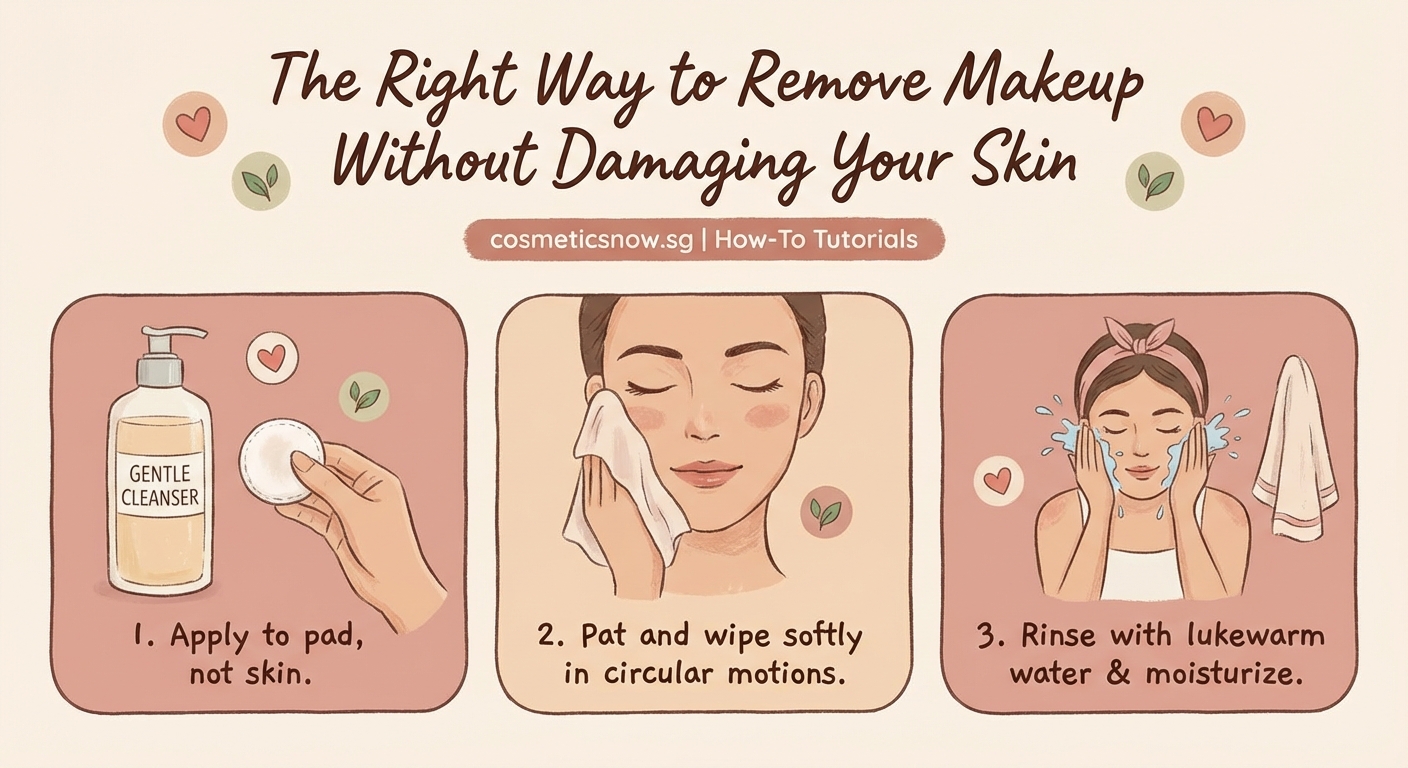
Double cleansing isn’t just a trend. It’s a scientifically sound approach to removing makeup without trauma.
Here’s how it works in practice.
Step One: Oil-Based Cleanser
Start with dry hands and a dry face.
Apply an oil-based cleanser or cleansing balm directly to your skin. The oil molecules bind to makeup, sunscreen, and sebum.
Massage gently for 60 seconds using circular motions. Focus on areas with heavy makeup like your eyes and lips.
Add a small amount of water to emulsify. The cleanser will turn milky white.
Rinse thoroughly with lukewarm water. Not hot, which strips your skin, and not cold, which doesn’t remove products effectively.
Step Two: Water-Based Cleanser
Follow with a gentle, water-based cleanser suited to your skin type.
This removes any remaining residue and cleanses your skin properly. Massage for 30 seconds using upward motions.
Rinse again with lukewarm water and pat dry with a clean towel. Never rub.
“The double cleanse method removes makeup completely while maintaining skin pH balance. The first cleanse removes makeup and oil-based debris, while the second cleanse actually cleans your skin.” – Board-certified dermatologist recommendation
Choosing Products That Won’t Compromise Your Skin Barrier
Not all cleansers are created equal. The wrong formula can undo all your careful technique.
Look for these ingredients in your first cleanse:
- Jojoba oil or squalane for dry skin
- Grapeseed oil for combination skin
- Rice bran oil for oily skin
- Micellar water for sensitive skin
Your second cleanser should match your skin type and concerns. After you master proper removal, you can focus on how to build a nighttime skincare routine for every skin type that addresses your specific needs.
Avoid these harmful ingredients:
- Sulfates (sodium lauryl sulfate, sodium laureth sulfate)
- Denatured alcohol
- Synthetic fragrances
- Physical exfoliating beads
These strip your skin’s natural oils and cause micro-tears in your skin barrier.
The Right Way to Remove Eye Makeup
Eye skin is ten times thinner than the rest of your face. It needs extra care.
Never pull, tug, or scrub your eye area. This causes premature wrinkles and can damage delicate lash follicles.
Here’s the proper technique:
- Soak a cotton pad with eye makeup remover or micellar water
- Press the pad gently against your closed eye for 10 seconds
- Swipe downward and outward in one smooth motion
- Use a fresh cotton pad for the other eye
- Clean up any remaining mascara with a cotton swab
For waterproof mascara, use an oil-based remover. Water-based formulas won’t break down waterproof formulas effectively.
If you wear winged eyeliner for beginners, pay special attention to your lash line where product builds up.
Common Makeup Removal Mistakes You’re Probably Making
Even people with good intentions make these errors. Recognizing them helps you avoid unnecessary skin damage.
| Mistake | Why It’s Harmful | Better Approach |
|---|---|---|
| Using makeup wipes alone | Spreads makeup around, doesn’t remove it completely | Use wipes only for emergencies, never as your main method |
| Scrubbing with hot water | Strips natural oils, causes inflammation | Use lukewarm water and gentle pressure |
| Skipping the first cleanse | Water-based cleansers can’t remove oil-based makeup | Always start with an oil-based product |
| Using the same towel for days | Bacteria buildup causes breakouts | Use a fresh, clean towel every night |
| Rubbing eyes vigorously | Damages delicate skin, breaks lashes | Press and hold, then gently swipe |
| Not cleansing your neck | Product buildup clogs pores | Extend your routine to your jawline and neck |
Step-by-Step Evening Routine for Damage-Free Removal
Here’s your complete nightly routine in the correct order:
- Remove any hair accessories and tie your hair back
- Wash your hands thoroughly
- Apply oil-based cleanser to dry skin
- Massage for 60 seconds, focusing on makeup-heavy areas
- Emulsify with water and rinse
- Apply water-based cleanser
- Massage for 30 seconds
- Rinse thoroughly
- Pat dry with a clean towel
- Apply your skincare products immediately while skin is damp
This process takes about five minutes. That’s less time than scrolling social media before bed.
The investment protects your skin for decades. Understanding why your skin barrier matters and how to repair it fast shows you exactly what you’re protecting with proper removal.
Tools and Accessories That Make Removal Easier
The right tools enhance your technique without adding unnecessary steps.
Reusable cotton pads work better than disposable ones. They’re softer, more absorbent, and better for the environment.
Microfiber cleansing cloths remove makeup with just water. They work through mechanical action, lifting makeup from your skin without harsh chemicals.
Silicone cleansing brushes provide gentle exfoliation while you cleanse. Use them on the lowest setting and replace the brush head every three months.
Headbands or hair clips keep hair away from your face. This prevents product buildup along your hairline.
Avoid:
- Rough washcloths that create friction
- Exfoliating brushes with stiff bristles
- Makeup removing devices that require excessive pressure
Adjusting Your Technique for Different Makeup Types
Light everyday makeup needs less intervention than a full face of long-wear products.
For Natural, Light Makeup
A single cleanse with a gentle, oil-based cleanser often suffices. Follow with a hydrating toner.
For Medium Coverage Foundation
Use the full double cleanse method. Pay attention to your hairline, jawline, and around your nose where foundation application tends to settle.
For Full Glam or Stage Makeup
Start with a cleansing balm or oil. Let it sit for 30 seconds before massaging.
Do a thorough double cleanse, then check your skin with a white cotton pad. If you see any color transfer, cleanse once more.
For Waterproof Products
Only oil-based removers break down waterproof formulas effectively. Let the product sit on your skin for 15 seconds before removing.
What to Do After Makeup Removal
Your skin is most receptive to products immediately after cleansing. This window lasts about 60 seconds.
Apply products in this order:
- Toner or essence
- Serums (thinnest to thickest consistency)
- Eye cream
- Moisturizer
- Facial oil (if using)
If you’re building a complete routine, the complete step-by-step guide to building your first skincare routine walks you through product selection and layering.
Your skin should feel clean but not tight or dry. If it feels stripped, your cleanser is too harsh.
Signs Your Removal Method Is Damaging Your Skin
Pay attention to these warning signals:
- Redness that lasts more than 30 minutes after cleansing
- Tight, uncomfortable feeling
- Increased breakouts along your hairline or jawline
- Flaking or peeling skin
- Stinging when you apply skincare products
- Visible broken capillaries around your nose
Any of these symptoms means your technique or products need adjustment.
Gentle doesn’t mean ineffective. The goal is thorough cleansing without trauma.
Emergency Situations and Travel Considerations
Life happens. You won’t always have access to your full routine.
For nights when you’re exhausted, keep micellar water and cotton pads by your bed. It’s not ideal, but it’s better than sleeping in makeup.
When traveling, bring:
- Travel-size cleansing balm
- Gentle face wash
- Reusable cleansing cloth
- Cotton swabs for detail work
A travel-friendly beauty routine helps you maintain skin health even when you’re away from home.
Hotel water can be harder or softer than what you’re used to. Bring your own cleansing products rather than relying on hotel amenities.
Seasonal Adjustments for Year-Round Skin Health
Your skin’s needs change with the seasons. Your removal routine should adapt too.
Winter: Use richer, more emollient cleansing balms. The cold air strips moisture, so your cleanser should be extra gentle.
Summer: Lighter cleansing oils work better in humidity. You might need to double cleanse more thoroughly due to increased sweat and sunscreen use.
Spring and Fall: Transition gradually between your winter and summer routines. Your skin needs time to adjust.
Building Habits That Stick
Consistency matters more than perfection. Here’s how to make proper removal automatic:
Set a phone reminder for 30 minutes before your usual bedtime. This gives you time to complete your routine without rushing.
Keep your products visible on your bathroom counter. Out of sight means out of mind.
Pair makeup removal with another established habit. If you always brush your teeth before bed, cleanse your face right after.
Track your routine for 30 days. After that, it becomes automatic.
Protecting Your Investment in Your Skin
You spend money on makeup, skincare, and treatments. Proper removal protects all those investments.
Think of it this way: you wouldn’t wash a silk blouse with dish soap and a scrub brush. Your face deserves the same consideration.
The products you use matter. The technique you employ matters more.
Gentle, thorough removal prevents the damage that ages skin prematurely. It keeps your pores clear without stripping your protective barrier.
Your skin regenerates every 28 days. Give it the clean foundation it needs to build healthy new cells.
Start tonight with proper technique. Your skin will thank you for decades to come.