Your skin does most of its repair work while you sleep. That’s not just marketing talk from beauty brands. Your cells genuinely regenerate faster at night, collagen production ramps up, and blood flow increases to your face. Missing out on a proper nighttime skincare routine means you’re ignoring the best opportunity your skin has to recover from daily damage.
A nighttime skincare routine should include cleansing, treating specific concerns, and moisturizing. The exact products depend on your skin type, but the foundation stays the same: remove the day’s buildup, apply active ingredients while your skin is most receptive, and lock in hydration. Consistency matters more than product count. Even three well-chosen steps performed nightly will outperform ten steps done sporadically.
Why nighttime routines work differently than morning ones
Morning skincare prepares your face for the day ahead. You’re protecting against UV rays, pollution, and makeup. Your evening routine has a different job entirely.
At night, your skin isn’t defending itself. It’s repairing. Cell turnover increases between 11 PM and midnight. That’s when your face is most receptive to treatment products.
Your skin also loses more water at night. Transepidermal water loss peaks while you sleep, which is why you might wake up with tight or dry skin. A proper nighttime routine addresses this.
Temperature matters too. Your skin temperature rises slightly at night, which helps products absorb better. That expensive serum you bought? It works harder at 10 PM than it does at 10 AM.
The essential steps everyone needs
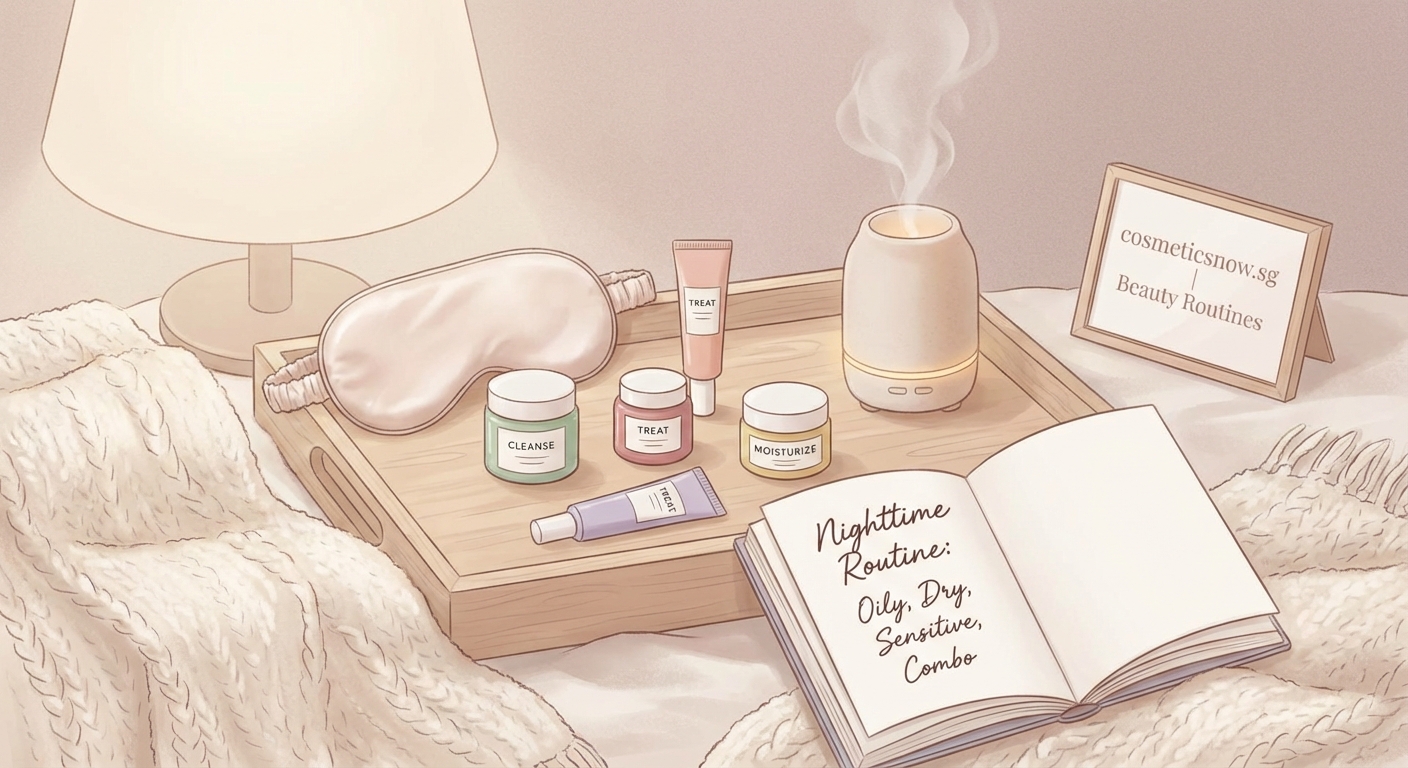
Every nighttime skincare routine needs these three core steps, regardless of skin type:
-
Cleanse thoroughly. You need to remove makeup, sunscreen, oil, and environmental debris. These create a barrier that prevents your treatment products from working.
-
Apply treatment products. This is when you use serums, acids, or prescription treatments. Your skin absorbs active ingredients better at night.
-
Moisturize and seal. Lock everything in with a moisturizer appropriate for your skin type. This prevents water loss and helps your skin barrier repair itself.
Everything else is optional or situational. You can build from these three steps based on your specific needs.
Building your routine for dry skin
Dry skin needs extra hydration and barrier support at night. Your routine should focus on adding moisture and preventing water loss.
Start with an oil-based or cream cleanser. Avoid foaming cleansers, which strip natural oils your dry skin desperately needs. Look for ingredients like glycerin or ceramides in your cleanser.
After cleansing, apply a hydrating serum. Hyaluronic acid is your friend here. It holds up to 1,000 times its weight in water. Pat it onto damp skin for better absorption.
Follow with a facial oil if your skin tolerates it. Oils like squalane, rosehip, or marula penetrate well and provide essential fatty acids. Two to three drops pressed into your skin is enough.
Finish with a rich night cream. Look for ingredients like shea butter, ceramides, or peptides. Your night cream should feel heavier than your day moisturizer. That’s intentional.
Consider adding an overnight mask once or twice weekly. These provide an extra moisture boost and help repair your skin barrier. If you’re just starting out with skincare, check out the complete step-by-step guide to building your first skincare routine for foundational advice.
“Dry skin benefits most from layering hydrating products from thinnest to thickest consistency. Each layer should be fully absorbed before adding the next.” — Board-certified dermatologist Dr. Whitney Bowe
Crafting the perfect routine for oily skin
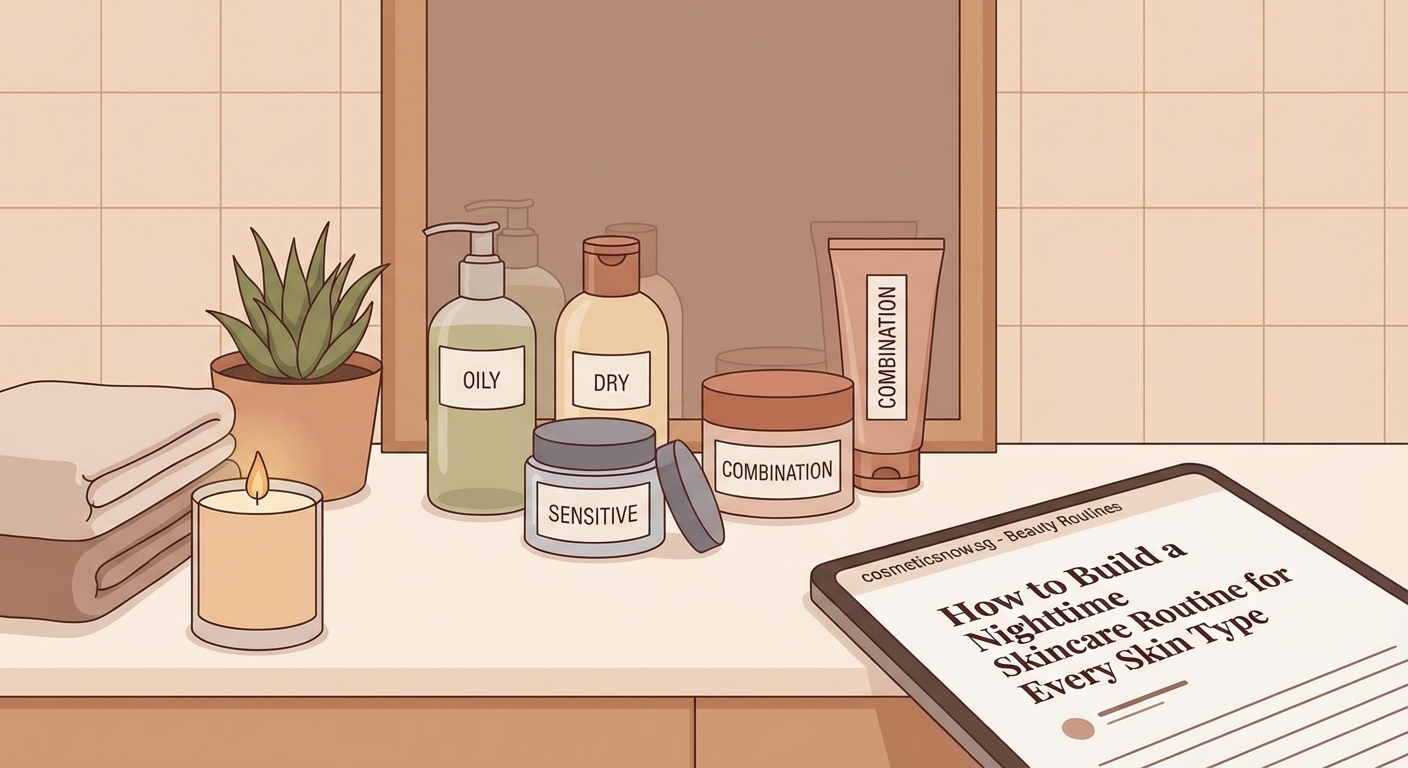
Oily skin still needs moisture at night. The myth that oily skin should skip moisturizer needs to die. When you skip hydration, your skin produces more oil to compensate.
Use a gel or foaming cleanser to remove excess sebum. Look for salicylic acid or tea tree oil in your cleanser if you’re prone to breakouts.
Apply a lightweight serum with niacinamide. This ingredient regulates oil production and minimizes pores. It works best with consistent nightly use.
If you’re dealing with active breakouts, spot-treat with benzoyl peroxide or salicylic acid. Apply these directly to problem areas before moisturizing.
Your moisturizer should be oil-free and gel-based. Ingredients like hyaluronic acid provide hydration without adding oil. Avoid thick creams that might clog your pores.
Retinol works wonders for oily skin. It regulates cell turnover, prevents clogged pores, and reduces oil production over time. Start with a low concentration and build up gradually.
Balancing combination skin at night
Combination skin is tricky because different areas need different care. Your T-zone might be oily while your cheeks stay dry.
Use a gentle, pH-balanced cleanser that won’t strip dry areas or leave oily zones greasy. Micellar water followed by a light gel cleanser works well.
Consider multi-masking before your regular routine. Apply a clay mask to oily areas and a hydrating mask to dry patches. Leave on for 10 minutes, then rinse.
Apply serums based on zone-specific needs. Use a mattifying serum on your T-zone and a hydrating one on dry areas. Yes, this takes extra time, but your skin will thank you.
Your moisturizer can be the same everywhere, but adjust the amount. Use more on dry areas, less on oily zones. A lightweight gel-cream formula works for most combination skin types.
Learn about how to properly layer your serums for maximum skin benefits to get the most from your products.
Gentle care for sensitive skin
Sensitive skin requires a minimalist approach. More products mean more potential irritants.
Cleanse with a fragrance-free, gentle cream cleanser. Avoid sulfates, alcohol, and synthetic fragrances. These trigger inflammation in sensitive skin.
Keep your routine simple. A hydrating serum and a gentle moisturizer might be all you need. Don’t feel pressured to use five different products because everyone else does.
Look for calming ingredients like centella asiatica, colloidal oatmeal, or allantoin. These reduce redness and strengthen your skin barrier.
Avoid active ingredients until your skin barrier is strong. No retinol, no acids, no vitamin C. Once your skin is stable, introduce one active ingredient at a time, waiting two weeks between additions.
Patch test everything. Apply new products to your inner arm for 24 hours before using them on your face. This simple step prevents full-face reactions.
Understanding why your skin barrier matters and how to repair it fast becomes crucial when dealing with sensitivity.
Common mistakes that sabotage your routine
| Mistake | Why it hurts | Better approach |
|---|---|---|
| Using too many products | Overwhelms skin, causes irritation | Stick to 3-5 products maximum |
| Skipping cleanser when tired | Leaves barrier-blocking debris | Keep cleansing wipes by your bed for exhausted nights |
| Applying products to dry skin | Reduces absorption | Pat on toner or essence first to dampen skin |
| Using daytime products at night | Misses opportunity for repair ingredients | Choose night-specific formulas with retinol or peptides |
| Changing products constantly | Prevents seeing real results | Give new products 4-6 weeks before switching |
| Rubbing products in aggressively | Causes irritation and broken capillaries | Press and pat products gently into skin |
When to use treatment products
Treatment products work best at specific times in your routine. Timing affects how well they absorb and how effective they are.
After cleansing, before moisturizing. This is prime time for serums, acids, and prescription treatments. Your skin is clean and receptive.
Retinol always goes on at night. UV exposure degrades retinol and makes your skin more sensitive. Apply it after cleansing, wait 20 minutes, then moisturize.
Acids need bare skin. AHAs and BHAs work best on freshly cleansed skin. Don’t layer them with retinol on the same night. Alternate between acid nights and retinol nights.
Spot treatments go on last. Apply them after moisturizer to prevent over-drying. The moisturizer won’t block the treatment from working.
Proper makeup removal is essential before any treatment works. Read about the right way to remove makeup without damaging your skin to set yourself up for success.
Product order matters more than you think
Layering products in the wrong order wastes money and reduces effectiveness. The rule is simple: thinnest to thickest consistency.
Here’s the correct order:
- Cleanser
- Toner or essence (optional)
- Serums (thinnest first if using multiple)
- Eye cream
- Moisturizer
- Face oil (if using)
- Spot treatments
Water-based products always go before oil-based ones. Oil creates a barrier that water-based products can’t penetrate.
Wait 30 to 60 seconds between each step. This lets products absorb properly instead of pilling up on your skin.
Adjusting your routine through the seasons
Your skin’s needs change with weather and humidity. Your nighttime routine should adapt.
Winter: Add a facial oil or sleeping mask. Cold air and indoor heating strip moisture. Layer more hydrating products than usual.
Summer: Switch to lighter textures. A gel moisturizer might replace your winter cream. You might skip facial oil entirely.
Spring and fall: These transition periods are perfect for introducing new active ingredients. Your skin is less stressed than in extreme temperatures.
Pay attention to how your skin feels when you wake up. Tight and flaky? Add more hydration. Greasy and congested? Lighten your products.
How to introduce active ingredients safely
Active ingredients like retinol, vitamin C, and acids deliver results, but they need careful introduction.
Start with one active ingredient at a time. Use it twice weekly for two weeks. If your skin tolerates it well, increase to three times weekly.
Never combine retinol and acids on the same night. Both increase cell turnover. Using them together causes irritation and peeling.
Buffer strong actives with moisturizer. Apply moisturizer first, wait five minutes, then apply retinol. This reduces irritation while still delivering results.
Stop using actives if you see persistent redness, burning, or peeling. These are signs of over-exfoliation, not “skin purging.”
For specific concerns like acne scarring, explore dermatologist-approved solutions for stubborn acne scars that work alongside your routine.
The role of overnight masks and treatments
Overnight masks provide intensive treatment while you sleep. They’re not necessary every night, but they serve specific purposes.
Hydrating masks work well for dry or dehydrated skin. Use them two to three times weekly in place of your regular moisturizer.
Exfoliating masks with gentle acids help with texture and brightness. Once weekly is enough for most skin types.
Clay masks absorb excess oil and clear pores. These work best for oily or combination skin, used once or twice weekly.
Apply overnight masks as your last step. They’re designed to sit on your skin for hours, creating a seal that boosts other products’ effectiveness.
Don’t sleep in wash-off masks. These are formulated to work for 10 to 20 minutes, then be removed. Leaving them on overnight causes irritation.
If you want to maximize your evening routine’s impact, learn how to transform dull skin into radiant glow with these nighttime habits.
Reading your skin’s feedback
Your skin tells you what it needs. You just have to pay attention.
- Waking up with tight, flaky skin? You need more hydration or a richer moisturizer.
- Shiny and greasy by morning? Your products are too heavy. Switch to lighter formulas.
- New breakouts appearing? Something is clogging your pores. Review your product ingredients.
- Persistent redness or stinging? You’re using too many actives or products with irritating ingredients.
- No changes after six weeks? Your products might not be strong enough or you need different active ingredients.
Keep a simple skin journal. Note what products you use and how your skin looks each morning. Patterns emerge after a few weeks.
Building consistency without perfection
The best nighttime skincare routine is the one you’ll actually do. Consistency beats complexity every time.
Set up your products where you’ll see them. Keep them by your bathroom sink, not hidden in a drawer.
If you’re exhausted, do a shortened version. Cleanser and moisturizer beat nothing. Don’t let perfect be the enemy of good.
Set a phone reminder for 30 minutes before bed. This gives you time to complete your routine without rushing.
Prep products in the morning. If you use cotton pads or tools, set them out so they’re ready at night.
Track your routine for 30 days. After a month, it becomes a habit that requires less mental effort.
Your skin works hardest while you rest
Building an effective nighttime skincare routine doesn’t require 12 products or an hour of your evening. It requires understanding what your specific skin type needs and providing those essentials consistently.
Start with the three core steps: cleanse, treat, moisturize. Adjust the specific products based on whether your skin is dry, oily, combination, or sensitive. Add treatment products gradually, paying attention to how your skin responds.
Your face regenerates itself every night. Give it the support it needs to do that job well. The routine you build tonight sets up the skin you’ll see tomorrow morning.