You’ve invested in multiple serums targeting different skin concerns, but are you applying them in the right order? The sequence matters more than you think. Layering serums incorrectly can block absorption, neutralize active ingredients, or even irritate your skin. Getting it right means each product works at full strength, delivering the results you paid for.
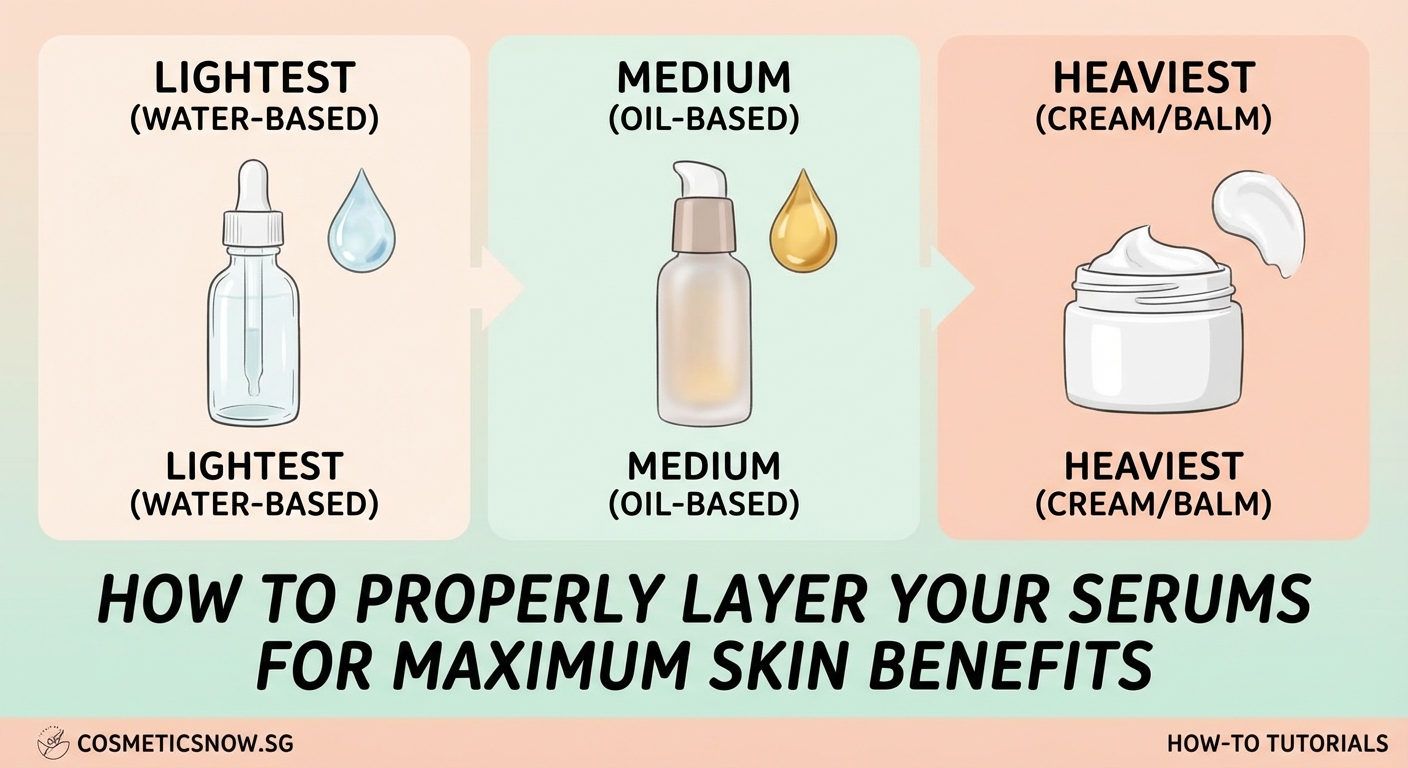
Proper serum layering follows a simple rule: apply from thinnest to thickest consistency. Wait 30 to 60 seconds between each layer for optimal absorption. Water-based serums go first, followed by oil-based formulas. Understanding pH levels and ingredient interactions prevents conflicts that reduce effectiveness. The right technique transforms multiple products from a confusing routine into a targeted treatment plan that delivers visible results.
Understanding Serum Consistency and Application Order
Texture determines sequence. Your thinnest, most watery serums should always go first.
The science behind this is straightforward. Lighter molecules penetrate skin more easily. Heavier products create a barrier that blocks absorption of anything applied afterward.
Start by lining up your serums from most liquid to most viscous. Shake each bottle and observe how it moves. Water-based serums flow like water. Gel serums have slight thickness. Oil-based serums feel slippery and substantial.
Most routines follow this progression:
- Hydrating serums with hyaluronic acid or glycerin
- Treatment serums with vitamin C, niacinamide, or peptides
- Oil-based serums with rosehip, squalane, or facial oils
- Moisturizer to seal everything in
Your skin can only absorb so much at once. Three serums per routine is the sweet spot for most people. More than that often means wasted product and money.
The pH Factor in Serum Layering

pH levels affect how ingredients perform. Some actives need specific pH ranges to work properly.
Vitamin C serums work best at pH 2.0 to 3.5. Apply these first on clean skin for maximum potency. The low pH helps the vitamin C penetrate deeply and remain stable.
AHA and BHA exfoliants also prefer acidic environments. If you’re using both vitamin C and chemical exfoliants, alternate days rather than layering them together. Combining too many acids can compromise your skin barrier.
Niacinamide and peptides function well at neutral to slightly acidic pH levels (5.0 to 7.0). These play nicely with most other ingredients.
Retinol serums need pH levels around 5.5 to 6.0. Always apply retinol as your last treatment step before moisturizer.
“pH compatibility matters as much as ingredient selection. A serum applied at the wrong pH level might as well be water. Your skin’s natural pH sits around 4.7 to 5.5, and products that respect this range absorb better and cause less irritation.” — Dr. Michelle Wong, Chemistry PhD and skincare researcher
Wait Times Between Each Layer
Patience pays off. Rushing through your routine wastes product.
Each serum needs 30 to 60 seconds to absorb before you apply the next one. This brief pause lets active ingredients penetrate without interference.
Water-based serums absorb fastest. You’ll feel when they’ve sunk in because your skin stops feeling wet.
Thicker serums take longer. If your skin still feels tacky after 60 seconds, that’s normal. Just avoid rubbing or patting excessively.
Some ingredients benefit from longer wait times:
- Vitamin C: Wait 60 to 90 seconds
- Retinol: Wait 2 to 3 minutes
- AHA/BHA: Wait 3 to 5 minutes
These extended pauses let pH-dependent ingredients work at full strength before you change the skin’s surface environment.
Morning routines can feel rushed. If you’re short on time, consider using a streamlined morning routine with fewer steps rather than rushing through multiple serums.
Ingredient Combinations That Work Together
Some ingredients boost each other’s effectiveness. Strategic pairing amplifies results.
Power couples for your routine:
- Vitamin C + Vitamin E + Ferulic acid (antioxidant protection)
- Niacinamide + Hyaluronic acid (hydration and barrier repair)
- Peptides + Retinol (collagen production and cell turnover)
- Ceramides + Cholesterol + Fatty acids (barrier restoration)
These combinations work synergistically. Each ingredient enhances what the others do.
Hyaluronic acid pairs well with almost everything. It draws moisture into skin without interfering with other actives. Apply it first to create a hydrated base for subsequent serums.
Niacinamide is another universal player. It reduces inflammation, which helps other actives work without irritation.
If you’re building a complete skincare routine, start with these versatile ingredients before adding more specialized treatments.
Ingredient Conflicts to Avoid
Not all serums belong in the same routine. Some combinations neutralize each other or cause irritation.
| Ingredient Pair | Problem | Solution |
|---|---|---|
| Vitamin C + Retinol | Different pH needs, potential irritation | Use vitamin C in morning, retinol at night |
| Niacinamide + Vitamin C (at high concentrations) | May reduce effectiveness in some formulations | Wait 10 minutes between, or use at different times |
| AHA/BHA + Retinol | Too much exfoliation, barrier damage | Alternate nights, never combine |
| Benzoyl peroxide + Retinol | Oxidizes retinol, reduces effectiveness | Use benzoyl peroxide in morning, retinol at night |
| Vitamin C + Copper peptides | Oxidizes vitamin C | Separate by 12 hours minimum |
The “niacinamide and vitamin C conflict” is often overstated. Modern formulations handle this combination well. But if you notice flushing or reduced results, separate them by time or routine.
When adding a new serum, introduce it alone for two weeks. This helps you identify sensitivities before complicating your routine further.
Morning Versus Evening Serum Strategies
Your skin has different needs at different times. Split your serums between morning and night.
Morning routine priorities:
- Antioxidant protection (vitamin C, vitamin E, ferulic acid)
- Hydration (hyaluronic acid, glycerin)
- Barrier support (niacinamide, ceramides)
- Sun protection (always finish with SPF)
Morning serums protect against environmental damage. UV rays, pollution, and free radicals attack skin throughout the day. Antioxidant serums neutralize these threats.
Vitamin C is particularly effective in morning routines. It doesn’t make skin sun-sensitive and provides photoprotection alongside your sunscreen.
Evening routine priorities:
- Cell turnover (retinol, peptides)
- Repair (growth factors, peptides)
- Exfoliation (AHA, BHA)
- Deep hydration (hyaluronic acid, squalane)
Night is when skin repairs itself. Your nighttime routine should support this natural renewal process.
Retinol breaks down in sunlight, making it perfect for evening application. It increases cell turnover while you sleep, revealing fresher skin by morning.
Application Technique That Maximizes Absorption
How you apply serums affects how well they work. Technique matters as much as order.
The proper application method:
- Cleanse your face and pat until slightly damp (not dripping)
- Dispense 2 to 3 drops of your first serum into your palm
- Warm it between your hands for 3 to 5 seconds
- Press gently onto your face, starting at the center and moving outward
- Use gentle patting motions rather than rubbing
- Don’t forget your neck and décolletage
- Wait for absorption before applying the next layer
Damp skin absorbs serums better than completely dry skin. The moisture helps ingredients penetrate deeper.
Warming serums between your palms improves spreadability. Cold serums sit on the surface longer.
Pressing and patting works better than rubbing. Friction can irritate skin and waste product on your hands instead of your face.
Most serums need only 2 to 4 drops for full coverage. More isn’t better. Excess product just sits on the surface or drips off.
Common Layering Mistakes That Reduce Effectiveness
Even experienced skincare users make these errors. Recognizing them helps you get better results.
Mistake 1: Applying moisturizer before serums
Moisturizers contain occlusives that seal the skin. Once applied, they block serum absorption. Always apply serums first, then lock them in with moisturizer.
Mistake 2: Using too many serums at once
Your skin can only process so many actives simultaneously. Four or more serums in one routine often means diminished returns. Quality over quantity wins.
Mistake 3: Mixing serums together in your palm
This seems efficient but ruins the careful formulation of each product. pH levels change, ingredients interact unpredictably, and you lose control over concentration. Apply each serum separately.
Mistake 4: Applying serums to completely dry skin
Bone-dry skin doesn’t absorb well. A slightly damp surface helps serums penetrate. Pat your face with a towel but leave it a touch moist.
Mistake 5: Skipping sunscreen after morning serums
Many actives (retinol, AHA, BHA) increase sun sensitivity. Others (vitamin C, niacinamide) work better with sun protection. Never skip SPF after your morning serum routine.
Mistake 6: Layering without considering your skin’s current condition
Your skin changes with seasons, stress, hormones, and health. A routine that worked in summer might overwhelm winter skin. Pay attention and adjust accordingly.
Adjusting Your Routine for Different Skin Types
Your skin type determines which serums to prioritize and how many to use.
For oily or acne-prone skin:
Focus on lightweight, water-based serums. Niacinamide controls oil production. Salicylic acid prevents breakouts. Hyaluronic acid hydrates without heaviness.
Limit oil-based serums or skip them entirely. Your skin produces enough natural oil.
Maximum serums: 2 to 3 per routine.
For dry or mature skin:
Layer hydrating serums generously. Hyaluronic acid, glycerin, and peptides address dryness and aging. Finish with a rich oil-based serum before moisturizer.
Your skin can handle more layers because it needs extra moisture.
Maximum serums: 3 to 4 per routine.
For sensitive or reactive skin:
Keep it simple. Fewer products mean fewer potential irritants. Stick with gentle ingredients like niacinamide, ceramides, and centella asiatica.
Introduce new serums slowly, one at a time. Wait two weeks between additions.
Maximum serums: 2 per routine.
For combination skin:
You might need different routines for different face zones. Apply oil-control serums to your T-zone and hydrating serums to dry areas.
Or choose universal ingredients like niacinamide and hyaluronic acid that balance rather than push skin in one direction.
Maximum serums: 2 to 3 per routine.
Understanding which serums target your specific concerns helps you build an effective routine without overdoing it.
Reading Your Skin’s Response
Your skin tells you whether your layering strategy works. Learn to interpret the signals.
Signs your routine is working:
- Smooth, even texture
- Improved hydration that lasts all day
- Gradual fading of hyperpigmentation
- Reduced fine lines over 4 to 8 weeks
- No irritation, redness, or sensitivity
- Makeup applies smoothly over your routine
Signs something needs adjustment:
- Persistent redness or burning
- Increased breakouts after 2 to 3 weeks
- Tight, uncomfortable feeling
- Flaking or peeling beyond normal retinol adjustment
- Products pilling or not absorbing
- Greasy residue that won’t sink in
Give new routines at least 4 weeks before judging results. Skin cell turnover takes 28 days. Most improvements appear gradually, not overnight.
If irritation occurs, strip back to basics. Use only cleanser and moisturizer for a few days, then reintroduce serums one at a time.
Seasonal Adjustments to Your Serum Routine
Your environment affects how serums perform. Adapt your layering strategy as seasons change.
Summer modifications:
- Reduce heavy oils and thick serums
- Increase antioxidant protection against UV damage
- Focus on lightweight, water-based hydration
- Apply serums to slightly damp skin for better absorption in humidity
Winter modifications:
- Add extra hydrating layers
- Include barrier-repair ingredients like ceramides
- Use richer, oil-based serums as your final layer
- Consider nighttime habits that combat dullness caused by dry indoor heating
Spring and fall transitions:
These in-between seasons let you experiment. Your skin is less stressed by extreme temperatures. Try new serums or adjust your layering order to find what works best.
Building Your Personal Serum System
Now that you understand the principles, create a routine that fits your life and skin.
Start with one or two serums addressing your primary concerns. Master those before adding more.
Track what you use and when. A simple note on your phone helps you remember which combinations work and which don’t.
Give each new addition at least two weeks of consistent use. Skincare is a marathon, not a sprint.
Remember that expensive doesn’t always mean better. A well-formulated drugstore serum applied correctly beats a luxury product used wrong.
Your routine should feel manageable, not stressful. If layering multiple serums becomes a chore, simplify. Two perfectly chosen serums beat five random ones every time.
Making Every Drop Count
Proper serum layering transforms products from individual treatments into a coordinated system. Each layer builds on the last, creating results no single product can achieve alone.
The order matters. The timing matters. The technique matters. But none of it requires complicated rituals or expensive tools. Just consistency and attention to how your skin responds.
Start tonight with the serums you already own. Line them up by texture. Apply them in order. Wait between layers. Your skin will show you the difference within weeks.