You wash your face before bed, slap on some moisturizer, and hope for the best. But when you wake up, your skin looks exactly the same. Tired. Dull. Lifeless. The truth is, your skin does most of its repair work while you sleep, and if you’re not supporting that process with the right nighttime skincare routine for glowing skin, you’re missing your biggest opportunity for transformation.
A strategic nighttime skincare routine for glowing skin works with your body’s natural repair cycle. Proper cleansing, targeted treatments, and hydration applied in the correct order allow active ingredients to penetrate deeply while you sleep. This approach addresses dullness at its source, helping you wake up with visibly brighter, more radiant skin that lasts throughout the day.
Why nighttime is your skin’s golden hour
Your skin doesn’t rest when you do. Between 10 PM and 2 AM, cell regeneration speeds up. Blood flow increases. Your skin becomes more permeable, absorbing products up to three times more effectively than during daylight hours.
This is when your complexion repairs damage from UV exposure, pollution, and daily stress. But it can only work with what you give it. Skip your evening routine and you’re forcing your skin to rebuild with limited resources.
Temperature drops at night, reducing natural oil production. Without proper hydration, you wake up with that tight, parched feeling that makes makeup sit poorly and fine lines look deeper.
The right products applied before bed work as your skin’s construction crew, delivering the materials needed for overnight renovation.
The foundation: proper evening cleansing
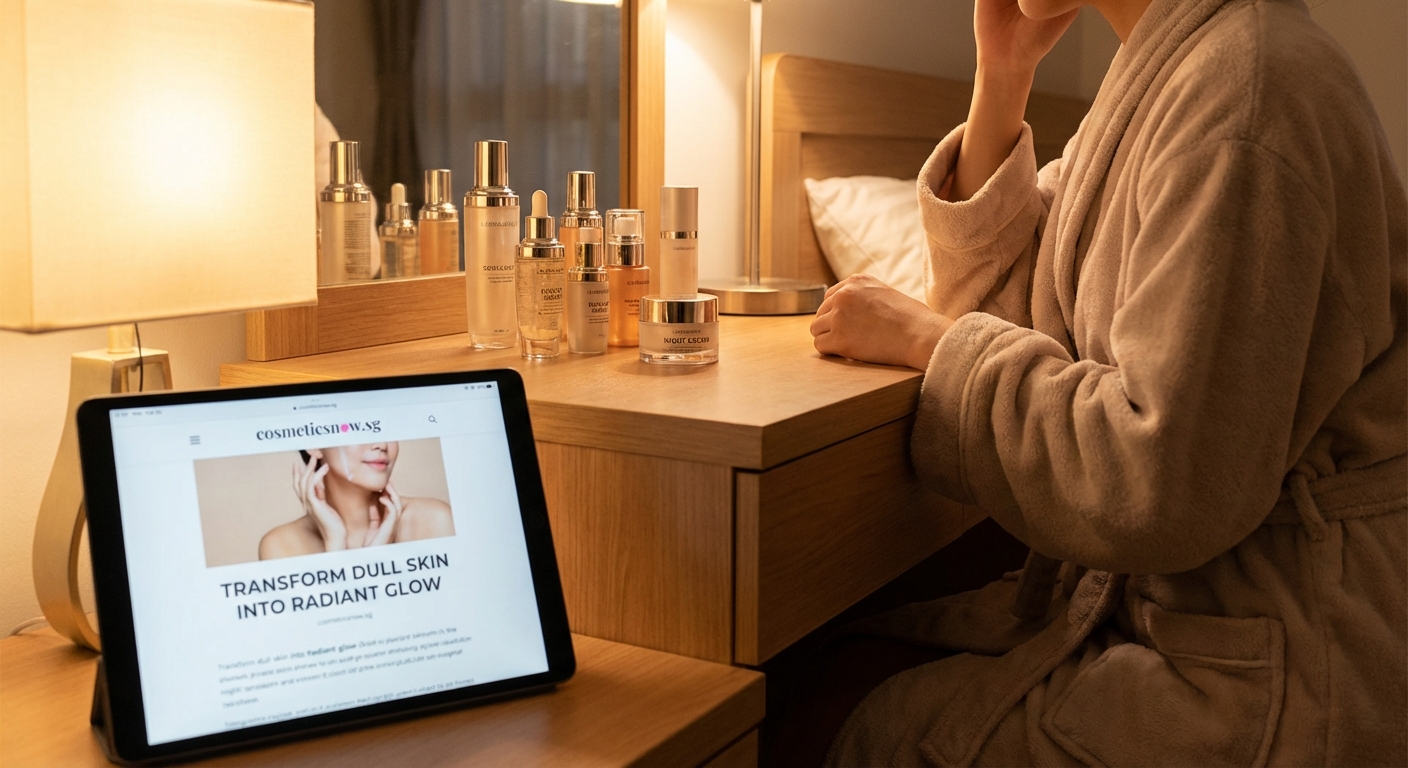
Cleansing at night isn’t the same as your morning rinse. You’re removing an entire day’s accumulation: makeup, sunscreen, sebum, environmental pollutants, and dead skin cells.
A single cleanse rarely cuts it. The double cleanse method starts with an oil-based cleanser to break down makeup and sunscreen, followed by a water-based cleanser to remove sweat and impurities. This two-step approach ensures your skin is truly clean without stripping its protective barrier.
The right way to remove makeup without damaging your skin prevents the irritation and breakouts that come from leaving residue behind.
Massage your cleanser for at least 60 seconds. This isn’t just about removing dirt. The gentle pressure stimulates circulation, bringing oxygen and nutrients to the surface.
Rinse with lukewarm water. Hot water feels relaxing but damages your skin barrier, leading to increased sensitivity and moisture loss.
Pat dry with a clean towel. Never rub. Your skin is most vulnerable when wet, and friction causes micro-tears that accumulate into visible damage over time.
Treatment products: when your skin is most receptive
After cleansing, your skin is prepped to absorb active ingredients. This is when you apply the products that actually change your complexion.
Start with treatments that target your specific concerns:
- Vitamin C serums brighten and even out tone
- Retinol increases cell turnover and smooths texture
- Niacinamide reduces inflammation and minimizes pores
- Hyaluronic acid pulls moisture deep into skin layers
- Peptides support collagen production for firmness
Apply products from thinnest to thickest consistency. Serums go on first because their smaller molecules penetrate deeper. Heavier creams create a seal that locks everything in.
How to properly layer your serums for maximum skin benefits explains the science behind product order and why it matters more than most people realize.
Wait 30 to 60 seconds between layers. This gives each product time to absorb before you add the next one. Piling everything on at once dilutes effectiveness and can cause pilling, where products ball up on your skin instead of sinking in.
“The biggest mistake I see is people rushing through their nighttime routine. Your skin needs time to absorb each layer. Think of it like building a house. You can’t put up the roof before the walls are stable.” — Board-certified dermatologist Dr. Michelle Wong
The step-by-step evening routine for radiant mornings

Here’s exactly how to structure your nighttime skincare routine for glowing skin:
- Remove eye makeup with a dedicated remover or cleansing oil
- Apply your first cleanser and massage for 60 seconds
- Rinse thoroughly and apply your second cleanser
- Pat skin dry and apply toner or essence while still slightly damp
- Apply targeted treatment serums from thinnest to thickest
- Seal everything with a moisturizer appropriate for your skin type
- Add eye cream to the orbital bone area
- Finish with a facial oil if your skin needs extra nourishment
This sequence ensures each product can do its job without interference. When you layer correctly, ingredients work synergistically instead of competing for absorption.
For those just starting out, the complete step-by-step guide to building your first skincare routine breaks down product selection and introduces active ingredients gradually to avoid overwhelming your skin.
Choosing products that actually deliver glow
Not all products create the same results. The key to radiant skin lies in selecting formulations with proven ingredients at effective concentrations.
Look for these glow-boosting ingredients in your nighttime products:
- Alpha hydroxy acids (glycolic, lactic) for gentle exfoliation
- Retinoids to speed cell turnover and reveal fresh skin
- Vitamin C derivatives for brightness and antioxidant protection
- Ceramides to strengthen the moisture barrier
- Squalane for lightweight hydration that mimics natural sebum
| Ingredient | Primary Benefit | Best For | Application Frequency |
|---|---|---|---|
| Retinol | Cell renewal, texture | All skin types | 2-3 times per week initially |
| Niacinamide | Pore refinement, tone | Oily, combination | Every night |
| Hyaluronic acid | Deep hydration | Dry, dehydrated | Every night |
| Vitamin C | Brightening, protection | Dull, uneven tone | Every night |
| Peptides | Firmness, repair | Mature skin | Every night |
Avoid products with high concentrations of fragrance or essential oils in your nighttime routine. These ingredients can cause irritation that shows up as redness and sensitivity in the morning, exactly the opposite of the glow you’re working toward.
Why your skin barrier matters and how to repair it fast explains why protecting this crucial layer is essential for achieving and maintaining that coveted radiance.
Common nighttime routine mistakes that kill your glow
Even with the right products, poor application habits sabotage results. Here are the mistakes that keep your skin looking dull:
Skipping sunscreen removal. Chemical and mineral sunscreens create a film that blocks product absorption. If you don’t remove them completely, your treatment products sit on top instead of penetrating.
Using too many actives at once. Combining retinol, vitamin C, and acids in one night overwhelms your skin. Irritation and redness aren’t signs of effectiveness. They’re signs of damage.
Applying products to completely dry skin. Slightly damp skin absorbs products better. The water acts as a vehicle, carrying ingredients deeper into your epidermis.
Rubbing instead of patting. Aggressive application stretches and damages skin tissue. Pat products in with your fingertips using gentle upward motions.
Going to bed immediately after application. Give your routine at least 15 minutes to absorb before your face hits the pillow. Otherwise, your products end up on your pillowcase instead of in your skin.
Using the same routine year-round. Your skin’s needs change with seasons, hormones, and stress levels. What works in humid summer might leave you parched in winter.
Adjusting your routine for different skin types
Glowing skin looks different on everyone, and your nighttime routine should reflect your skin’s unique needs.
For oily skin, focus on lightweight, water-based products. Gel moisturizers and serums provide hydration without adding excess oil. Include niacinamide to regulate sebum production and salicylic acid to keep pores clear.
Dry skin needs richer textures and occlusive ingredients. Layer a hydrating serum under a cream moisturizer, then seal with a few drops of facial oil. Look for products with ceramides and fatty acids that repair the moisture barrier.
Combination skin requires zoning. Apply lighter products to your T-zone and richer formulas to dry cheeks. You can use different moisturizers on different areas of your face.
Sensitive skin benefits from minimal, gentle routines. Stick to fragrance-free products with soothing ingredients like centella asiatica, oat extract, and allantoin. Introduce new products one at a time, waiting two weeks between additions.
How to build a nighttime skincare routine for every skin type provides detailed product recommendations and addresses specific concerns for each category.
The role of sleep quality in skin radiance
Your skincare products can only do so much if you’re not getting quality sleep. Poor sleep disrupts the repair process your routine is designed to support.
Aim for seven to nine hours per night. During deep sleep, human growth hormone peaks, stimulating cell reproduction and repair. Cut this short and your skin doesn’t have time to complete its regeneration cycle.
Sleep position matters. Pressing your face into a pillow creates compression lines that become permanent over time. Try sleeping on your back, or invest in a silk pillowcase that reduces friction.
Keep your bedroom cool, between 60 and 67 degrees Fahrenheit. This temperature range supports the natural drop in body temperature that signals sleep onset and allows deeper, more restorative rest.
Use a humidifier if you live in a dry climate or run heating or air conditioning. Optimal humidity levels between 30 and 50 percent prevent your skin from losing moisture to the air while you sleep.
Lifestyle habits that amplify your nighttime routine
What you do during the day affects how well your nighttime routine works. These habits compound over time, either supporting or sabotaging your efforts.
Hydration throughout the day. Drinking water consistently maintains the moisture levels your skin needs to function properly. Aim for half your body weight in ounces daily.
Balanced nutrition. Your skin rebuilds itself using nutrients from your diet. Omega-3 fatty acids, vitamins A and C, and zinc all support the repair processes happening while you sleep.
Stress management. Chronic stress increases cortisol, which breaks down collagen and triggers inflammation. This shows up as dullness, breakouts, and accelerated aging.
Regular exercise. Physical activity increases blood flow, delivering oxygen and nutrients to your skin while removing waste products that contribute to dullness.
Limiting alcohol and sugar. Both dehydrate your skin and trigger inflammation. That glass of wine before bed might help you fall asleep, but it interferes with sleep quality and shows up as puffiness and dullness the next morning.
When to expect visible results
Patience is crucial. Skin cell turnover takes approximately 28 days in your twenties and slows to 40 to 60 days as you age. Real change requires consistent effort over weeks and months.
You’ll notice some improvements within the first week. Better hydration shows up as plumper, smoother texture. Your skin feels softer and makeup applies more evenly.
Brightness and tone improvements become visible around the four to six week mark. This is when increased cell turnover starts revealing fresh, undamaged cells at the surface.
Deeper changes like reduced fine lines, improved firmness, and faded hyperpigmentation take three to six months of consistent use. These results require structural changes in your skin’s deeper layers.
Take progress photos in the same lighting every two weeks. Daily changes are subtle and easy to miss. Photos provide objective evidence of improvement that keeps you motivated.
Weekend reset: a deep-treatment beauty routine for damaged skin offers intensive treatments you can add to your regular routine for faster results when your skin needs extra support.
Building consistency without burnout
The most effective nighttime skincare routine for glowing skin is the one you actually do. Complicated routines fall apart when life gets busy.
Start with the basics: cleanser, treatment serum, moisturizer. Master these three steps before adding extras. Once they become automatic, you can layer in additional products.
Keep your products visible. Store them on your bathroom counter or nightstand where you’ll see them before bed. Out of sight means out of mind.
Set a phone reminder for 30 minutes before your target bedtime. This gives you time to complete your routine without rushing.
Prep products in advance on busy days. If you know you’ll be exhausted after an event, lay out your products in order before you leave. Removing decision-making eliminates the temptation to skip steps.
Accept that some nights won’t be perfect. Missing one night won’t ruin your progress. Just get back on track the next evening.
Signs your routine is working
How do you know if all this effort is paying off? Look for these markers of healthy, glowing skin:
Your complexion looks brighter and more even when you wake up. That dull, gray cast fades as cell turnover increases and removes damaged surface cells.
Makeup sits better on your skin. When your texture is smooth and properly hydrated, foundation blends seamlessly instead of clinging to dry patches or sliding off oily areas.
Your skin feels plump and bouncy. Well-hydrated skin springs back when you press it gently. Dehydrated skin feels thin and papery.
Pores appear smaller. While you can’t change pore size, keeping them clear and maintaining good hydration makes them less visible.
You need less concealer. Better circulation and reduced inflammation mean fewer dark circles and less overall discoloration.
These changes happen gradually. Trust the process and give your routine time to work.
Making your nighttime routine work for you
The perfect nighttime skincare routine for glowing skin isn’t about using the most products or spending the most money. It’s about understanding what your skin needs and consistently giving it the tools to repair itself while you sleep.
Start tonight. Cleanse thoroughly, apply your treatments, and seal everything with appropriate moisture. Do this every evening, and in a few weeks, you’ll see the difference. Your skin will look brighter, feel softer, and radiate the healthy glow that comes from proper nighttime care. The face you see in the mirror each morning will reflect the effort you put in each night.