Your skin doesn’t behave the same way every day of the month, and there’s a scientific reason for that. Hormonal fluctuations throughout your menstrual cycle directly impact oil production, hydration levels, sensitivity, and even your likelihood of breaking out. Understanding these patterns means you can adjust your skincare routine menstrual cycle phase by phase, giving your skin exactly what it needs when it needs it most.
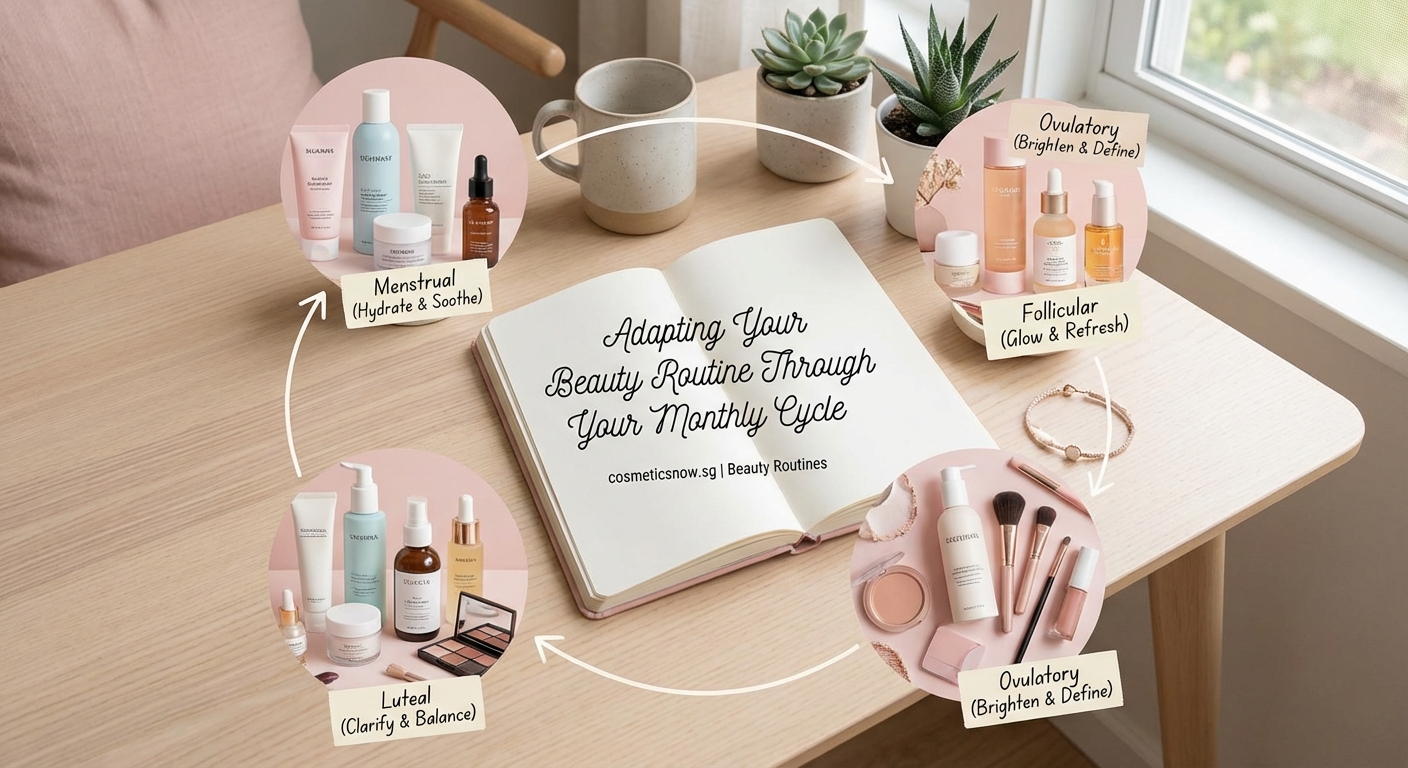
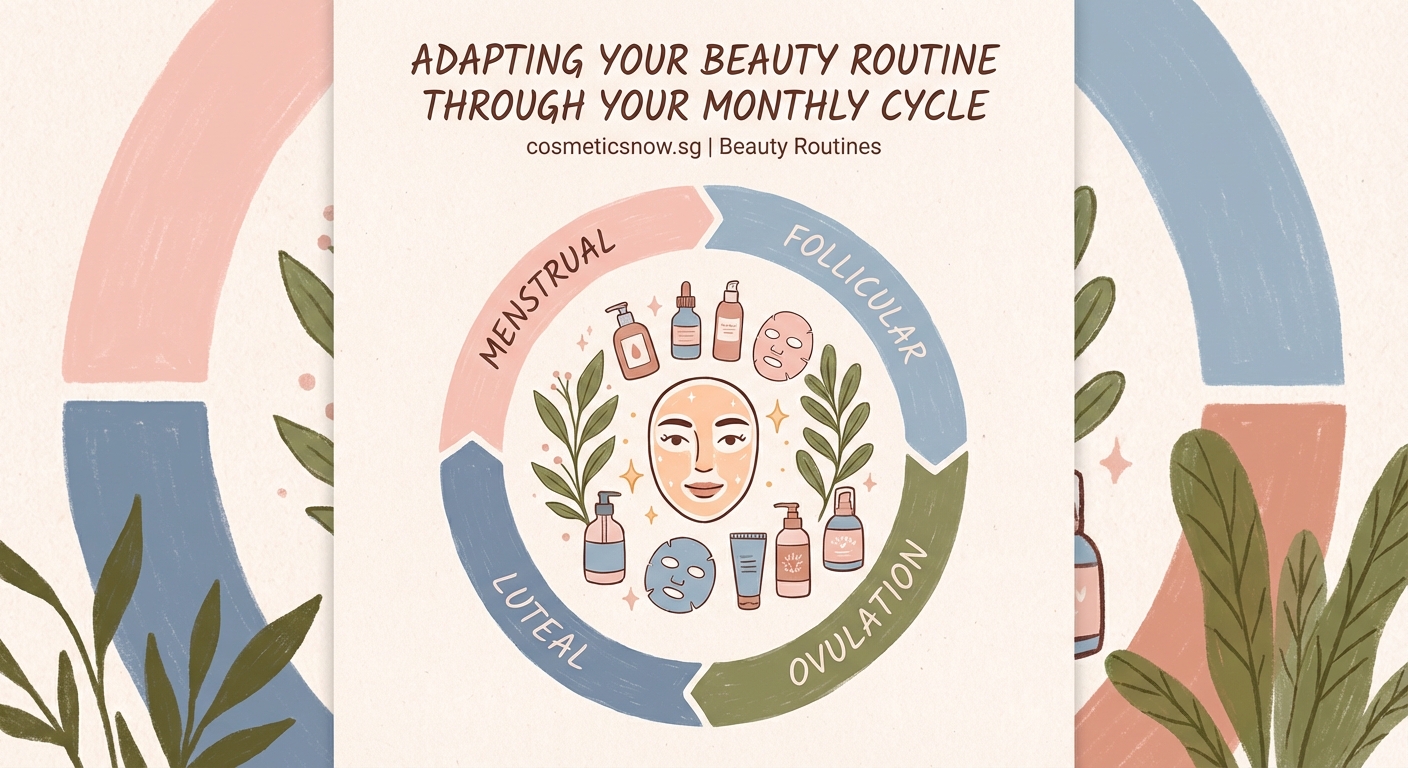
Your menstrual cycle creates four distinct phases that affect your skin differently. During menstruation, focus on gentle hydration. The follicular phase is your glow window for trying new products. Ovulation brings peak radiance but watch for increased oil. The luteal phase demands pore-clearing actives and anti-inflammatory ingredients to prevent hormonal breakouts before they start.
Understanding the four phases of your cycle
Your menstrual cycle spans roughly 28 days, though anywhere from 21 to 35 days is normal. Each phase brings distinct hormonal changes that show up on your skin.
The menstrual phase lasts about 3 to 7 days when your period arrives. Estrogen and progesterone drop to their lowest levels. Your skin may feel dry, sensitive, and look dull.
The follicular phase begins on day one of your period but really picks up after bleeding stops. It lasts until ovulation, roughly days 1 to 13. Estrogen rises steadily. Your skin starts producing more collagen, looks plumper, and heals faster.
Ovulation happens around day 14. Estrogen peaks right before you ovulate, then drops slightly. Testosterone also rises. Your skin looks its absolute best during this window, but oil production increases.
The luteal phase runs from ovulation until your next period, roughly days 15 to 28. Progesterone dominates while estrogen fluctuates. Your skin produces more sebum, pores appear larger, and inflammation increases. This is when hormonal breakouts typically appear.
Menstrual phase skincare strategies
Your period week calls for gentle, comforting skincare. Hormones are at their lowest, which means your skin barrier may be compromised.
Skip harsh exfoliants during the first few days of bleeding. Your skin is more reactive now. Stick to mild, creamy cleansers that won’t strip natural oils.
Layer hydrating products generously. Use a hydrating toner or essence, followed by a nourishing serum. Look for ingredients like hyaluronic acid, ceramides, and glycerin.
Choose a richer moisturizer than usual. Your skin loses moisture more easily during menstruation. If you typically use a gel moisturizer, switch to a cream formula for these few days.
Avoid testing new products during your period. Sensitivity peaks now, so you might react to something that would normally be fine.
“I always tell my clients to think of their period week as recovery time for their skin. It’s not the moment to be aggressive with treatments. Focus on barrier repair and hydration.” — Aesthetic dermatologist, Singapore
Consider adding a calming face oil to your nighttime skincare routine for every skin type. Rosehip, squalane, or marula oil can provide extra comfort without clogging pores.
Follicular phase glow strategies
This is your skin’s golden window. Estrogen rises throughout this phase, boosting collagen production and improving skin texture.
Your follicular phase is the perfect time to try new products or treatments. Your skin is more resilient and less likely to react negatively.
Incorporate gentle exfoliation 2 to 3 times per week. Chemical exfoliants like lactic acid or mandelic acid work beautifully now. Your skin cell turnover is already accelerating, so you’ll see faster results.
This is also the ideal phase for properly layering your serums for maximum skin benefits. Your skin absorbs active ingredients more effectively during the follicular phase.
Try a vitamin C serum in the morning. Your skin is primed to use antioxidants efficiently now, and you’ll notice brightness faster.
Book professional treatments during this phase if possible. Facials, chemical peels, or microneedling appointments scheduled for days 7 to 12 of your cycle typically yield better results with less downtime.
Your makeup application will feel effortless during this phase. Foundation glides on smoothly, and you need less concealer. Take advantage by learning how to apply foundation like a professional makeup artist.
Ovulation phase maintenance
You’re at peak radiance around ovulation. Your skin looks plump, clear, and glowing naturally. But there’s a catch: oil production ramps up.
Keep your routine consistent but watch for shine. You might need to blot your T-zone more often or use a mattifying primer if you wear makeup.
Continue with your current active ingredients. Your skin can handle them well right now. Just don’t go overboard adding new products simply because your skin looks good.
Consider a clay mask mid-phase. A gentle kaolin or bentonite clay mask once during ovulation week can prevent pores from getting congested as oil production increases.
Stay hydrated internally. Drinking enough water helps regulate oil production and keeps that natural glow going.
This is the perfect time for photos, events, or special occasions. Your skin naturally photographs well during ovulation because of increased blood flow and estrogen’s plumping effects.
Luteal phase breakout prevention
This phase requires the most strategic skincare. Progesterone triggers increased sebum production and inflammation. Your pores produce more oil, and that oil is thicker and stickier than usual.
Start breakout prevention early in the luteal phase, not after pimples appear. By day 16 or 17, begin using targeted treatments.
Products that work during the luteal phase
Incorporate salicylic acid 2 to 3 times per week. This beta hydroxy acid penetrates oil-filled pores and prevents clogs before they become inflamed.
Use niacinamide daily. This ingredient regulates sebum production and reduces inflammation. A 5% to 10% niacinamide serum applied morning and evening makes a measurable difference.
Add a spot treatment to your routine. Keep benzoyl peroxide or tea tree oil on hand for any spots that do appear. Apply it as soon as you feel a pimple forming under the skin.
Don’t abandon hydration. Even oily skin needs moisture. Skipping moisturizer triggers your skin to produce even more oil. Choose a lightweight, oil-free gel formula.
Consider azelaic acid for stubborn hormonal acne. This ingredient fights bacteria, reduces inflammation, and helps fade post-acne marks. It works especially well for jawline and chin breakouts.
Watch your diet during this phase. Some women find that reducing dairy and high-glycemic foods during the luteal phase helps minimize breakouts.
Adapting your makeup routine through your cycle
Your skincare routine menstrual cycle adjustments should extend to your makeup application too.
During menstruation and the early follicular phase, use more hydrating makeup formulas. Dewy foundations, cream blushes, and luminous highlighters work with your skin instead of emphasizing dry patches.
Around ovulation, you can experiment with longer-wearing, matte formulas. Your skin has enough natural oils to prevent makeup from looking cakey.
During the luteal phase, focus on oil control. Use a mattifying primer, set your makeup with powder, and carry blotting papers. Skip heavy cream products that might slide off as oil production increases.
Keep the right way to remove makeup without damaging your skin consistent throughout your cycle. Thorough cleansing becomes even more critical during the luteal phase when pores clog easily.
Tracking your cycle for better skin
You can’t optimize your skincare routine menstrual cycle approach without knowing where you are in your cycle.
Use a period tracking app or simple calendar method. Mark day one as the first day of your period. Count forward to identify each phase.
Take weekly selfies in the same lighting. You’ll start noticing patterns in how your skin changes. Maybe you always get a pimple on your right cheek around day 22, or your skin looks extra glowing on day 10.
Keep a skincare journal for two to three cycles. Note what products you used and how your skin responded. You’ll identify which ingredients work best during each phase.
Pay attention to your skin’s texture, not just breakouts. You might notice that your pores look larger during the luteal phase, or your skin feels tighter during menstruation.
Remember that stress, sleep, and diet also affect your skin. Your cycle provides a framework, but other factors matter too.
Building your phase-specific product arsenal
You don’t need a completely different routine for each phase. Smart additions and swaps are enough.
Essential products for cycle-synced skincare
| Phase | Must-Have Products | Optional Additions |
|---|---|---|
| Menstrual | Rich moisturizer, gentle cleanser, hydrating serum | Face oil, barrier repair cream |
| Follicular | Vitamin C serum, gentle exfoliant, light moisturizer | Treatment masks, new product trials |
| Ovulation | Mattifying primer, clay mask, consistent actives | Oil-control toner, blotting papers |
| Luteal | Salicynic acid, niacinamide, spot treatment | Azelaic acid, oil-free moisturizer |
Start with the complete step-by-step guide to building your first skincare routine as your base. Then add phase-specific products as needed.
Keep a core routine that stays constant: cleanser, moisturizer, and sunscreen every day. Adjust your treatment products and textures based on your cycle phase.
Store backup products for each phase. When you hit the luteal phase, you don’t want to realize you’re out of salicylic acid. Stock up on essentials so you’re always prepared.
Common mistakes to avoid
Many women make these errors when adjusting their skincare routine menstrual cycle:
- Overreacting to hormonal breakouts by using too many harsh products at once
- Skipping moisturizer during the luteal phase because skin feels oily
- Testing new products right before your period when sensitivity peaks
- Using the same heavy moisturizer during ovulation that you need during menstruation
- Ignoring the follicular phase as an opportunity for treatments and improvements
- Expecting the same products to work equally well every day of the month
Another common mistake is giving up too soon. It takes two to three cycles to really see patterns and understand how your skin responds to hormonal changes.
Some women also make the error of blaming everything on their cycle. If you’re breaking out constantly throughout all phases, hormonal fluctuations might not be the only issue. Consider factors like product sensitivities, dietary triggers, or underlying skin conditions.
When hormonal skincare isn’t enough
Sometimes adjusting your skincare routine menstrual cycle phase by phase isn’t sufficient to control hormonal acne or other skin issues.
See a dermatologist if you experience severe cystic acne, especially along your jawline and chin. These deep, painful breakouts often need prescription treatment.
Hormonal birth control can help regulate skin changes for some women. Certain formulations reduce androgens, which decreases oil production and breakouts.
Spironolactone is another prescription option for hormonal acne. This medication blocks androgen receptors and can significantly reduce sebum production.
If your skin suddenly changes dramatically, or if you notice new symptoms like excessive hair growth or irregular periods, talk to your doctor. These could indicate hormonal imbalances that need medical attention.
Remember that understanding skin barrier health and how to repair it fast matters regardless of where you are in your cycle. A compromised barrier makes every hormonal fluctuation worse.
Lifestyle factors that support cycle-synced skincare
Your skincare products work better when supported by healthy habits.
Sleep quality matters more during the luteal phase. Progesterone can disrupt sleep, but poor sleep worsens inflammation and breakouts. Aim for 7 to 8 hours, especially in the week before your period.
Manage stress throughout your cycle. Cortisol interacts with your sex hormones and can trigger breakouts. During the luteal phase, when you’re already prone to inflammation, stress makes everything worse.
Exercise regularly but adjust intensity to your cycle. High-intensity workouts during the follicular phase and ovulation feel great. During menstruation and the late luteal phase, gentler movement like walking or yoga might feel better.
Watch your water intake during the luteal phase. Progesterone causes water retention, but staying hydrated actually helps reduce bloating and supports your skin.
Consider your diet’s impact on hormonal balance. Foods rich in omega-3 fatty acids, zinc, and vitamin E support healthy skin throughout your cycle.
Adjusting for irregular cycles
Not everyone has a predictable 28-day cycle. If your periods are irregular, you can still optimize your skincare routine menstrual cycle approach.
Focus on skin signals rather than calendar dates. Learn to recognize follicular phase skin (smooth, glowing, resilient) versus luteal phase skin (oily, congested, sensitive).
Watch for ovulation signs like increased energy, clearer skin, and changes in cervical mucus. Your skin’s best days cluster around ovulation regardless of when it happens.
Keep breakout-fighting products on hand always. If you can’t predict your luteal phase, be ready to add salicylic acid and niacinamide as soon as you notice increased oiliness or the first sign of a pimple.
Track your skin alongside other cycle symptoms. If you notice breast tenderness, mood changes, or increased appetite, your luteal phase has likely started. Adjust your skincare accordingly.
Making cycle syncing sustainable
The goal isn’t perfection. You don’t need to follow a complex routine that requires constant attention.
Start simple. Just swap between two moisturizers: a richer one for menstruation and follicular phase, a lighter one for ovulation and luteal phase. That alone makes a difference.
Add one phase-specific product at a time. Maybe begin with salicylic acid for your luteal phase. Once that becomes habit, add vitamin C for your follicular phase.
Prepare products in advance. When you enter a new phase, move the relevant products to the front of your shelf. You’re more likely to use them if they’re visible and accessible.
Give yourself grace during difficult cycles. Some months are harder than others. If you’re traveling, stressed, or dealing with life changes, maintaining an elaborate phase-specific routine might not be realistic.
Remember that consistency with basics beats perfection with complexity. Building the perfect morning skincare routine in 5 simple steps and sticking to it matters more than perfectly timing every product to your cycle.
Your skin’s natural rhythm
Working with your menstrual cycle instead of against it transforms your relationship with your skin. You stop feeling frustrated by “random” breakouts and start seeing predictable patterns you can address proactively.
Your skincare routine menstrual cycle approach doesn’t need to be complicated. Small, strategic adjustments make a real difference. Rich moisturizer during your period, gentle exfoliation during your follicular phase, and targeted breakout prevention during your luteal phase cover the essentials.
Pay attention to your skin’s signals. Track your cycle for two to three months. Notice when your skin glows and when it struggles. Then adjust your products and routines to support what your skin needs during each phase. Your skin will thank you with fewer surprises and more consistently healthy, balanced days throughout the entire month.